
Using roller mill for kaolin for paint filler in ethiopia
Introduction: The Rising Demand for Quality Kaolin in Ethiopia’s Paint Sector
Ethiopia’s paint industry has seen consistent growth over the past decade, driven by infrastructure development, real estate expansion, and a growing manufacturing base. For paint manufacturers, the quality of the filler material is critical. Kaolin, a naturally occurring clay mineral, is widely used as a filler and extender in water-based and solvent-based paints. It improves opacity, gives a smooth finish, and enhances scrub resistance. However, not all kaolin is created equal. The processing method—specifically, the milling technology—determines the fineness, brightness, and consistency of the final product.
Using a roller mill for kaolin in Ethiopia is not just about reducing particle size. It is about achieving a controlled, repeatable, and energy-efficient process that aligns with the demands of modern paint formulations. This article discusses the machinery options, technical considerations, and best practices for Ethiopian processors who want to upgrade their kaolin milling lines.
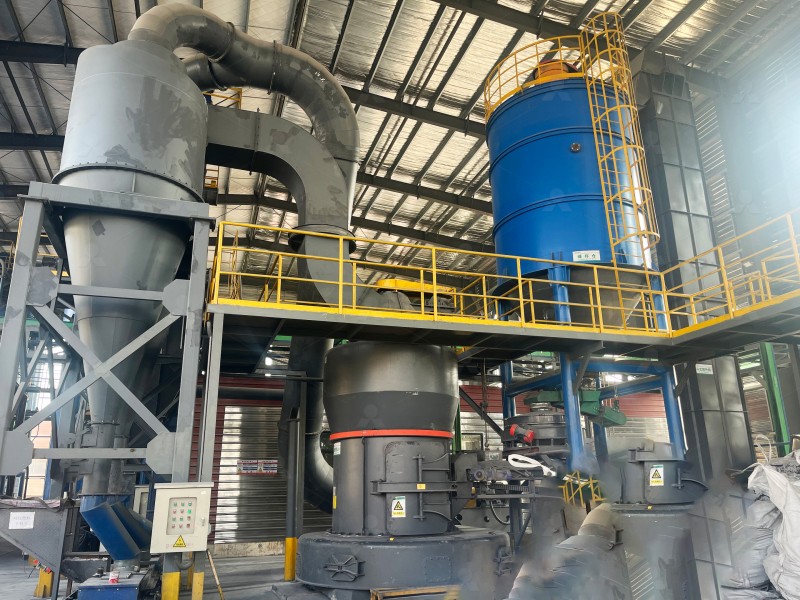
Why Fine Grinding Matters for Paint Filler Kaolin
Paint manufacturers specify kaolin with a particle size typically between 325 mesh (45 microns) and 1250 mesh (10 microns). For premium paints, fineness can go down to 2500 mesh (5 microns) or even d97≤5μm. At these sizes, kaolin disperses more uniformly, produces a smoother film, and improves hiding power. If the grinding equipment cannot achieve these specifications consistently, the paint quality suffers, leading to complaints, returns, or lost contracts.
Traditional ball mills are common in smaller operations, but they have significant drawbacks: high energy consumption, long grinding cycles, and contamination from steel balls. Roller mills, particularly those designed for ultra-fine grinding, offer a different value proposition. They use less energy, produce less noise, and allow tight control over particle size distribution. For a country like Ethiopia, where electricity costs are a major operational factor, energy efficiency translates directly into better margins.
Selecting the Right Roller Mill for Kaolin Processing
When evaluating roller mill technologies for kaolin, three types stand out based on production scale and fineness requirements:
1. Ultrafine Vertical Roller Mills (e.g., LUM Series)
These mills integrate grinding, classifying, and drying in a single unit. They are ideal for capacities between 5 and 18 tons per hour, with an input size up to 10 mm. The German powder separating technology incorporated in these units allows adjustment from 325 to 2500 mesh. For Ethiopian processors targeting the export market or supplying large paint factories, this is a robust solution. The roller shell and lining plate curve design in the LUM series prevents material lingering, which improves whiteness retention—a key quality metric for high-gloss paints.
2. Ultrafine Grinding Mills with Cage-Type Classifiers (e.g., MW Series)
For smaller operations or those requiring extreme fineness, the MW Ultrafine Grinding Mill is a proven workhorse. It handles input sizes up to 20 mm and delivers capacities from 0.5 to 25 tph. The absence of rolling bearings and screws in the grinding chamber means fewer mechanical failures—a real advantage in regions where maintenance support is limited. The pulse dust collector and muffler make it compliant with Ethiopian environmental standards, which is increasingly important as regulation tightens around industrial emissions.

3. European Trapezium Mills (e.g., MTW-Z Series)
These mills use a bevel gear drive and diluted oil lubrication for the grinding rollers, making them suitable for continuous 24-hour operation. With capacities up to 55 tph, they are best suited for large-scale industrial plants. The cambered air duct design reduces resistance and energy consumption, while the elastic volute damping structure protects the mill from vibration damage. For kaolin with high moisture content, the built-in drying capability is a bonus.
Recommended Product: MW Ultrafine Grinding Mill
For Ethiopian paint filler manufacturers who need a balance of fineness, energy efficiency, and ease of maintenance, we recommend the MW Ultrafine Grinding Mill. Its cage-type powder selector allows precise control over particle size, achieving d97≤5μm in a single pass. The system consumes only 30% of the energy compared to a jet mill while delivering 40% higher throughput. With input size up to 20 mm and capacity ranging from 0.5 to 25 tph, it fits both small-scale and medium-scale operations. The absence of internal rolling bearings eliminates a common failure point, and the external lubrication system allows maintenance without shutdown.
Process Flow for Kaolin Milling in Ethiopia
A typical kaolin milling line for paint filler consists of the following stages:
- Primary Crushing: A hammer crusher reduces run-of-mine kaolin lumps to around 20 mm.
- Drying: If moisture exceeds 6%, a rotary dryer or the mill’s integrated drying system brings it down to acceptable levels.
- Feeding: A vibrating feeder and bucket elevator transport material to the mill hopper.
- Grinding and Classification: Inside the mill, kaolin passes between grinding rollers and rings. The classifier separates fine particles from coarse ones; coarse material falls back for regrinding.
- Collection: A cyclone collector and pulse dust collector capture the final powder. Air is filtered and recycled.
- Packaging: The finished powder is bagged for delivery to paint factories.
One advantage of modern roller mills is that this entire process can be automated. PLC control systems allow the operator to adjust fineness, feed rate, and classifier speed from a single panel, reducing labor costs and human error.

Technical Considerations for Ethiopian Processors
Power Supply and Energy Cost: Energy accounts for a significant portion of operating costs in grinding. Liming’s roller mills are designed to minimize specific power consumption. For example, the LUM series reduces energy use by 30-50% compared to conventional ball mills. In Ethiopia, where industrial electricity tariffs can be volatile, this efficiency provides a hedge against rising costs.
Wear Parts Availability: One concern with any mill is the lifespan of wear parts—roller shells, grinding rings, and liners. Liming uses wear-resistant alloy materials developed in collaboration with scientific institutes. These parts last 1.7 to 2.5 times longer than traditional manganese steel. Furthermore, Liming’s spare parts supply chain is structured to support overseas customers, including those in Africa. Having a reliable source for replacement parts prevents costly downtime.
Environmental Compliance: Ethiopian environmental agencies are increasingly monitoring dust and noise emissions from industrial sites. The MW and LUM mills come with efficient pulse dust collectors that achieve near-zero dust spillage. The noise levels are kept low through mufflers and soundproofing. This makes it easier to obtain operating permits and maintain good community relations.
Product Consistency: Paint manufacturers demand batch-to-batch consistency. Roller mills with digital controls (CNC-machined parts) provide the necessary precision. The fineness can be adjusted on the fly, and the system automatically compensates for variations in feed material hardness or moisture.

Conclusion: The Right Mill Makes the Difference
Ethiopia’s kaolin reserves are ample, but the value lies not in the raw material alone—it is in the processing. A well-chosen roller mill turns low-grade clay into a high-value industrial input for paint manufacturing. Whether you are a startup looking for a compact, efficient unit or an established producer scaling up for export, the technology exists to meet your needs.
Investing in a mill that offers low energy consumption, precise fineness control, and easy maintenance is not an expense; it is a competitive advantage. For those serious about entering or expanding in the paint filler market, the MW Ultrafine Grinding Mill or the LUM Ultrafine Vertical Grinding Mill are both excellent choices, depending on your capacity and fineness requirements.
Frequently Asked Questions (FAQs)
- What is the ideal fineness of kaolin for paint filler?
Most paint applications require kaolin between 325 mesh (45 microns) and 1250 mesh (10 microns). For premium paints, fineness up to 2500 mesh (5 microns) is used. - Can the MW Ultrafine Grinding Mill handle kaolin with moisture above 5%?
Yes, but pre-drying is recommended. If moisture exceeds 10%, a separate drying step before feeding the mill is advised to prevent material buildup. - How much energy does the LUM Ultrafine Vertical Grinding Mill save compared to a ball mill?
The LUM series typically saves 30% to 50% in energy consumption, depending on material hardness and required fineness. - What is the typical lifespan of grinding rollers for kaolin?
With Liming’s wear-resistant alloy materials, roller shells can last 1.7 to 2.5 times longer than traditional high-manganese steel rollers, but actual life depends on feed abrasiveness and operating hours. - Is it difficult to change the fineness setting on these mills?
No. Both the MW and LUM mills have adjustable classifiers. The operator can change fineness by adjusting the rotating speed of the rotor via the PLC panel without stopping the mill. - Do these mills require special foundation work?
Yes, a concrete foundation is required according to the mill’s weight and vibration characteristics. The technical manual provides specific foundation drawings. Liming can also recommend local civil engineering partners. - What after-sales support does Liming offer in Ethiopia?
Liming provides technical documentation, remote troubleshooting, and a supply chain for original spare parts. For larger installations, on-site commissioning support can be arranged. - Can one mill produce both coarse kaolin (for putty) and fine kaolin (for paint)?
Yes. By adjusting the classifier speed and grinding pressure, the same machine can produce different fineness grades. However, switching between very different fineness grades may require a cleaning run to avoid cross-contamination. - What is the maximum input size for the MW mill?
The MW Ultrafine Grinding Mill can accept feed material up to 20 mm. Larger lumps must be crushed to this size before feeding. - How does the pulse dust collector affect the final product quality?
It ensures that no fine powder escapes into the atmosphere, which improves yield and keeps the working environment clean. The collected dust is part of the final product, so there is no waste.