
Grinding mill price & cost analysis for kaolin for paint filler in turkey
Grinding Mill Price & Cost Analysis for Kaolin for Paint Filler in Turkey
Turkey has established itself as a significant player in the global kaolin market, driven by its robust ceramics, paper, and paint industries. For paint manufacturers, kaolin serves as a critical functional filler, valued for its brightness, opacity, and rheological control. However, the journey from raw kaolin ore to a high-quality paint filler is capital-intensive, and the choice of grinding equipment directly impacts both the price per ton and the overall operational cost structure. This analysis dives deep into the economics of kaolin grinding for the Turkish paint sector, comparing available technologies and offering a clear path to optimizing your milling budget.

The Economic Landscape of Kaolin in Turkey
Turkey’s kaolin reserves, primarily located in the Çanakkale, Balıkesir, and Bilecik regions, vary widely in quality. For paint filler applications, the market demands a fineness typically between 325 mesh (45 μm) and 1250 mesh (10 μm), with strict requirements on brightness (ISO 85+) and low grit content. The cost challenge for Turkish processors is threefold: energy prices (electricity and natural gas), labor rates, and equipment depreciation. A conventional ball mill system, while low in initial capital expenditure (CAPEX), often bleeds profit through high energy consumption (kW/ton) and significant wear part replacement costs. This has led many forward-thinking plants to reconsider their milling strategy.
Breaking Down the Costs: CAPEX vs. OPEX
When analyzing the price of a grinding mill for kaolin, the purchase price is just the tip of the iceberg. The total cost of ownership (TCO) includes installation, civil works, energy consumption, maintenance, and downtime. In Turkey, where electricity tariffs for industrial users have seen consistent increases, operational expenditure (OPEX) is the dominant factor. A mill that offers a 30-50% reduction in energy consumption can pay back its higher upfront investment within 18 to 24 months. This is precisely where modern roller mill technology outpaces traditional ball mills.
Traditional Systems: Ball Mills and Raymond Mills
Many older Turkish plants still operate Raymond mills or traditional ball mills for kaolin. While a small Raymond mill might have a low initial price tag (around USD 50,000-100,000), its capacity is limited (0.6-5 tph), and the cost per ton for energy and maintenance is relatively high. Ball mills, often used for wet grinding, require extensive drying systems and have high steel ball consumption. For a paint filler requiring ultra-fine particle size (d97 < 10μm), a standard ball mill struggles with efficiency, leading to longer grinding times and higher costs. This inefficiency makes them less competitive for the ‘ultra-fine’ segment of the Turkish paint filler market.
The Optimal Solution for Turkish Kaolin: The MW Ultrafine Grinding Mill
For processors targeting the high-value paint filler market, precision and energy efficiency are non-negotiable. LIMING’s MW Ultrafine Grinding Mill is engineered specifically for this challenge. With an input size of 0-20 mm and a capacity ranging from 0.5 to 25 tph, it directly addresses the volume needs of a mid-scale Turkish kaolin plant. Its ability to produce powders from 325 mesh up to 2500 mesh (d97≤5μm) allows manufacturers to serve both standard and premium paint formulations from a single machine.

Direct Cost Savings with MW Mill
The MW mill’s design eliminates rolling bearings and screws inside the grinding chamber, which are common failure points in other mills. This translates directly into lower spare parts costs and less unplanned downtime—a critical factor for Turkish factories aiming for 24/7 production. The external lubricating system allows for maintenance without stopping the machine, ensuring continuous operation that maximizes the return on investment. Furthermore, its system energy consumption is only 30% of a jet mill, a common competitor for ultra-fine grinding, making it the most cost-effective option for achieving paint-grade fineness.
Alternative for Higher Capacity: The LUM Ultrafine Vertical Grinding Mill
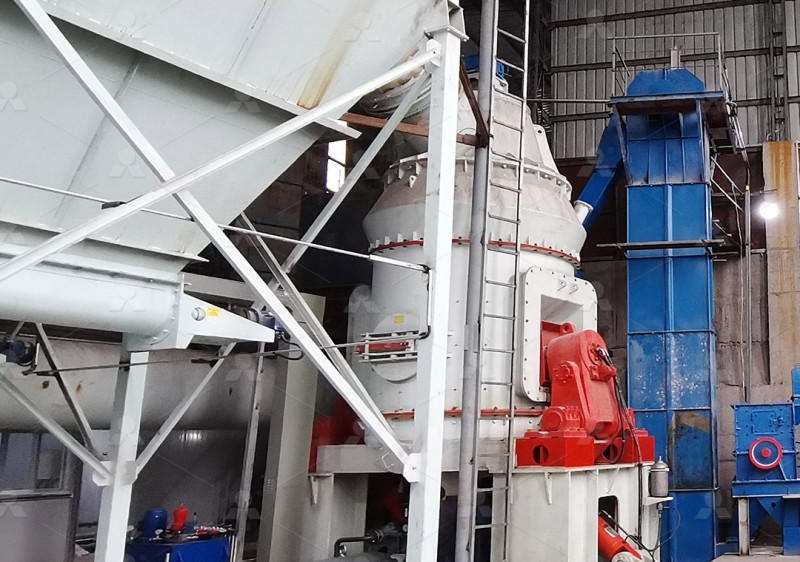
For larger operations requiring consistent throughput above 5 tph with a focus on whiteness and purity, the LUM Ultrafine Vertical Grinding Mill is a prime candidate. It integrates grinding, grading, and conveying into a single, compact system. The LUM mill is particularly suited for Turkish kaolin that needs a high degree of brightness improvement. Its multi-head powder separator technology ensures a precise cut, eliminating the need for downstream sieving which adds cost. By reducing energy consumption by 30-50% compared to common mills, the LUM mill offers significant long-term savings for high-volume producers in the paint filler segment.
Comparative Cost Analysis (Hypothetical 10 tph Line)
Let us model a typical Turkish paint filler line processing kaolin to 800 mesh (d90 < 15μm).
- Ball Mill System: CAPEX: Moderate (USD 300k-400k). OPEX: High (Energy ~35 kWh/ton, Steel balls frequent replacement). Drying costs are often separate, adding 10-15% to total OPEX.
- Jet Mill: CAPEX: High (USD 500k+). OPEX: Very High (Compressed air/steam energy equivalent to 80+kWh/ton). Rarely viable for economic mass production of paint filler.
- MW Ultrafine Grinding Mill: CAPEX: Higher than ball mill (USD 450k-600k). OPEX: Low (Energy ~10-15 kWh/ton, minimal wear parts). Integrated drying and classification saves space and secondary equipment costs. Payback period is typically 1-2 years based on energy savings alone.
Environmental and Regulatory Compliance Costs
Turkey’s environmental regulations are tightening, particularly in industrial zones like those around Bursa and Istanbul. Fine kaolin dust is a hazardous air pollutant. The MW Ultrafine Grinding Mill excels here with its efficient pulse dust collector and muffler system. Traditional mills often require significant retrofit costs for dust collection to meet ‘Zero Waste’ regulations. The MW mill arrives as a compliant, eco-friendly solution. This avoids potential fines and the cost of retrofitting pollution control equipment, adding a crucial ‘risk reduction’ value to the price analysis.

Conclusion: Strategic Investment for Turkish Paint Fillers
The cheapest mill is rarely the most profitable. For Turkish kaolin processors specializing in paint filler, the analysis points decisively toward investing in vertical roller or ultra-fine ring-roller technology. The MW Ultrafine Grinding Mill offers an unbeatable combination of flexibility (325-2500 mesh), energy economy, and environmental compliance, making it the ideal choice for small to medium capacity lines. For larger scale operations requiring maximum yield and purity, the LUM Ultrafine Vertical Grinding Mill provides the heavy-duty solution. By focusing on total cost of ownership rather than just purchase price, Turkish manufacturers can secure their profitability and product quality for the demanding paint filler market.
Frequently Asked Questions (FAQs)
- What is the typical price range for an MW Ultrafine Grinding Mill suitable for a 10 tph kaolin paint filler line in Turkey?
The price depends heavily on the specific configuration (power, classification system, automation level) and the scope of supply (including crushers, classifiers, and dust collectors). A complete turnkey 10 tph MW mill system for kaolin generally falls within the USD 450,000 to 650,000 range. We recommend submitting your specific material analysis (Moisture, Hardness, Feed Size) for a detailed quotation. - How does the energy cost of the LUM Ultrafine Mill compare to a traditional ball mill for kaolin grinding?
The LUM mill typically consumes 30% to 50% less energy than a ball mill for the same throughput and fineness. For a 10 tph operation grinding to 800 mesh, this can translate to savings of over 100,000 kWh per month, which is substantial given industrial electricity rates in Turkey. - Can the MW mill handle kaolin with a high moisture content (e.g., 8-12%)?
Yes, the MW Ultrafine Grinding Mill system is typically configured with a hot air generator (often using natural gas in Turkey) to allow for simultaneous grinding and drying. The system can efficiently handle feed moisture up to 10-12%, eliminating the need for a separate, costly rotary dryer. - How often do the grinding rollers and rings need to be replaced on the MW mill for kaolin?
Wear life is dependent on the abrasiveness of the specific kaolin (its silica and quartz content). For standard Turkish kaolin (Mohs hardness < 4), the wear parts typically last 6,000 to 10,000 hours. The use of high-chrome wear-resistant alloys ensures a long service life, reducing planned maintenance costs. - Are spare parts for LIMING mills readily available in Turkey?
Yes. LIMING has a strong distribution network and often stocks critical spare parts locally or has fast shipping capabilities. Furthermore, the simple and modular design of the MW and LUM mills means common replacements like roller shells and ring segments can be changed quickly by a local maintenance team. - What is the footprint of an MW mill compared to a ball mill system?
The MW mill has a very compact vertical structure. Its footprint is roughly 40-50% smaller than a traditional ball mill system of equal capacity, including the classifier and dust collector. This is a major advantage in Turkish industrial zones where land prices are high. - Is the powder from the LUM mill consistent enough for high-end automotive paint fillers?
Absolutely. The LUM mill features a German-designed multi-head classifier that provides a very precise particle size distribution (PSD). It can consistently achieve a d97 of less than 10μm with a very narrow distribution curve, meeting the stringent requirements of high-gloss and automotive paint systems where consistency is paramount.