
How to optimize talc processing with roller mill for ceramic tiles in philippines
Understanding the Local Challenge: Talc for Ceramic Tiles
The Philippine ceramic tile industry is a significant consumer of talc. Talc acts as a flux, reducing the firing temperature and improving the thermal shock resistance of the tiles. However, processing this soft mineral efficiently in a tropical climate presents unique logistical and technical hurdles. High ambient humidity can cause material clogging, while inconsistent raw feed sizes from local quarries often challenge traditional grinding equipment. The goal for any plant manager is to achieve a consistent, ultra-fine product (typically 325 mesh or finer for glaze applications) with the lowest possible energy consumption and downtime. This is where a modern roller mill, specifically designed for ultrafine grinding, becomes a game-changer.
Why a Roller Mill is the Superior Choice for Talc
Compared to ball mills or jet mills, a roller mill offers substantial advantages for talc. The layered grinding principle of a vertical roller mill or a ring-roller mill is highly efficient for platy minerals like talc. Talc particles have a natural lamellar structure. A well-designed roller mill can delaminate these particles without excessive fracturing, preserving the platelet shape which is crucial for the slip properties and surface finish of ceramic tiles. The key is controlling the grinding pressure and the classifier speed to achieve the desired particle size distribution.

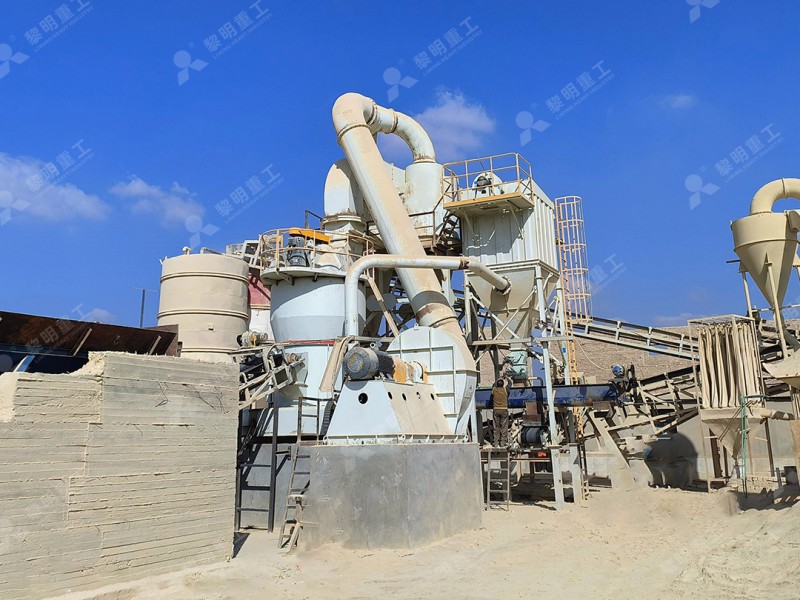
Our MW Ultrafine Grinding Mill is engineered specifically to handle this challenge. It is designed to take feed material up to 20mm and reduce it to a fineness adjustable between 325 and 2500 mesh. For a typical Philippine ceramic application targeting a d97 of 45 microns (325 mesh), the MW mill operates with exceptional stability. The elimination of rolling bearings and screws in the grinding chamber means you don’t have to worry about seal failures from fine talc dust—a common problem in other mill designs. The external lubrication system allows for 24-hour continuous operation, which is critical for meeting production quotas.
Step-by-Step Optimization Strategy for Your Roller Mill
1. Control the Feed Moisture
In the Philippines, raw talc can have a moisture content ranging from 5% to 15% depending on the source and storage conditions. High moisture leads to material sticking on the grinding ring and impeding airflow. You must integrate a drying system upstream. The MW Ultrafine Grinding Mill system can be configured with a hot air generator to dry the material during the grinding process. For optimal performance, ensure that the feed moisture entering the mill is below 6%. This will prevent clogging and ensure stable material flow through the classifier.
2. Optimize the Classifier Rotor Speed
The fineness of the talc powder is directly controlled by the cage-type powder selector. For ceramic tile body and glaze, you need a precise cut point. A slow rotor speed results in a coarser product, while a higher speed gives a finer one. For a standard tile body application, we recommend starting with a rotor speed that yields 98% passing 325 mesh. Use a laser particle size analyzer to verify the d50 and d97 values. The multi-head classifier option on the MW Mill allows you to fine-tune this even for high-capacity lines.
3. Manage the Grinding Ring and Roller Wear
Talc is soft, but it can still cause abrasive wear over time, especially if it contains impurities like silica. Monitor the power draw of the main motor. An increase in current without an increase in feed rate usually indicates that the rollers or rings are wearing down and losing their grinding efficiency. The MW Mill’s design allows for easy inspection and replacement of these wear parts. The milling curves are optimized to maintain high efficiency even after significant wear, giving you a longer operational window between maintenance stops.
4. Integrate an Efficient Pulse Dust Collector
Environmental regulations in the Philippines are becoming stricter, especially in industrial zones. Talc dust is a respiratory hazard and a nuisance. The MW Ultrafine Grinding Mill comes standard with a high-efficiency pulse dust collector. This is not an add-on; it is an integral part of the system. Ensure the filter bags are of a material suitable for talc (resistant to moisture and static buildup). Regularly check the differential pressure across the filter. A clean filter ensures that the entire system operates under negative pressure, preventing dust leaks and ensuring a clean, safe working environment.

Case Study Example: Local Implementation
Consider a scenario in a tile plant in Laguna. The client was using an old ball mill to process talc. Their specific energy consumption was high, and the product fineness was inconsistent. After switching to the LUM Ultrafine Vertical Grinding Mill, they saw immediate results. The LUM mill, with its double position-limiting technology, provided a stable operation even when the feed contained slightly oversized particles. The client reported a 30% reduction in energy costs and a significant improvement in the whiteness of their tile body, directly attributed to the lower iron content generated by the LUM’s unique grinding curve and the lack of direct metal-to-metal contact.
Maintaining the System for Longevity
Don’t neglect the ancillary equipment. The reducer and the hydraulic system are the heart of the mill. Use the recommended gear oil and hydraulic fluid viscosity for tropical climates. The PLC control system provided with our mills can be programmed to automatically adjust the grinding pressure based on mill vibration, protecting the machine from damage during empty or overload conditions. We also offer full technical support and a sufficient supply of spare parts, so you can keep your operation worry-free.
Conclusion
Optimizing talc processing in the Philippines is about matching the right technology to the local conditions. A modern roller mill, specifically the MW Ultrafine Grinding Mill or the LUM Ultrafine Vertical Grinding Mill, offers the reliability, efficiency, and precision required to produce high-quality ceramic tiles. By focusing on moisture control, classifier optimization, wear management, and proper dust collection, you can significantly lower your operating costs while improving product quality.

Frequently Asked Questions (FAQ)
- What is the ideal feed size for the MW Mill when processing Philippine talc?
The MW Ultrafine Grinding Mill is designed for an input size of 0-20 mm. If your talc lumps are larger than this, a simple hammer crusher or jaw crusher should be used upstream to reduce the size. - Can I use the same mill for both talc and other minerals like calcium carbonate?
Yes, but thorough cleaning of the internal chamber and pipes is required to avoid contamination. The MW and LUM mills are versatile and can handle various non-metallic minerals. - How do I handle the high humidity in the rainy season to prevent clogging?
We recommend integrating a hot air generator into the mill system. Even low-temperature (100-150°C) hot air can significantly reduce the surface moisture of the talc, preventing internal sticking. - What is the typical maintenance cycle for the grinding rollers?
With proper feeding and quality talc (low silica), the roller shells on the MW mill can last for 6 to 12 months of continuous operation. Regular visual inspection during scheduled downtime is key. - What fineness is best for ceramic tile glaze?
For glaze applications, a fineness of d97 ≤ 15 microns (around 800-1250 mesh) is typically required. The MW mill can easily achieve this with its 2500 mesh maximum capability. - Is the electricity consumption really 40% less than a ball mill?
Yes, compared to a traditional ball mill processing the same talc to the same fineness, the MW Ultrafine Grinding Mill can reduce system energy consumption by up to 30-40%. - Do you provide installation support in the Philippines?
Yes, we offer full on-site technical guidance for installation, commissioning, and operator training to ensure your team can run the system efficiently from day one.