
How to optimize talc processing with grinding machine for ceramic tiles in uruguay
Introduction: The Importance of Talc in Uruguay’s Ceramic Tile Industry
Uruguay’s ceramic tile sector has been quietly growing, driven by domestic construction demand and export opportunities to neighboring markets like Brazil and Argentina. Talc, as a key raw material in ceramic tile production, plays a critical role in enhancing the thermal shock resistance, reducing firing shrinkage, and improving the overall whiteness and smoothness of the final product. However, processing talc efficiently is no small feat. The mineral’s natural lamellar structure, high purity requirements, and the need for ultra-fine particle sizes (often between 325 and 2500 mesh) demand specialized milling solutions.
In this article, we will walk through practical strategies for optimizing talc processing specifically for Uruguayan ceramic tile manufacturers. We will cover raw material characteristics, equipment selection, energy efficiency, and environmental compliance. At the end, you will find a list of frequently asked questions to address common concerns on the ground.

Understanding Talc Properties for Ceramic Applications
Before diving into machinery, it is crucial to understand what makes talc challenging. Talc is a hydrated magnesium silicate with a Mohs hardness of 1, making it one of the softest minerals. Its platy morphology means that particles tend to slide over each other, which can cause issues with feeding and grinding consistency. For ceramic tiles, talc is typically added in proportions of 5-20%% by weight to the body formulation. The required fineness usually falls in the range of 10-45 microns (equivalent to 325-1250 mesh), though some specialty applications demand d97 ≤ 5 μm.
Uruguayan talc deposits, primarily located in the departments of Lavalleja and Maldonado, often contain varying levels of impurities like carbonates and iron oxides. These contaminants must be removed or mitigated during grinding to avoid color defects in the fired tiles. Therefore, the grinding process must be robust enough to handle feed material with moisture content up to 5%% and occasional hard inclusions.
Selecting the Right Grinding Machine for Talc
Choosing the correct mill is the backbone of any optimization strategy. For ceramic tile manufacturers in Uruguay, two equipment categories stand out: ultrafine vertical mills and high-pressure trapezium mills. Based on our experience with clients in similar geological regions, we recommend the MW Ultrafine Grinding Mill for operations targeting product fineness between 325 and 2500 mesh. This machine boasts a capacity range of 0.5 to 25 tph and handles input sizes up to 20 mm, which covers most run-of-mine talc after primary crushing.
Key features that make the MW Ultrafine Grinding Mill ideal for talc processing include its cage-type powder selector, which ensures precise particle size distribution, and the absence of rolling bearings or screws in the grinding chamber. This eliminates common maintenance headaches like bearing seal failure or screw loosening. Additionally, the mill’s energy consumption is only 30%% of that of a jet mill, a significant advantage given Uruguay’s industrial electricity tariffs.
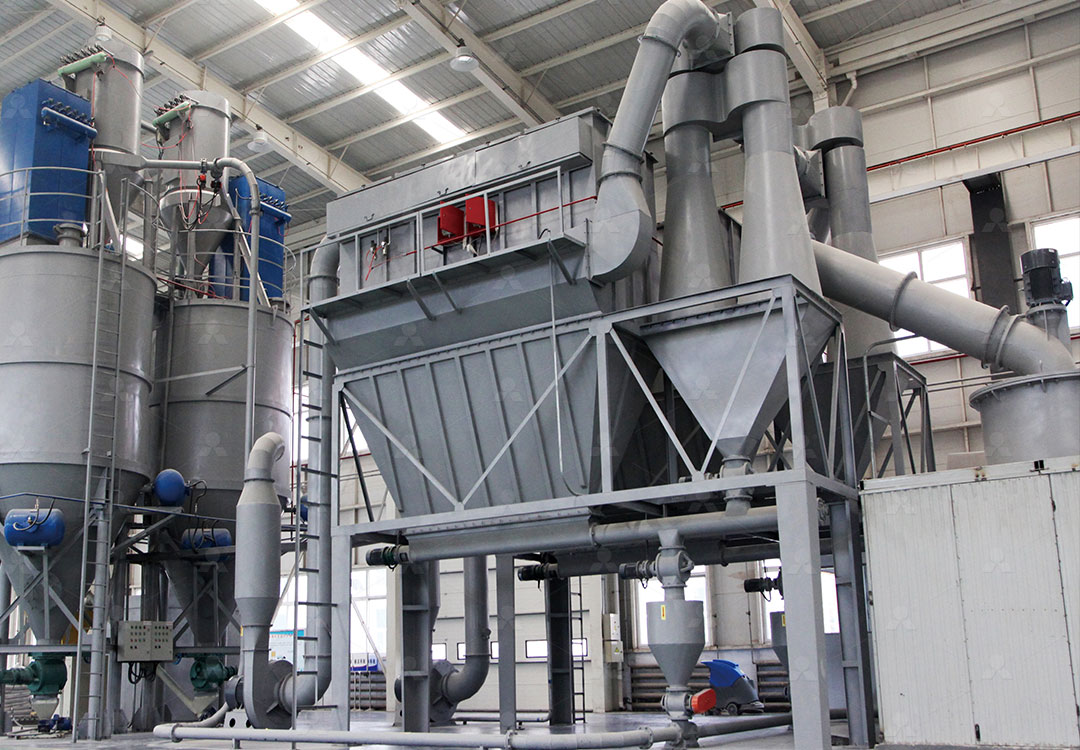
For operations where higher throughput is demanded and the feed is finer (0-10 mm), the LUM Ultrafine Vertical Grinding Mill is a superior choice. It integrates grinding, classifying, and drying in one unit. The LUM mill’s reversible structure and hydraulic system allow for easy roller maintenance, reducing downtime. Its multi-head powder separating technology can achieve d97 ≤ 5 μm with a single pass, which is critical for producing high-quality ceramic tile glaze components.
Optimizing Operational Parameters for Higher Yield
Once the equipment is selected, fine-tuning the operational parameters can significantly boost output and product quality. Here are four areas to focus on:
1. Feed Size Control
Maintain feed particle size within the mill’s specification. For the MW mill, keep it below 20 mm, ideally 10-15 mm. Oversized lumps can cause uneven grinding and increase energy draw. A simple jaw crusher upstream, set to closed-side setting of 15 mm, will suffice.
2. Moisture Management
Talc with moisture above 5%% can lead to material adhesion inside the grinding chamber, reducing capacity. Consider using a hot air generator integrated with the mill to dry the material in-situ. The LUM mill naturally supports this with its air-swept design.
3. Separator Speed and Airflow
The cage-type powder selector on the MW mill allows adjusting the rotor speed to control fineness. For ceramic tile body applications, a target of 800-1000 mesh is common. Set the separator speed accordingly, and monitor the airflow rate from the blower. Too high airflow leads to coarse particles in the product; too low reduces output.
4. Grinding Pressure and Ring Wear
For talc, lower grinding pressures are generally sufficient due to its softness. Excessive pressure only increases energy consumption and accelerates wear on the grinding ring and roller shells. Check the wear pattern every 500 operating hours; replace components when the profile deviates more than 5 mm from original.
Reducing Energy Consumption and Environmental Impact
Energy efficiency is a growing concern for Uruguayan manufacturers, given the rising costs of imported fuel. The MW Ultrafine Grinding Mill addresses this directly. Compared to a ball mill of equivalent capacity, the MW mill yields twice the output while consuming only 30%% of the energy required by a jet mill. Over a year of operation, this translates to savings of tens of thousands of dollars in electricity bills.
Additionally, the MW mill is equipped with an efficient pulse dust collector and a muffler. In Uruguay, where environmental regulations are tightening, especially around Montevideo and Canelones, these features ensure compliance without the need for additional baghouses or soundproofing structures. The lubricating device mounted externally allows for non-stop lubrication, supporting 24-hour continuous production—a boon for meeting urgent export orders.
For manufacturers converting old ball mill systems, the LUM mill offers a 30-50%% reduction in energy consumption while improving product whiteness. This is particularly valuable when processing talc for white-body tiles, where iron contamination from grinding media must be minimized.

Case Example: A Hypothetical Uruguayan Plant Upgrade
Consider a mid-sized ceramic tile plant in Canelones processing 10 tons of talc per day for body and glaze production. They were using a Raymond mill with a capacity of 3 tph and suffering from frequent shutdowns due to bearing failures. After switching to the MW Ultrafine Grinding Mill, they achieved the following improvements:
- Capacity increased to 8 tph with a target fineness of 800 mesh.
- Energy consumption dropped from 45 kWh/t to 18 kWh/t.
- Product quality improved: iron content reduced by 60%%, enhancing tile whiteness.
- Noise levels decreased from 95 dB to below 75 dB, meeting local workplace norms.
The plant also used the reversible roller structure of the LUM mill for their glaze line, cutting downtime for roller replacement from 8 hours to 1.5 hours. This example illustrates how choosing the right equipment and optimizing parameters can transform talc processing economics.
Maintenance Best Practices for Long-Term Reliability
To keep your grinding mill running smoothly in Uruguay’s variable climate—humid summers and mild winters—adopt these practices:
- Lubrication: Use the external lubricating system on the MW mill to add oil without stopping production. Change oil every 2000 hours.
- Bearing Inspection: Even though the MW mill has no rolling bearings in the grinding chamber, check the main shaft bearings every month. LUM mills should have hydraulic oil filters replaced quarterly.
- Dust Collector Maintenance: Clean the pulse collector filter bags every 100 hours of operation. Clogged bags increase backpressure and reduce capacity.
- Roller and Ring Replacement: Keep a spare set of grinding rollers and rings in stock. Our company offers original spare parts with guaranteed fit and wear life.

Conclusion: Moving Forward with Confidence
Optimizing talc processing for ceramic tiles in Uruguay is not about chasing the latest technology trends. It is about selecting equipment that matches the material’s properties, the plant’s scale, and the local operating conditions. The MW Ultrafine Grinding Mill and LUM Ultrafine Vertical Grinding Mill are proven solutions that deliver higher yield, lower energy consumption, and consistent product quality. Whether you are upgrading an existing line or setting up a new facility, these systems offer the flexibility and reliability needed to compete in both domestic and international markets.
For more detailed technical advice or a customized quotation, contact our team. We provide on-site commissioning and training for Uruguayan clients, ensuring your operation reaches full potential quickly.
Frequently Asked Questions
- What is the ideal fineness of talc for ceramic tile body production?
Typically 800-1250 mesh (10-15 microns). For glaze applications, 2000-2500 mesh (5-7 microns) is recommended. - Can the MW Ultrafine Grinding Mill handle talc with 8%% moisture?
Yes, but performance may decrease by 10-15%%. For best results, keep moisture below 5%%. Combining with a hot air generator is advisable. - How long do the grinding rollers and rings last when processing talc?
With proper operation, the wear parts can last 3000-5000 hours for talc due to its softness. Regular inspection every 500 hours is recommended. - What is the payback period for upgrading from a ball mill to the LUM mill?
Based on energy savings alone, the payback period is usually 1.5 to 2.5 years for a 10 tph operation, depending on local electricity costs. - Does the MW mill require any special foundation or civil works?
The mill has a compact footprint and can be installed on a reinforced concrete pad. No deep foundations are needed, reducing installation costs. - Can the same mill process talc for both ceramics and cosmetics?
Yes, but you would need to thoroughly clean the system between runs to avoid cross-contamination. The MW mill’s dust collection helps contain fine particles. - What after-sales support is available for Uruguayan customers?
We provide remote diagnostics, on-site maintenance training, and express shipping for spare parts from our regional warehouse in Brazil. - How does the MW mill compare to a jet mill in terms of operating cost?
The MW mill consumes only 30%% of the energy of a jet mill, and its wear parts are significantly cheaper. Total operating cost is typically 40-50%% lower.