
How to optimize limestone processing with roller mill for raw material for lime in uruguay
Introduction: The challenge of limestone processing in Uruguay
Uruguay’s limestone reserves present a real opportunity for the lime production industry, but the path from raw stone to high-quality quicklime or hydrated lime is paved with technical challenges. Local operators often struggle with inconsistent feed sizes, high moisture content during wet seasons, and the need for a product fineness that meets both agricultural and industrial specifications. The roller mill, particularly when configured for ultra-fine grinding, offers a solution that addresses these pain points while keeping operational costs under control.
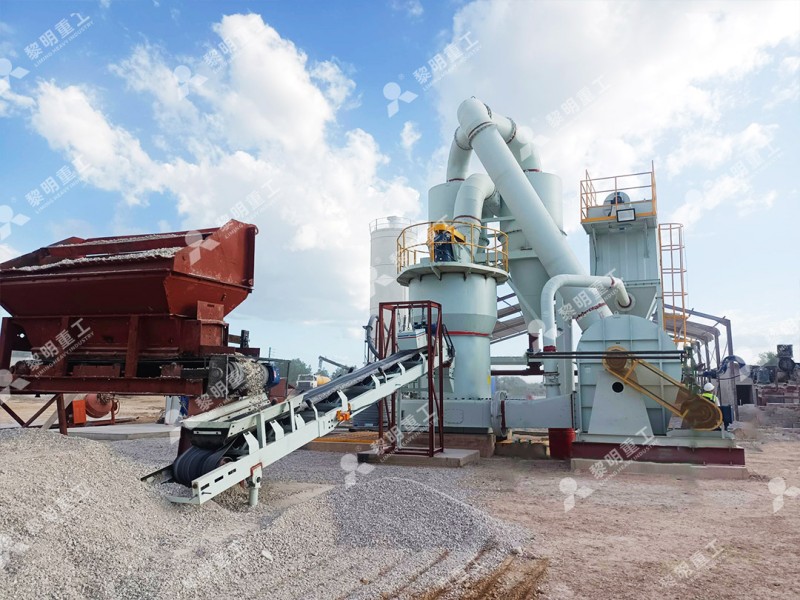
Why roller mills outperform traditional ball mills for lime raw material
Traditional ball mills have been the workhorse of the industry for decades, but they come with inherent inefficiencies. High energy consumption, frequent liner replacements, and the risk of iron contamination are just a few of the headaches. Roller mills, on the other hand, operate on a completely different principle. They rely on material bed grinding, where the roller presses down on a layer of limestone particles against a rotating grinding table or ring. This mechanism reduces direct metal-to-metal contact, which not only cuts down on wear part costs but also minimizes the introduction of iron into the final powder—a critical factor for lime used in food-grade or high-purity applications.
One of the standout advantages is the ability to adjust fineness on the fly. For lime production, you might need a coarse grind for steelmaking flux (around 200 mesh) or a superfine powder for flue gas desulfurization (down to 325 or even 600 mesh). With a roller mill equipped with a high-efficiency classifier, switching between these specifications takes minutes, not hours. This flexibility is a game-changer for Uruguayan producers who serve multiple markets.
Key parameters to optimize for limestone grinding
To get the most out of your roller mill, you need to dial in several variables. First, feed moisture. Most roller mills can handle up to 6% moisture without auxiliary drying equipment, but if your limestone comes from a quarry with high humidity, a hot air generator might be necessary. Second, feed size distribution. A well-crushed feed (typically 80% passing 20 mm) ensures stable operation and prevents the mill from choking. Third, grinding pressure. Too little pressure and you get poor throughput; too much and you risk excessive vibration and accelerated wear on the roller shell and liner.

Another often-overlooked factor is the separator speed. Modern classifiers allow precise control over the cut point. For lime raw material, targeting a specific surface area (Blaine value) rather than just mesh size often yields better reactivity in the kiln. A product with a Blaine value of 3500 to 4500 cm²/g is generally ideal for vertical lime kilns, as it ensures uniform calcination without excessive fines that can cause dusting problems.
Our recommended solution: The MW Ultrafine Grinding Mill
For Uruguayan operations that need to produce ultra-fine limestone powder for high-value lime products, the MW Ultrafine Grinding Mill stands out. This machine handles input sizes up to 20 mm and delivers capacities from 0.5 to 25 tph, making it suitable for both small-scale and medium-scale producers. Its key advantage lies in the newly designed grinding curves of the roller and ring. Compared to jet mills or stirred mills, the MW mill boosts production capacity by 40% while consuming only 30% of the energy. That is a direct hit to your electricity bill.
The fineness adjustment range—325 to 2500 mesh—covers virtually every application in the lime value chain. Whether you are preparing raw meal for a rotary kiln or producing hydrated lime for construction, this mill delivers consistent quality. The cage-type powder selector, based on German technology, ensures that the screening rate can achieve d97≤5 μm in a single pass. This eliminates the need for secondary classification circuits, simplifying your plant layout and reducing capital expenditure.
We also appreciate the thought that went into maintenance. There are no rolling bearings or screws inside the grinding chamber, so you never have to worry about a loose bolt causing catastrophic damage. The lubrication system is external, allowing you to grease the main shaft without shutting down the mill. For a 24/7 operation, this reliability translates directly into revenue.
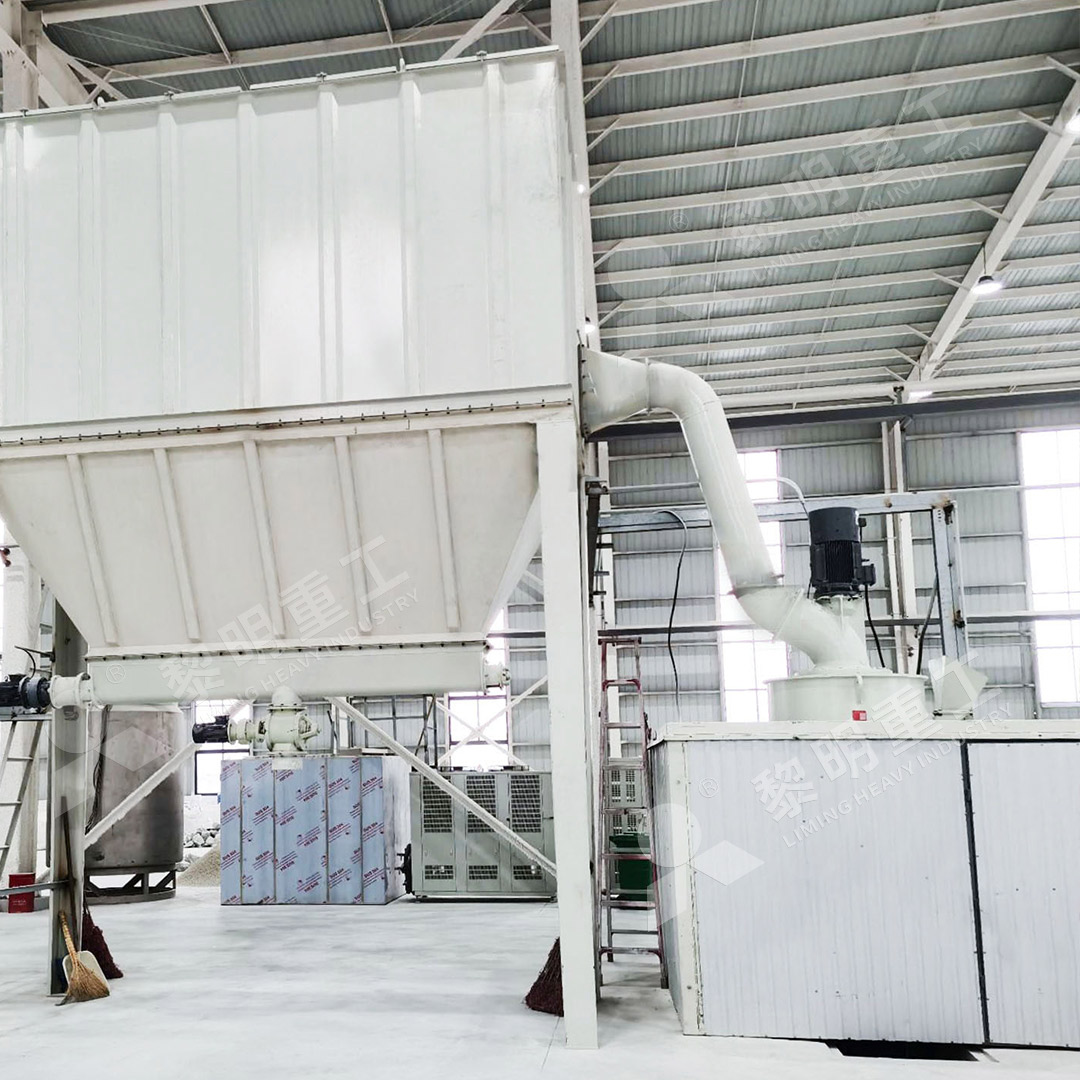
Process integration: From quarry to kiln feed
Integrating the roller mill into your existing plant requires careful thought about material handling. A typical setup includes a primary jaw crusher to reduce run-of-mine limestone to below 20 mm, followed by a bucket elevator that feeds the raw material into a surge hopper. A vibrating feeder then meters the limestone into the mill at a controlled rate. The ground product is conveyed pneumatically to a cyclone collector and then to a storage silo. For lime kiln feed, you might want to add a screw conveyor that blends the powder with a binder to form pellets, but that depends on your kiln type.
One piece of advice we have seen work well in similar climates is to install a dehumidifier or pre-heater on the air intake during the wet winter months in Uruguay. This keeps the material flow stable and prevents clogging in the air classifier. Also, consider using a pulse-jet dust collector on the mill outlet. The MW mill comes standard with an efficient pulse dust collector and a muffler, which not only keeps your operation compliant with environmental regulations but also recovers valuable fines that would otherwise be lost.
Economic and environmental benefits
The move to a roller mill is not just about technical performance; it is about the bottom line. In Uruguay, where energy costs are a significant portion of operating expenses, the 30-50% reduction in power consumption compared to a ball mill can pay back the investment in two to three years. Furthermore, the lower wear part consumption—thanks to the material bed grinding principle—reduces downtime for maintenance. For a plant producing 50,000 tons of lime per year, even a 5% increase in uptime translates to substantial additional output.
On the environmental side, the enclosed system with negative pressure operation ensures that no dust escapes into the surrounding area. This is increasingly important as local regulations tighten around particulate emissions. The MW mill’s noise reduction features also make it easier to operate near residential zones, which is a practical consideration for quarries that have expanded into suburban areas.
FAQ
- What is the maximum moisture content my limestone can have before it affects the roller mill performance? Most roller mills can handle up to 6% moisture. Above that, you will need a hot air system to dry the material during grinding.
- Can I use the same roller mill for both limestone and dolomite feed? Yes, but you may need to adjust the grinding pressure and classifier speed to account for differences in hardness. Dolomite is slightly harder and may require a lower feed rate.
- How often do I need to replace the grinding roller and ring? For limestone, the wear parts typically last 2000 to 4000 hours depending on the abrasiveness of the stone. The MW mill’s reversible structure makes replacement faster.
- Is it possible to achieve a product fineness of d97 < 10 µm for lime hydration? Yes, the MW Ultrafine Grinding Mill can reach d97 ≤ 5 µm in a single pass, which meets the strictest requirements for hydrated lime.
- What is the recommended power supply setup for Uruguay’s electrical grid? The mill motors can be configured for 380V or 440V, 50 Hz. We recommend installing a soft starter or VFD to manage inrush currents.
- Do I need a separate drying system if I process limestone from a wet quarry? If the feed moisture exceeds 6%, a hot air generator integrated with the mill’s air intake is advisable. The MW mill can be ordered with this option.
- How does the mill handle tramp metal or other contaminants? The design without rolling bearings in the chamber minimizes damage risks. However, installing a magnetic separator before the mill is strongly recommended to protect the roller surface.
- Can the mill be used for grinding lime after calcination (quicklime grinding)? Quicklime is highly reactive and hygroscopic. It requires an inert atmosphere or special sealing. The MW mill is better suited for raw limestone; for quicklime, consult our technical team for a dedicated solution.