
Grinding mill price & cost analysis for gypsum for plaster production in colombia
Introduction: The Colombian Plaster Market and Its Grinding Needs
Colombia’s construction sector has experienced steady growth over the past decade, driving demand for high-quality plaster. Gypsum, the core raw material for plaster production, requires precise grinding to achieve the fineness and purity needed for applications ranging from wall finishes to decorative moldings. For Colombian producers, selecting the right grinding mill is not just about technical specifications—it is a financial decision that impacts operational costs, product quality, and long-term profitability.
This analysis provides a comprehensive breakdown of grinding mill pricing and cost considerations for gypsum processing in Colombia. We will examine capital expenditure (CAPEX), operational expenditure (OPEX), maintenance costs, and energy consumption patterns. The goal is to help plaster manufacturers make informed decisions that balance upfront investment with lifetime value.

Understanding Gypsum Characteristics for Grinding
Gypsum (calcium sulfate dihydrate) presents unique challenges in grinding. Its relatively soft nature (Mohs hardness of 2) allows for efficient size reduction, but its tendency to generate heat during processing can lead to partial dehydration, forming bassanite (hemihydrate) or anhydrite. This phase transformation affects plaster setting time and strength.
Key parameters for gypsum grinding include:
- Feed moisture: Typically 5-10%% in natural gypsum; synthetic gypsum from flue gas desulfurization (FGD) can reach 15-20%%.
- Target fineness: For plaster production, 80-90%% passing 100 mesh (150 μm) is standard, with some applications requiring 200 mesh (74 μm).
- Throughput requirements: Small Colombian operations may need 1-5 tph, while larger plants aim for 10-25 tph.
These factors directly influence mill selection and cost structures.
Capital Expenditure: Mill Purchase Price Breakdown
The initial investment varies significantly based on mill type, capacity, and automation level. Below is a comparative analysis of mainstream grinding technologies suitable for gypsum processing in Colombia.
Ball Mill Systems
Traditional ball mills remain popular due to their low initial cost and simplicity. A 5 tph ball mill system, including classifier and auxiliary equipment, typically ranges from $80,000 to $150,000 USD for Colombian importers. However, the trade-off comes in energy efficiency and maintenance. Power consumption averages 25-35 kWh per ton of finished product.
Raymond Mill Systems
Raymond mills offer a middle ground. A 3-5 tph Raymond mill package costs approximately $60,000-$120,000 USD. These systems are compact and reliable but limited in fineness control. They consume 18-25 kWh per ton.
Vertical Roller Mills (VRM)
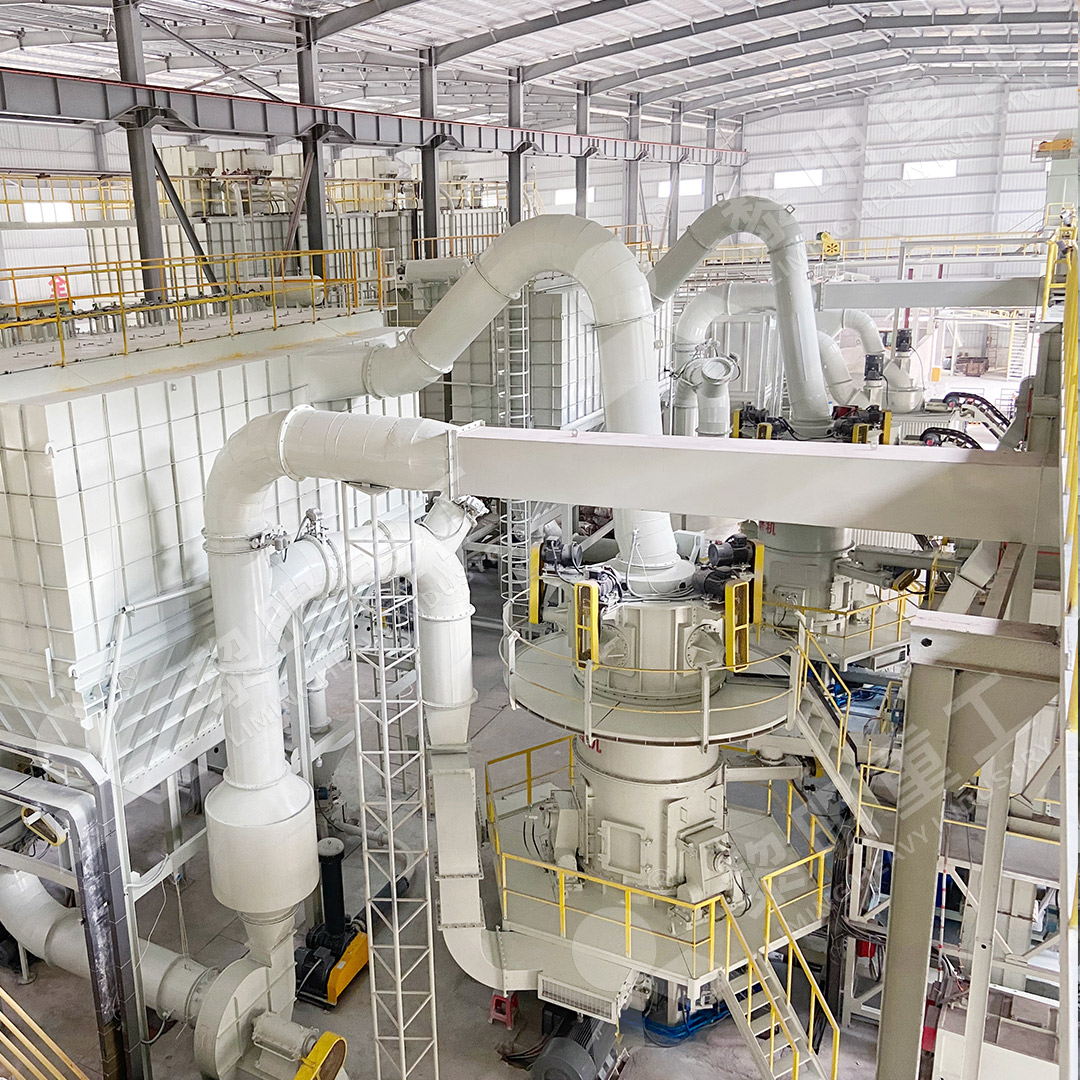
For medium to large operations, vertical roller mills provide superior efficiency. The LUM Ultrafine Vertical Grinding Mill from LIMING, for example, offers advanced features specifically valuable for gypsum plaster production. Its German-engineered powder separating technology ensures precise particle size distribution—critical for consistent plaster quality.
Recommended Product: LUM Ultrafine Vertical Grinding Mill
Input Size: 0-10 mm
Capacity: 5-18 tph
Fineness: 325-2500 mesh
This mill integrates grinding, grading, and drying into one system, reducing auxiliary equipment costs. A complete LUM installation for 10 tph gypsum processing typically costs $180,000-$300,000 USD, depending on automation level and auxiliary components.
Ultrafine Grinding Mills
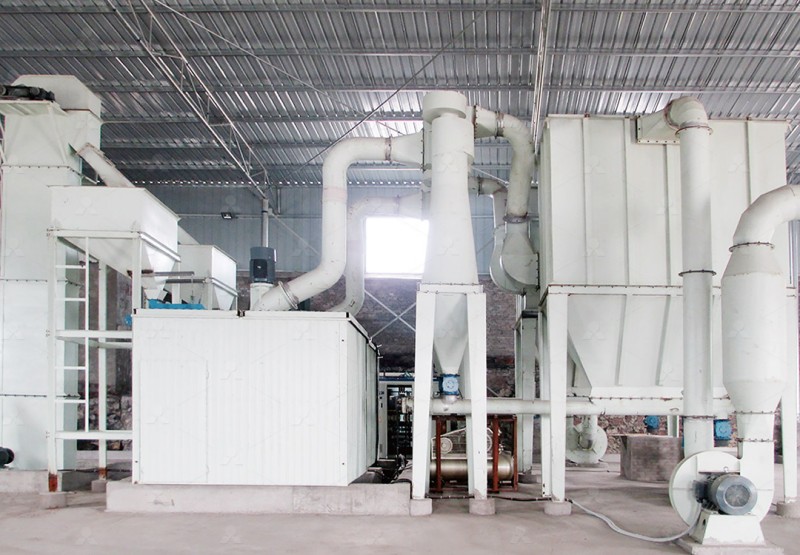
For specialty plasters requiring ultra-fine powders, the MW Ultrafine Grinding Mill from LIMING is an excellent choice. Its unique roller and ring design yields 40%% higher capacity than jet mills at only 30%% energy consumption. Import price for a complete MW system ranges from $150,000-$250,000 USD.
Operational Expenditure: Energy, Labor, and Consumables
OPEX often exceeds initial CAPEX within the first two years of operation. Colombian plaster manufacturers must consider local electricity rates, which average $0.12-$0.18 USD per kWh for industrial users.
| Mill Type | Energy Consumption (kWh/ton) | Annual Energy Cost (10 tph, 8,000 hrs/yr) |
|---|---|---|
| Ball Mill | 28-35 | $268,800-$336,000 USD |
| Raymond Mill | 18-25 | $172,800-$240,000 USD |
| LUM Vertical Mill | 12-18 | $115,200-$172,800 USD |
| MW Ultrafine Mill | 10-15 | $96,000-$144,000 USD |
The energy savings from advanced mills translate directly to profitability. A LUM or MW mill can save $100,000-$200,000 USD annually compared to a ball mill for the same throughput.
Labor and Automation
Modern mills feature PLC-based automation. The LUM Ultrafine Vertical Grinding Mill includes expert-level control systems enabling remote operation. This reduces labor requirements from 2-3 operators per shift to 1 operator overseeing multiple units. Colombian labor costs average $4-$8 USD per hour for skilled operators, so automation savings are substantial.
Maintenance and Wear Parts Costs
Gypsum’s abrasiveness accelerates wear on grinding components, particularly rollers and rings. The cost structure varies:
- Ball mills: Steel ball consumption averages 500-800 grams per ton, costing $0.50-$0.80 USD per ton. Liner replacement every 12-18 months costs $15,000-$25,000 USD.
- Raymond mills: Roller and ring replacement every 8-12 months, costing $5,000-$8,000 USD.
- LUM and MW mills: Advanced wear-resistant alloys extend service life 1.7-2.5 times vs. manganese steel. Roller and shell replacement every 18-24 months, costing $8,000-$15,000 USD.
LIMING mills feature reversible structures for easy maintenance. The LUM allows hydraulic turning-out of grinding rollers for inspection without complete disassembly. The MW mill has no rolling bearings or screws in the grinding chamber, eliminating common failure points.
Cost of Downtime and Reliability
Unexpected breakdowns cost Colombian plaster plants $5,000-$20,000 USD per day in lost production. Mill reliability is therefore a hidden cost factor.
The MW Ultrafine Grinding Mill’s design eliminates rolling bearings and screws in the grinding chamber, removing common failure modes. External lubrication allows 24-hour continuous operation. Similarly, the LUM’s double position-limiting technology prevents destructive roller-to-table contact, ensuring stability even with variable feed quality.
Environmental Compliance Costs
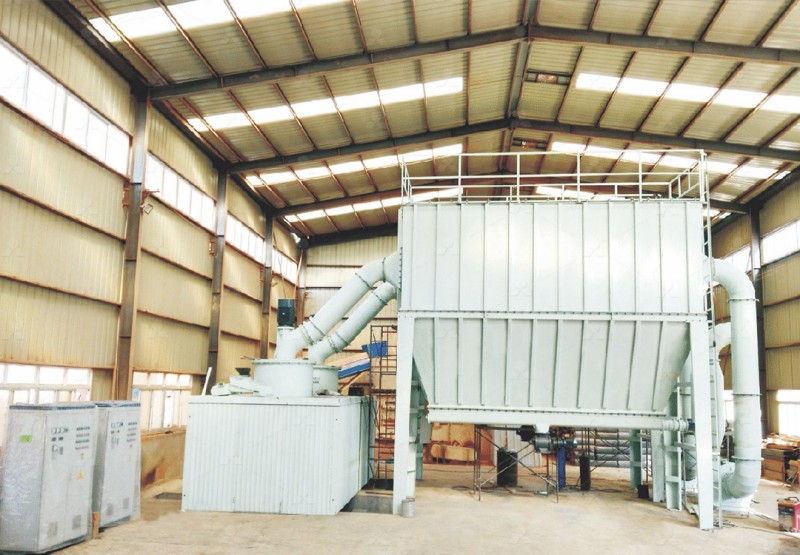
Colombian environmental regulations are tightening. Dust emissions must stay below 20 mg/Nm³. Older mills require expensive baghouse retrofits ($30,000-$80,000 USD). Both LUM and MW mills come equipped with efficient pulse dust collectors meeting international standards. The MW system includes silencers and noise reduction chambers, eliminating additional soundproofing costs.
Total Cost of Ownership: A Comparative Summary
For a 10 tph gypsum plaster plant operating 8,000 hours annually over 5 years:
| Cost Component | Ball Mill | Raymond Mill | LUM Vertical Mill | MW Ultrafine Mill |
|---|---|---|---|---|
| Initial CAPEX | $120,000 | $95,000 | $250,000 | $200,000 |
| 5-Year Energy Cost | $1,400,000 | $960,000 | $720,000 | $600,000 |
| 5-Year Maintenance | $200,000 | $150,000 | $90,000 | $75,000 |
| Total 5-Year Cost | $1,720,000 | $1,205,000 | $1,060,000 | $875,000 |
While advanced mills like LUM and MW have higher upfront costs, their total lifetime ownership is significantly lower due to energy and maintenance savings.
Recommendations for Colombian Plaster Manufacturers
For Colombian operations, the choice depends on scale and product focus:
- Small plants (1-5 tph): Raymond mills offer reasonable economics, but consider the MW Ultrafine Mill if targeting high-value specialty plasters.
- Medium plants (5-15 tph): The LUM Ultrafine Vertical Grinding Mill delivers optimal balance of capacity, energy efficiency, and product quality. Its multi-head powder separator ensures consistent fineness for premium plaster grades.
- Large plants (15-25 tph): The MW Ultrafine Grinding Mill‘s 40%% higher capacity vs. jet mills and 30%% energy consumption makes it the most cost-effective choice. Its dust-free, low-noise operation aligns with Colombian environmental standards.
LIMING’s digitalized manufacturing ensures consistent quality across all spare parts. With tens of CNC machine tools controlling cutting, bending, and machining, core components achieve high precision. This translates to reliable field performance and worry-free operation.
Final Takeaways
Grinding mill selection for Colombian gypsum plaster production is a strategic business decision. Advanced mills like LIMING’s LUM and MW series command higher initial prices but deliver superior total cost of ownership through lower energy consumption, reduced maintenance, and consistent product quality. As Colombia’s construction market continues expanding, investing in efficient grinding technology positions manufacturers for sustainable growth and competitive advantage.
Frequently Asked Questions (FAQs)
1. What is the ideal grinding mill capacity for a medium-sized Colombian plaster plant?
Most mid-sized Colombian operations processing natural or synthetic gypsum find that a mill with 8-12 tph capacity provides sufficient output while maintaining operational flexibility. The LUM Ultrafine Vertical Grinding Mill (5-18 tph range) is well-suited for this segment, allowing scalability as production grows.
2. How does feed moisture affect mill performance and cost?
Higher moisture content reduces grinding efficiency and increases energy consumption. For every 1%% increase in feed moisture above 8%%, grinding capacity decreases by approximately 5-7%%. Synthetic gypsum with 15%% moisture may require pre-drying or a mill with integrated drying capability. Both LUM and MW mills can handle moderate moisture levels when configured with hot air generators.
3. Can a single mill handle both natural gypsum and synthetic FGD gypsum?
Yes, modern mills like the MW Ultrafine Grinding Mill can process both feedstocks. However, synthetic gypsum’s finer particle size and higher moisture content may require adjustments to separator speed and grinding pressure. The MW mill’s adjustable fineness between 325-2500 mesh provides the flexibility needed for feedstock variations.
4. What are the typical delivery times and logistics for importing mills to Colombia?
Lead times from Chinese manufacturers like LIMING typically range 45-75 days from order. Shipping to Colombian ports (Buenaventura, Cartagena, or Barranquilla) takes 25-35 days. Total delivery time averages 3-4 months including customs clearance. It is advisable to order spare parts simultaneously to avoid delays during installation.
5. What is the expected payback period for investing in an energy-efficient mill?
For a medium-sized Colombian plant replacing a ball mill with a LUM or MW system, the energy savings alone often achieve payback within 18-24 months. When factoring in reduced maintenance labor and improved product quality commanding higher selling prices, payback can shorten to 12-18 months.
6. How does the MW mill’s dust collection system compare to local Colombian environmental standards?
The MW Ultrafine Grinding Mill’s pulse dust collector achieves emission concentrations below 10 mg/Nm³, which exceeds Colombian Resolution 909 of 2008 requirements (typically 20-50 mg/Nm³ depending on source category). The integrated silencer also meets Colombian noise regulations (Resolución 0627 de 2006) for industrial zones.
7. What maintenance training does LIMING provide for Colombian operators?
LIMING offers on-site commissioning support and operator training programs. For Colombian clients, this typically includes a 5-7 day training session covering mill operation, preventive maintenance procedures, and troubleshooting. Remote technical support is also available via video conferencing for ongoing assistance.
8. Can the LUM mill produce plaster with less than 1%% residual moisture?
Yes, the LUM Ultrafine Vertical Grinding Mill incorporates a hot air drying system that can reduce product moisture to 0.5%% or lower. This is critical for plaster applications where excess moisture causes setting time variability. The mill’s negative pressure operation ensures efficient moisture removal without dust leakage.
9. What is the warranty period for LIMING grinding mills shipped to Colombia?
Standard warranty is 12 months from date of commissioning or 18 months from port of departure, whichever comes first. Extended warranty options are available for an additional fee. The warranty covers manufacturing defects in materials and workmanship, excluding normal wear parts like grinding rollers and rings.
10. How do Colombian import duties affect the total landed cost?
Grinding mills fall under HS code 8474.20, with import duties to Colombia ranging 5-15%% depending on specific classification. VAT of 19%% applies on CIF value plus duties. Total landed cost typically adds 25-35%% to the FOB price. Engaging a customs broker specializing in industrial machinery helps optimize classification and reduce clearance delays.