
Energy-saving powder processing mill designed for cement raw materials construction mix in kenya
Introduction: The Kenyan Construction Sector and the Need for Efficient Grinding
Kenya’s construction industry is on a robust growth trajectory, fueled by ambitious infrastructure projects like the Nairobi Expressway, the Standard Gauge Railway, and a surge in affordable housing initiatives. This boom creates a massive demand for cement-based materials. However, the process of transforming raw materials like limestone, gypsum, and clay into fine cement powder is notoriously energy-intensive. Power costs in Kenya are among the highest in Africa, and the environmental scrutiny on industrial emissions is tightening. For a plant manager in Athi River or a project developer in Mombasa, the question is no longer just about throughput; it is about how to achieve the required fineness for cement raw mix while slashing energy bills and meeting strict emission standards.
This is where modern, energy-saving powder processing mills come into play. Traditional ball mills, while workhorses of the industry, are inefficient, consuming massive amounts of electricity and generating significant heat and noise. The shift is now towards advanced vertical roller mills and ultra-fine grinding technologies that offer a step-change in performance. In this article, we’ll explore a solution engineered specifically for the demanding conditions of the Kenyan market, focusing on a mill that delivers high capacity, low energy consumption, and a minimal environmental footprint.

Understanding the Challenge: Grinding Cement Raw Mix in Kenya
Producing cement raw meal involves grinding a precisely proportioned mixture of raw materials—typically limestone, clay, shale, and sand—into a fine, homogeneous powder. The fineness required for optimal clinker burning in a rotary kiln is usually in the range of 10-20% residue on a 90-micron sieve. Achieving this requires significant energy, often consuming 60-70% of the total electrical power used in the cement plant.
Kenyan cement producers face unique challenges. The quality of limestone can vary, and moisture content can fluctuate depending on the season in the Rift Valley. This demands a mill that is robust, flexible, and can handle varying feed sizes without compromising output. Furthermore, the industry is under pressure to lower its carbon footprint. An energy-saving mill not only reduces operational costs (OPEX) but also decreases Scope 2 emissions from purchased electricity. The right equipment must offer a balance between initial capital expenditure (CAPEX) and long-term operational savings, a calculation that is critical for the Kenyan financial model.
The Ideal Solution: Introducing the High-Efficiency Grinding Mill
Based on our extensive experience in designing grinding machinery for the most demanding markets, the MW Ultrafine Grinding Mill stands out as a prime candidate for cement raw mix preparation in Kenya. This isn’t just a mill; it is a system engineered for efficiency and environmental responsibility. Its design philosophy directly addresses the pain points of Kenyan operators: high power costs, maintenance downtime, and dust pollution.
Let’s break down why the MW series is a game-changer for Kenya’s construction material supply chain. The machine is capable of handling an input size of 0-20 mm, which is standard after primary crushing, and offers a capacity range from 0.5 to 25 tons per hour. This makes it suitable for both smaller blending stations and larger, centralized cement grinding units.
Key Feature: Low Energy Consumption and High Yield
Energy is the largest cost driver in cement grinding. The MW Ultrafine Grinding Mill has been specifically engineered to combat this. The newly designed grinding curves of the roller and ring significantly enhance grinding efficiency. Compared to a traditional jet mill, the system energy consumption is only 30%, while the production capacity is 40% higher. When compared to a ball mill, the yield is nearly doubled under the same power conditions. For a Kenyan plant running 24 hours a day, this translates to thousands of dollars saved in electricity costs per month.
Key Feature: Eco-Friendly Operation with Pulse Dust Collector
Kenya’s National Environment Management Authority (NEMA) has strict regulations regarding industrial dust emissions. The MW series comes standard with an efficient pulse dust collector and a muffler. This means that the entire milling system operates with near-zero dust pollution. The silencer reduces noise pollution, making it easier to comply with local workplace safety and community noise ordinances. The ‘green’ design of this mill ensures that your production line is future-proofed against tightening environmental laws.
Key Feature: Durability and Reduced Maintenance
Downtime is the enemy of profitability. The MW Ultrafine Grinding Mill features a unique design with no rolling bearings or screws inside the grinding chamber. This innovative approach eliminates the common issue of bearing seal failure or loose screws causing machine damage. The lubricating device is installed externally on the main shaft, allowing for lubrication without shutting down the machine. This means you can run the mill for 24 hours a day, every day, maximizing your return on investment.

How It Works: The Grinding Process in Detail
Understanding the working principle is key to trusting the technology. The motor drives the main shaft and turnplate via a reducer. This reducer drives dozens of rollers to rotate against the raceway of the ring. Material that has been crushed (e.g., by a hammer crusher) is transported into a hopper by an elevator. A vibrating feeder then evenly feeds the material to the central part of the upper turnplate. Centrifugal force pushes the material to fall onto the raceway of the ring where it is crushed into powder.
After being ground in the first raceway, the material moves to the second and third turnplates for progressive grinding. A blower inhales external air into the mill and carries the fine powder to the separator. The turbine in the separator returns coarse powder for re-grinding while allowing fine powder to pass into a cyclone collector as the final product. The air current, now clean, is exhausted through the blower and muffler after being purified by the filter. This closed-loop system is incredibly efficient and clean.
Tailoring the Solution for Cement Raw Mix and Construction Blends
For the specific production of cement raw mix and construction blends (like pozzolana or sand-cement mixes), the adjustable fineness feature of the MW series is critical. The product fineness can be adjusted between 325 and 2500 meshes. For raw meal preparation, operators can dial in the exact fineness required for optimal clinker reactivity. The cage-type powder selector, utilizing German technologies, ensures a screening rate that can achieve d97 ≤ 5μm in a single pass. This precision ensures that the chemistry of your raw mix is consistent, which is vital for high-quality cement production.
While the MW Ultrafine Grinding Mill is excellent for higher fineness requirements and lower tonnages, many large-scale cement plants require bulk processing of raw meal. For these operations, we recommend our LM Vertical Grinding Mill. The LM mill is a larger, heavy-duty machine that integrates crushing, drying, grinding, and classifying. Its capacity can reach up to 340 tons per hour, making it ideal for the main grinding line in a large cement plant. Its key advantage is a 30-40% reduction in energy consumption compared to a ball mill, along with a 50% smaller footprint. The LM series is the workhorse for high-volume, continuous production.
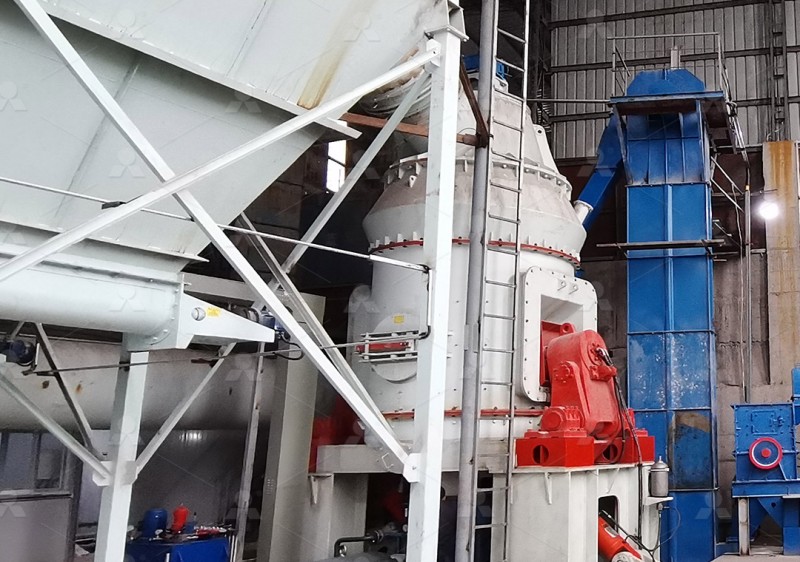
Case Study Context: Why Kenyan Plant Managers Choose This Technology
Imagine a facility in the coastal region of Kenya. They need to grind gypsum and limestone for use in a drymix mortar production line. They need a fineness of 800 mesh but have limited power availability and strict noise regulations. The MW Ultrafine Grinding Mill would be the perfect choice. Its low power draw (just 30% of a jet mill) keeps the generator or grid load low, while the integrated silencer keeps the noise levels down. The fan and dust collector system ensures no white dust clouds escape the building.
Conversely, for a major cement manufacturer expanding their grinding station near Nairobi, the LM Vertical Grinding Mill offers the necessary throughput (over 50 tph) for raw meal, with the durability to run continuously without frequent roller changes. The hydraulic pressure system allows for precise control of grinding force, adapting to different hardnesses of limestone without causing vibration.
Supply Chain and Spare Parts Assurance in Kenya
A major concern for any Kenyan industrial buyer is the availability of spare parts. A mill is a long-term investment; if a roller shell or liner plate needs replacement, you cannot afford to have the machine idle for weeks. Our company, LIMING, takes full responsibility for every machine produced. We provide a sufficient supply of original spare parts and technical services. We understand the logistics of the Kenyan market and maintain a buffer stock of critical wear parts (like roller shells and grinding rings) for both the MW and LM series. This worry-free operation is a fundamental part of our service promise. Your production continuity is our priority.
Conclusion: The Strategic Investment for Kenyan Construction
In the fast-paced Kenyan construction market, choosing the right grinding technology is a strategic decision. The MW Ultrafine Grinding Mill represents a leap forward in marrying high output with low energy consumption and environmental stewardship. It is designed not just to grind material, but to lower your cost per ton and ensure compliance with local regulations.
Whether you are producing specialized construction blends or handling bulk cement raw meal, the combination of the MW series (for finer, lower-capacity work) and the LM series (for high-capacity, primary grinding) covers the full spectrum of needs. By investing in these modern, energy-saving mills, Kenyan construction material producers can reduce their carbon footprint, improve their bottom line, and contribute to the nation’s infrastructure development with confidence. The future of grinding in Kenya is not just about power; it is about smart power.

Frequently Asked Questions (FAQ)
- What specific energy savings can I expect when switching from a traditional ball mill to an MW Ultrafine Grinding Mill for cement raw mix?
When grinding to similar fineness, the MW system can save approximately 30-40% more energy than a ball mill and its energy consumption is only 30% of a jet mill. This is due to the superior grinding curves and efficient powder selection technology. - Can the MW Ultrafine Grinding Mill handle the high moisture content of limestone found in the rainy season in Kenya?
The MW series is designed primarily for dry materials (moisture <5%). For high moisture feeds, we recommend integrating a dryer before the mill or using the LM Vertical Grinding Mill, which has a strong hot air drying capability built into the system. - Is it expensive to maintain the grinding rollers and rings of these mills in Kenya?
No. While they eventually wear, the wear parts are made of high-chrome alloy. Our ‘reversible structure’ (available on models like the LUM) allows you to turn the roller to use the unworn side, doubling the lifespan. We also maintain a stock of spare parts in our regional warehouse to minimize shipping delays. - What is the required power grid connection for the MW Mill? Can it run on generators common in Kenyan industrial zones?
The motor size is relative to capacity. A typical 10 tph setup requires around 150-200 kW of installed power. This is suitable for standard industrial generators. We can also provide variable frequency drives (VFDs) to optimize power usage and provide a softer start for generators. - I am making a specific construction mix (Tile Adhesive). Which fineness setting should I use on the MW Mill?
For applications like tile adhesive or plaster, which require high fineness, the MW series is ideal. You can easily adjust the fineness between 325 and 2500 meshes. We recommend starting at around 600-800 mesh (d97) for tile adhesive to achieve the right balance of workability and strength. - How noisy is the LM Vertical Grinding Mill compared to a ball mill?
The LM mill is significantly quieter. Because the grinding roller does not directly contact the grinding table (it grinds on a material bed), the metal-on-metal noise is eliminated. The system also operates under negative pressure, which helps contain noise. Typical noise levels are around 80-85 dB(A), much lower than a ball mill. - What is the lead time for installing a new MW Ultrafine Grinding Mill in Kenya?
Lead time depends on the plant configuration. A standard unit takes approximately 60-90 days for delivery after order confirmation. Installation and commissioning by our engineers can be completed in 2-3 weeks, depending on civil works preparation.