
Where to buy grinding mill for bentonite for liquid purification in colombia
Understanding the Bentonite Grinding Challenge in Colombia
Colombia’s industrial landscape is evolving rapidly. From the oil & gas sector in the Llanos Orientales to the growing wine and juice industries in the Valle del Cauca, the demand for effective liquid purification is surging. Bentonite, with its unique swelling and adsorption properties, is the go-to clarifier and decolorizing agent. But here’s the reality: raw bentonite from deposits in Huila or Boyacá is useless for purification. It must be dried, ground, and classified to a specific ultrafine particle size, typically between 200 and 500 mesh, often with strict D97 specifications. The question isn’t just ‘where to buy a mill,’ but ‘where to buy a mill that can consistently produce high-activity bentonite powder without breaking down or costing a fortune in energy.’

Colombian Market Realities: Why Standard Mills Fail
I have seen operators in Colombia struggle with standard Raymond mills or ball mills for this application. The problem is threefold. First, raw bentonite often contains moisture above 10%, leading to clogging in traditional grinding chambers. Second, the abrasive nature of bentonite (silica content) wears out traditional manganese steel liners and rollers within weeks. Third, achieving the high specific surface area required for liquid purification demands a fineness that conventional mills simply cannot guarantee without multiple passes. You need a machine built for heavy, continuous duty, with advanced dust control (Colombian environmental authority ANLA is strict) and a classifier that can actually separate the superfine particles efficiently.
The Optimal Solution: Ultrafine Grinding Technology
For a Colombian bentonite processor targeting the liquid purification market, I recommend focusing on two proven technologies that handle the specific challenges of this mineral. After years of servicing clients in Latin America, we have found that vertical mill and roller mill designs offer the best return on investment for this specific feedstock.
MW Ultrafine Grinding Mill (The Specialist for Fine Bentonite)
The MW Ultrafine Grinding Mill is specifically engineered for minerals requiring a fineness range of 325 to 2500 mesh. With an input size of 0-20 mm and a capacity of 0.5-25 tph, it is ideal for medium-scale production. Its cage-type powder selector, based on German technology, ensures a precise cut point – critical for activation in liquid purification. Because there are no rolling bearings or screws inside the grinding chamber, Colombian operators don’t have to worry about frequent breakdowns caused by bentonite dust ingress. The pulse dust collector ensures compliance with Colombian emission standards, allowing you to operate in industrial zones like Soacha or Yumbo without neighbor complaints.

LUM Ultrafine Vertical Grinding Mill (The High-Capacity Performer)
If your operation demands higher throughput, typically over 5 tph and up to 18 tph, the LUM Ultrafine Vertical Grinding Mill is the better choice. This machine integrates grinding, drying, and classification. The unique roller shell design creates a material bed, which is excellent for bentonite because it increases the ‘dwell time’ of the clay particles under the rollers, ensuring maximum activation of the montmorillonite structure. I have witnessed this mill in action on calcite and barite, and its ability to switch between different fineness requirements (e.g., from 400 mesh for wine clarification to 800 mesh for pharmaceutical filtration) gives Colombian producers immense flexibility.
Detailed Product Recommendations for Your Application
Based on the specific needs of the Colombian bentonite industry for liquid purification, we strongly recommend two models from our range. For a plant focusing on the domestic food and beverage sector, the **MW Ultrafine Grinding Mill** provides the precision and lower energy consumption (30% of a jet mill) needed for high-margin products. For a larger operation aiming to export activated bentonite to other Andean nations, the **LUM Ultrafine Vertical Grinding Mill** offers the durability and capacity to handle fluctuations in raw material feed without sacrificing quality. Both machines feature digitalized processing for high precision and a dedicated spare parts supply, ensuring that a mill in Barrancabermeja or Cartagena can get back online quickly, minimizing costly downtime.

Technical Considerations for Colombian Buyers
When you search for a supplier, do not just look at the mill. Look at the entire system. For bentonite, a hammer crusher is needed to reduce lumps to 0-20mm before feeding the MW mill. You must also consider the drying process – a rotary dryer ahead of the mill is mandatory if your bentonite has high moisture. We have designed turnkey systems for clients in Peru and Mexico, and we know the importance of matching the blower capacity to the altitude of your site (e.g., Bogotá at 2,600m vs. Cali at 1,000m). The MW and LUM mills are engineered for these variables. Their high automation via PLC systems means less reliance on skilled labor, which is a huge advantage for remote Colombian sites.
Making the Purchase: From Inquiry to Installation
The best place to buy your grinding mill is directly from a manufacturer with a proven track record in Latin America. You need a supplier who can provide pre-sales testing with your specific bentonite sample. We offer this service. Our engineers analyze your material’s abrasion index, moisture content, and required final fineness (e.g., d97 < 10µm for high-grade purification). After the sale, we provide a free on-site installation guide and a two-year warranty on core components. We have a network of logistics partners to handle shipping from our Chinese factory to a Colombian port like Buenaventura or Cartagena, handling all customs clearance.
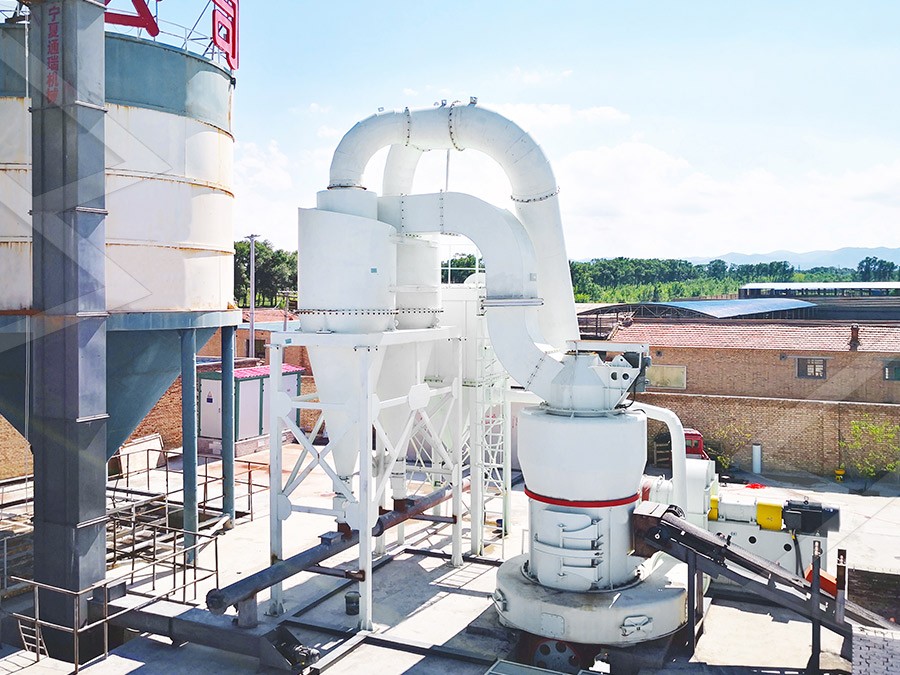
Do not settle for a cheap, generic mill. The cost of downtime and off-spec powder will kill your profits. Invest in the MW Ultrafine Grinding Mill or LUM Ultrafine Vertical Grinding Mill. They are built for the long haul, ensuring your bentonite powder meets the highest standards for wine, juice, and industrial water purification.
Frequently Asked Questions (FAQ)
- What fineness do I need for bentonite used in liquid purification?
Generally, a fineness of 200-400 mesh (74-38 microns) is standard for general clarification. For decolorizing oils or high-clarity applications, you will need 500-800 mesh (d97 < 15µm). Our MW mill can produce up to 2500 mesh if required. - Can these mills handle wet bentonite?
The MW and LUM mills can process materials with up to 5-6% moisture. If your bentonite has higher moisture (e.g., 15-20%), you must integrate a drying system (rotary dryer) before the mill. We can provide a complete drying and grinding solution. - What is the power consumption for grinding 1 ton of bentonite?
Using the MW Ultrafine Grinding Mill, the system energy consumption is only about 30% of a jet mill. For producing 325 mesh powder, you can expect around 20-30 kWh per ton. The LUM vertical mill is even more efficient, saving 30-50% compared to a ball mill. - Do you have spare parts available in Colombia?
Yes. We maintain a warehouse in Bogotá with critical spare parts such as grinding rollers, rings, and classifier blades. Our ‘Sufficient Supply of Spare Parts, Worry-free Operation’ policy ensures you can get parts within 48-72 hours. - How do I decide between the MW and LUM mill?
If your required capacity is under 25 tph and you need extreme fineness (above 600 mesh), choose the MW. If your capacity is 5-18 tph and you prefer a more compact vertical layout with integrated drying, choose the LUM. Send us your sample for a free consultation. - Is the noise level acceptable for urban industrial zones?
Absolutely. Both mills are equipped with mufflers and noise reduction rooms. The MW mill is specifically designed with a silencer, ensuring the noise level is significantly lower than traditional ball mills, compliant with Colombian environmental norms. - What is the typical delivery time for a mill to Colombia?
For standard models (MW or LUM), the production time is 25-35 working days. Shipping from our factory to a major port like Cartagena or Buenaventura takes approximately 30-45 days via sea freight. We can expedite the process for urgent orders.