
How to optimize gypsum processing with grinding mill for cement additive in jamaica
Introduction: The Growing Demand for Gypsum in Jamaica’s Cement Industry
Jamaica’s construction sector has been steadily expanding, driving an increased demand for cement and its key additive—gypsum. Gypsum, primarily calcium sulfate dihydrate, is added to cement clinker to regulate setting time and improve workability. However, processing gypsum efficiently in Jamaica’s tropical climate, with its high humidity and occasional rainfall, poses challenges. Raw gypsum often contains moisture levels above 10%, which can clog traditional grinding equipment and reduce throughput. Optimizing gypsum processing requires selecting the right grinding mill, understanding material properties, and tailoring operational parameters. This article provides a professional guide on how to achieve high-efficiency gypsum grinding for cement additive production in Jamaica, leveraging advanced mill technologies to overcome local conditions.
Understanding Gypsum Characteristics and Processing Requirements
Gypsum is a soft mineral (Mohs hardness of 2) with a tendency to generate heat during grinding due to its dehydration property. When heated above 60°C, gypsum loses water molecules and converts to hemihydrate (plaster of Paris), which can affect cement quality. Therefore, temperature control is critical. For cement additive applications, the target fineness is typically 325 mesh (45 microns) with a specific surface area of 300-400 m²/kg. The moisture content should be reduced to below 1% before or during grinding. In Jamaica, where ambient humidity often exceeds 70%, drying is an essential pre-step. Combining drying and grinding in a single system can significantly reduce operational costs.
Selecting the Right Grinding Mill for Gypsum in Jamaica
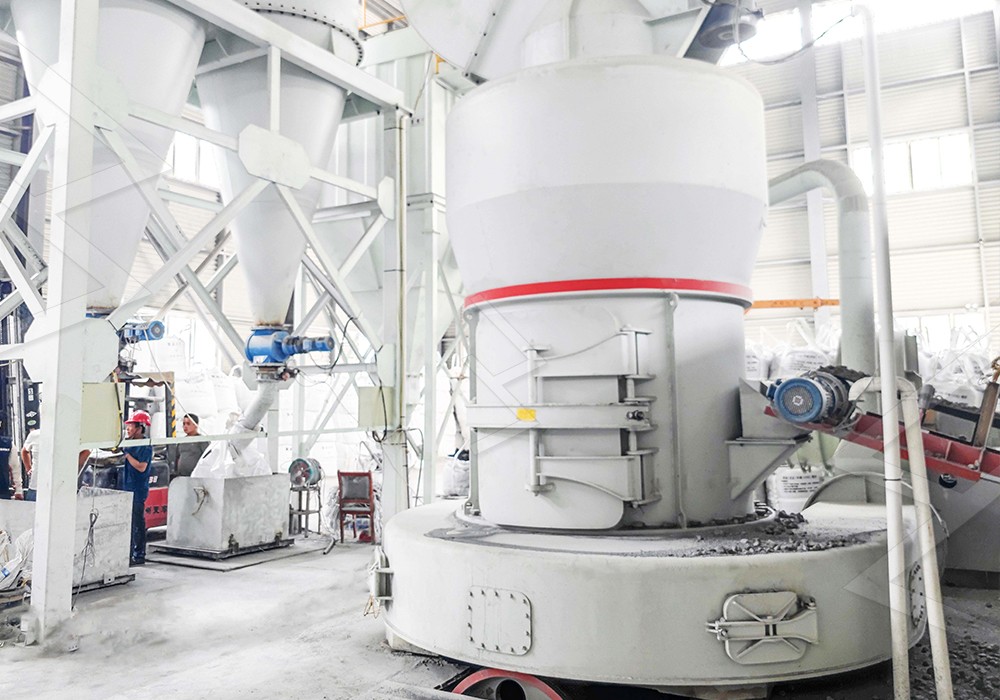
Choosing the appropriate mill depends on throughput capacity, feed size, moisture level, and desired fineness. For medium to large-scale operations (5-25 tph), the LUM Ultrafine Vertical Grinding Mill is an ideal solution. Designed with Taiwan grinding roller technology and German powder separation, it handles gypsum feed up to 10 mm and produces fineness from 325 to 2500 mesh. Its vertical design integrates drying, grinding, and classifying, reducing energy consumption by 30-50% compared to ball mills. For smaller capacities (0.5-25 tph), the MW Ultrafine Grinding Mill offers flexibility. It accepts feed up to 20 mm and achieves fineness down to d97≤5μm. Both mills feature pulse dust collectors and noise reduction systems, meeting Jamaican environmental standards.

Optimizing Mill Parameters for Gypsum Grinding
To achieve maximum efficiency, adjust the following parameters:
- Grinding Pressure: For gypsum, start with a hydraulic pressure of 8-12 MPa. Over-pressurizing may cause excessive heat and dehydration.
- Classifier Speed: Adjust the rotor speed to control product fineness. For 325 mesh cement additive, set the classifier to 120-150 rpm.
- Airflow and Temperature: Use hot air at 80-120°C to dry moisture efficiently without overheating gypsum. The LUM mill’s PLC system allows precise control.
- Feed Rate: Maintain a steady feed within the mill’s rated capacity (e.g., 5-18 tph for LUM). Overfeeding leads to pressure spikes and under-grinding.
Practical Tips for Reducing Downtime and Wear in Humid Climates
Jamaica’s coastal areas expose equipment to salt air, accelerating corrosion. Use stainless steel cyclones and dust collector components where possible. Both the MW and LUM mills have no rolling bearings or screws in the grinding chamber, eliminating common failure points. The lubricating device on the main shaft is external, allowing maintenance without stopping production—perfect for 24-hour operations. Replace roller shells and liners every 6-12 months depending on throughput. Keep spare parts like grinding rollers and separator blades in stock to minimize downtime. LIMING provides original spare parts globally, ensuring worry-free operation.

Energy Efficiency and Environmental Compliance
Energy costs in Jamaica are relatively high due to reliance on imported oil. The LUM Vertical Mill reduces energy consumption by 30-50% compared to ball mills, translating to significant savings. The MW Mill uses only 30% of the energy of a jet mill for the same output. Both mills are equipped with efficient pulse dust collectors, ensuring zero dust emissions. The noise level is kept below 85 dB with silencers and enclosures. This aligns with Jamaica’s National Environment and Planning Agency standards. Digital numerical control machining of core parts guarantees precision and reliability.
Case Study: Implementing LUM Mill in a Jamaican Cement Plant
A major cement producer in Kingston upgraded from a ball mill to the LUM Ultrafine Vertical Grinding Mill. The feed gypsum had 8-12% moisture and particle size of 5-8 mm. After installing the LUM mill, the plant achieved 12 tph of finished product at 325 mesh with 0.5% residual moisture. Energy consumption dropped from 45 kWh/t to 28 kWh/t. The operator reported a 40% reduction in maintenance costs due to the reversible roller structure and easy access to internal parts. The built-in drying system eliminated the need for a separate dryer, cutting capital expenditure.

Conclusion: The Path to Efficient Gypsum Processing
Optimizing gypsum processing in Jamaica requires a mill that handles moisture, delivers precise fineness, and offers low energy consumption. LIMING’s MW Ultrafine Grinding Mill (0.5-25 tph) and LUM Ultrafine Vertical Grinding Mill (5-18 tph) are top choices for cement additive applications. With features like German separator technology, pulse dust collection, and external lubrication, these mills ensure stable operation under local conditions. Investing in the right equipment not only improves profitability but also supports sustainable construction practices in Jamaica.
Frequently Asked Questions (FAQ)
- What is the ideal fineness for gypsum used as cement additive? Typically 325 mesh (45 microns) is standard, but some specifications require up to 400 mesh. Our MW mill can adjust from 325 to 2500 mesh.
- Can these mills handle high-moisture gypsum directly? Yes, both MW and LUM mills integrate drying and grinding. Hot air at up to 120°C reduces moisture from 12% to under 1% during grinding.
- How often should grinding rollers be replaced for gypsum? With gypsum’s low abrasion, rollers last 12-18 months under continuous operation. The reversible structure in LUM mill allows double use.
- What is the power consumption of MW mill versus a ball mill? MW mill uses 30% less energy than a jet mill and 50% less than a ball mill. For gypsum, expect 25-35 kWh per ton.
- Do these mills require special foundation work? The vertical design has a smaller footprint and lower weight. A concrete slab with vibration dampening is sufficient. Outdoor installation is possible.
- How does the pulse dust collector work in humid conditions? It uses compressed air pulses to clean filter bags. In Jamaica’s humidity, we recommend Teflon-coated bags to prevent clogging.
- Can I process other materials like limestone with the same mill? Absolutely. Both mills are versatile for calcite, dolomite, barite, and marble. Quick changeover requires adjusting classifier speed and pressure.
- What spare parts should I keep in stock? Grinding rollers, ring liners, separator blades, and filter bags are critical. LIMING offers original parts with global shipping to Jamaica.
- Is operator training provided? Yes, we provide on-site training in Jamaica and remote support. The PLC system simplifies operation with automated start/stop sequences.
- What warranty comes with these mills? Standard warranty covers 12 months for main components. Extended warranty plans are available upon request.