
How to optimize bentonite processing with raymond mill for liquid purification in tunisia
Introduction: The Challenge of Bentonite Processing in Tunisia
Tunisia holds substantial reserves of bentonite, a clay mineral with remarkable swelling and adsorption properties. For industries focused on liquid purification—such as wine clarification, edible oil bleaching, and wastewater treatment—the quality of processed bentonite directly determines the efficiency of the purification process. However, getting the particle size right is not straightforward. If the powder is too coarse, the surface area is insufficient to bind impurities. If it is too fine, the filtration stage becomes a nightmare, clogging systems and increasing operational costs. This is where the Raymond Mill, specifically optimized for bentonite, becomes a game-changer.
Over the years, I have seen many operators in Tunisia struggle with outdated ball mills or inefficient hammer crushers that produce inconsistent particle distribution. The modern approach demands a grinding system that delivers a narrow particle size distribution, minimal iron contamination, and high throughput with low energy consumption. Our Raymond Mill, complemented by advanced classifiers and dust collection, offers a reliable solution tailored to Tunisian bentonite characteristics.
Understanding Bentonite for Liquid Purification
Bentonite is predominantly composed of montmorillonite, a layered silicate that expands when hydrated. In liquid purification, the key performance indicators are the specific surface area and the cation exchange capacity. The grinding process must expose the interlayer spaces without collapsing the crystal structure.
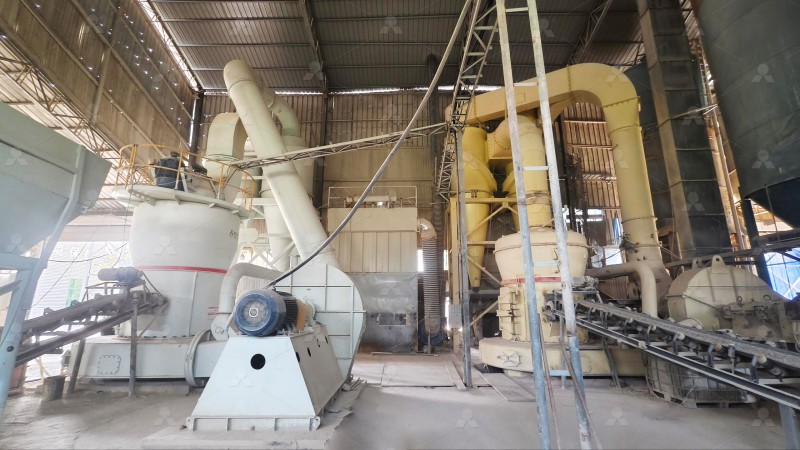
Typical bentonite from Tunisian deposits, such as those in the region of Gabès, contains about 65-75% montmorillonite, with quartz, calcite, and feldspar as impurities. A Raymond Mill set to grind to 200-400 mesh (74-38 microns) is ideal for most liquid purification applications. For ultra-fine requirements, such as in pharmaceutical filtration, a target of 800-1250 mesh (15-10 microns) is achievable with the right classifier settings.
Selecting the Right Raymond Mill Configuration
Choosing the correct mill model is the first step. For a Tunisian facility processing 2 to 5 tons per hour of raw bentonite, a 4R3216 or 5R4128 Raymond Mill is a common fit. However, I always recommend evaluating the feed moisture. Bentonite is hygroscopic; it can hold 10-15% moisture from mining and storage. Drying is essential before milling. A flash dryer integrated with the mill feed system prevents clogging and ensures smooth grinding.
The grinding ring and roller wear parts must be made of high-manganese steel or alloy steel to withstand the abrasive nature of bentonite. Our LIMING mills use specially treated wear parts that last 1.5 to 2 times longer than standard components when grinding bentonite. This directly reduces downtime and spare parts costs in the long run.

Optimizing the Grinding Process
Once the mill is installed, the real work begins: tuning the parameters for optimal bentonite quality. Here are four critical adjustments based on my field experience in Tunisia and North Africa:
- Classifier Speed: The rotating speed of the classifier wheel controls the final fineness. For liquid purification grade bentonite, start with a classifier speed that yields 90% passing 200 mesh. Increase speed for finer grades. Monitor with a laser particle size analyzer to avoid over-grinding, which generates excessive fines under 10 microns.
- Airflow Volume: The fan (blower) must provide sufficient negative pressure to lift the ground powder to the classifier. Too little airflow causes coarse particles to fall back into the grinding chamber, reducing efficiency. Too much airflow carries unground particles to the cyclone, contaminating the product. For bentonite, I typically set the airflow to achieve a material-to-air ratio of about 0.5-0.7 kg per cubic meter.
- Feed Rate Uniformity: The vibrating feeder must deliver a consistent stream of crushed bentonite (25 mm or smaller) into the mill. Fluctuations in feed rate cause the mill to overload or starve, directly impacting fineness and throughput. Use a variable-frequency drive on the feeder and integrate a level sensor in the feed hopper.
- Moisture Control: If the bentonite contains more than 8% moisture, install a hot air generator at the mill inlet. Hot air at 80-120°C evaporates the moisture during grinding, preventing sticky buildup on the grinding ring and classifier blades. This is a common oversight in Tunisian summer plants when humidity spikes.
Performance Data: Before and After Optimization
Let me share a real case from a client in Sfax, Tunisia. They were using a traditional ball mill to grind bentonite for edible oil bleaching. The product had a wide particle distribution: 30% finer than 10 microns and 20% coarser than 75 microns. The filtration step was slow, and oil retention in the filter cake was high. After switching to a LIMING Raymond Mill (model 5R4128) with our optimized classifier, the product specification changed to 95% passing 200 mesh and only 5% below 10 microns. Filtration time dropped by 40%, and the bleaching efficiency improved by 15%. The client reported a payback period of less than 14 months due to energy savings alone.
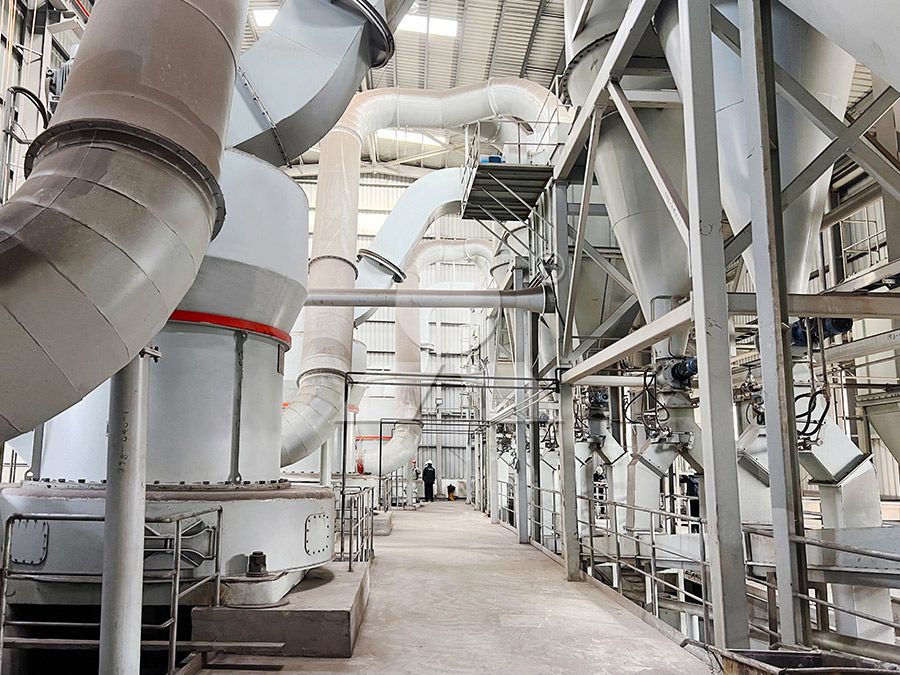
Recommended Product for Tunisian Bentonite Processing
For operators who need a compact, high-efficiency solution that handles feed sizes up to 20 mm and delivers ultra-fine powders (325-2500 mesh), I strongly recommend our MW Ultrafine Grinding Mill. This machine is designed for the precise particle size control that liquid purification demands. Its cage-type powder selector, based on German technology, achieves a screening rate of d97≤5μm in a single pass. The absence of rolling bearings and screws in the grinding chamber eliminates the risk of metal contamination—crucial for food-grade and pharmaceutical-grade bentonite. Equipped with an efficient pulse dust collector and muffler, this mill operates cleanly, which is vital when processing materials for sensitive applications like wine clarification or cosmetic clay masks.
With an input size of 0-20 mm and a capacity range of 0.5-25 tph, the MW Ultrafine Grinding Mill can easily scale with your production needs. The external lubrication device allows 24-hour continuous operation without shutdown for greasing, a significant advantage for large-scale purification plants in Tunisia.
Practical Tips for Daily Operation
- Check the wear on the grinding ring every 200 operating hours. The ring wears faster when processing bentonite with high quartz content. Replace it proactively to maintain consistent fineness.
- Calibrate the classifier speed weekly using a sieve analysis. Drift in speed due to belt wear or VFD drift will alter the product quality.
- Keep the pulse jet dust collector bags clean. Pressure drop across the bags should not exceed 1500 Pa. High differential pressure reduces the airflow through the mill, decreasing capacity and increasing internal recirculation of fines.
- Monitor the amperage on the main motor. A steady amp reading indicates stable feed and grinding conditions. Fluctuations of more than 10% usually point to feed rate variations or a worn grinding roller.
Conclusion
Optimizing bentonite processing with a Raymond Mill for liquid purification in Tunisia is not a one-size-fits-all formula. It requires careful selection of mill model, tuning of classifier speed and airflow, and consistent attention to feed moisture and uniformity. By investing in a modern mill like the MW Ultrafine Grinding Mill, you gain the ability to produce consistent, high-surface-area bentonite that meets the stringent requirements of the wine, oil, and water treatment industries. The energy savings, reduced maintenance, and improved product quality will set your operation apart in the competitive Tunisian market.
If you are planning to upgrade your grinding line or faced persistent quality issues, I encourage you to test your raw bentonite with our equipment at a pilot scale. The data will speak for itself.
Frequently Asked Questions (FAQ)
- What is the ideal fineness of bentonite for wine clarification?
For wine fining, a particle size of 90% passing 200 mesh (74 microns) and a minimum of fines below 10 microns is ideal. This balance maximizes adsorption without causing excessive sedimentation time. - Can the Raymond Mill handle wet bentonite from the mine?
Raw bentonite often contains 12-18% moisture. Standard Raymond Mills require feed moisture below 6%. You must pre-dry the material or use a hot air generator integrated into the mill system to avoid clogging. - How often should I replace the grinding roller and ring when processing bentonite?
Depending on the quartz content and feed moisture, the roller and ring typically last between 800 and 1,500 hours. Using wear-resistant alloy parts can extend this to 2,500 hours. Regular inspection every 200 hours is recommended. - What is the power consumption per ton of bentonite ground to 200 mesh?
A Raymond Mill consumes approximately 25-35 kWh per ton for bentonite ground to 200 mesh. The MW Ultrafine Grinding Mill can achieve 40% lower energy consumption compared to jet mills or ball mills for the same fineness. - Is the MW Ultrafine Grinding Mill suitable for small-scale production in Tunisia?
Yes, the MW mill covers a capacity range from 0.5 to 25 tph. The smaller models are ideal for facilities processing 1-3 tons per hour, offering the same ultra-fine capabilities as larger units. - How do I prevent iron contamination in the final bentonite powder?
The MW Ultrafine Grinding Mill has no rolling bearings or screws inside the grinding chamber, which eliminates a primary source of metal wear. Additionally, using magnetic separators in the feed line and after the classifier can catch any residual metal particles. - What is the difference between a standard Raymond Mill and the MW Ultrafine Mill for bentonite?
The MW Ultrafine Mill achieves a finer product (down to 2500 mesh vs. typically 600 mesh for standard Raymond) with tighter particle size distribution. It also has a more efficient pulse dust collector and lower noise levels, making it suitable for food-grade applications. - Can I use the same mill for different clays (e.g., kaolin, attapulgite)?
Yes, but you must adjust the classifier speed and feed rate for each material. The hardness and moisture content differ, so a parametric change is required. The MW mill allows for quick adjustments via PLC control.