
Gypsum raymond mill for construction materials in egypt
Gypsum Raymond Mill for Construction Materials in Egypt: A Comprehensive Guide
Egypt’s construction sector is experiencing a robust expansion, driven by large-scale infrastructure projects, new urban communities, and a growing demand for modern housing. Within this thriving market, gypsum plays a pivotal role as a fundamental construction material, used extensively in plaster, drywall, cement additives, and decorative elements. The efficiency, quality, and cost-effectiveness of gypsum processing directly influence the success of downstream applications. For Egyptian processors seeking to optimize their production lines, understanding the capabilities of modern grinding technology, particularly the Raymond mill and its advanced derivatives, is essential.
This article delves into the specifics of gypsum Raymond milling solutions tailored for the Egyptian market, highlighting key equipment, operational advantages, and the strategic benefits of upgrading to next-generation grinding systems.
The Role of Gypsum in Egypt’s Construction Boom
Egypt possesses vast reserves of high-quality gypsum rock, primarily located along the Red Sea coast and in the Sinai Peninsula. This natural advantage has fostered a strong local industry. However, the margin for success lies not just in having the raw material, but in processing it efficiently. Traditional methods often fall short in terms of energy consumption, product fineness, and environmental compliance. This is where the transition to specialized Raymond mills becomes critical.
A standard Raymond mill, with its proven pedigree, is designed for the fine grinding of non-flammable and non-explosive materials like gypsum. Its operation is straightforward: raw gypsum is fed into the grinding chamber, where grinding rollers oscillate outward to press against a stationary ring. A shovel blade scoops the material between the roller and the ring, achieving the desired particle size. The ground powder is then carried by an air stream to a classifier, where fines are collected and coarse particles are returned for further grinding. The result is a consistent, high-quality powder ideal for construction-grade plasters and boards.
Why Upgrade? Addressing Local Challenges
Egyptian gypsum processors face several specific challenges. High ambient temperatures and occasional humidity can affect material handling. Energy costs are a significant operational expense. Furthermore, stricter environmental regulations require dust-free, low-noise operations. Traditional Raymond mills, while reliable, may struggle to meet these modern demands without significant auxiliary equipment.
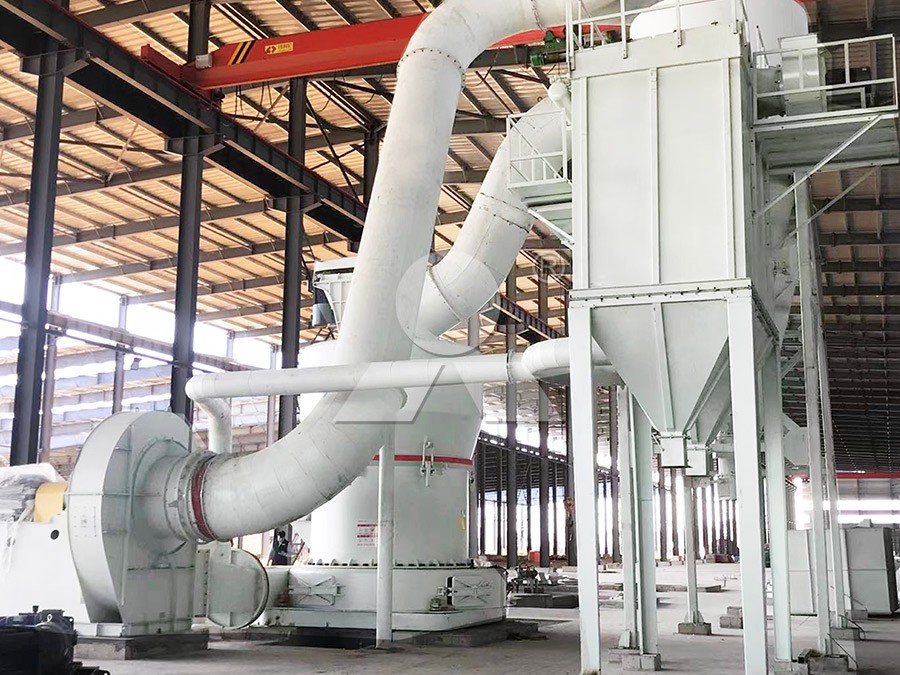
Upgrading to a system like the MW Ultrafine Grinding Mill addresses these issues head-on. While a standard Raymond mill handles basic fineness requirements (typically 80-325 mesh), the MW Ultrafine Grinding Mill offers superior efficiency and a much broader fineness range, from 325 up to 2500 mesh. This flexibility allows Egyptian manufacturers to diversify their product lines, producing everything from standard building plaster to high-value, ultra-fine gypsum for specialized industrial fillers. The MW mill’s design, featuring newly engineered grinding curves, can boost production capacity by up to 40% compared to traditional methods, directly translating to lower energy consumption per ton of finished product—a critical factor given Egypt’s energy landscape.

The MW Ultrafine Grinding Mill: A Game Changer for Gypsum
The MW Ultrafine Grinding Mill represents a significant leap forward from the classic Raymond mill. It is not merely an incremental improvement but a re-engineering of the grinding principle for the ultra-fine market. For an Egyptian gypsum processor, the direct benefits are tangible:
- Higher Yielding, Lower Energy Consumption: The newly designed grinding curves of the rollers and ring directly enhance efficiency. With the same power input, the production capacity exceeds that of jet mills and stirred mills by 40%, and yields are double that of ball mills. System energy consumption is only 30% of a jet mill, providing massive operational savings.
- Adjustable Fineness (325-2500 mesh): The mill’s German-engineered cage-type powder selector allows for precise powder separation. This adjustability means one machine can produce a coarse plaster powder in the morning and a high-value, ultra-fine filler powder in the afternoon, simply by adjusting settings.
- Worry-Free Operation: The grinding chamber contains no rolling bearings or screws. This eliminates common failure points like bearing damage or loose screws. The external lubricating device allows for continuous, 24-hour operation without shutdown for maintenance.
- Eco-Friendly Design: The integrated, high-efficiency pulse dust collector ensures zero dust pollution. Combined with mufflers and noise elimination rooms, the entire system operates well within stringent environmental standards, a growing necessity for cement and gypsum plants near urban areas.
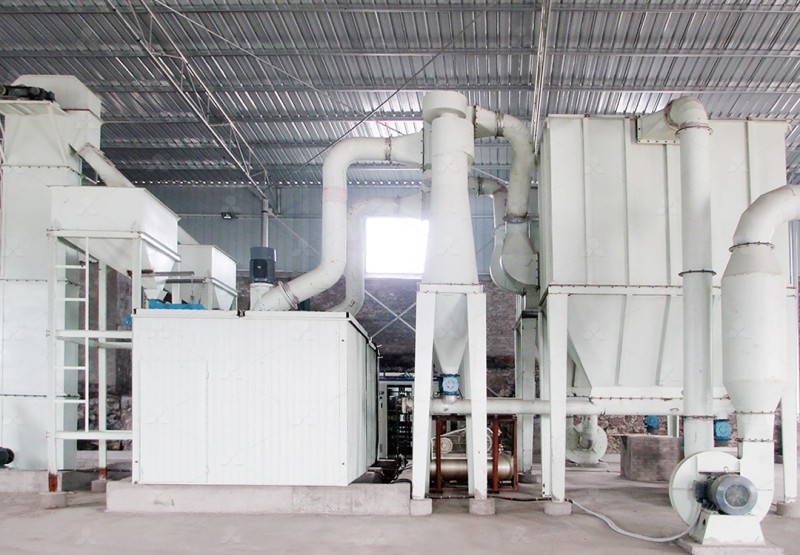
For a large-scale operation requiring very high throughput with a focus on standard fineness materials, the LUM Ultrafine Vertical Grinding Mill presents another excellent option. It integrates ultra-fine grinding, grading, and conveying into a single, compact unit. Its multi-head powder separating technology and PLC control system allow for precise control over grinding pressure and speed, reducing energy consumption by 30-50% compared to common mills. The reversible structure of the roller makes maintenance quick and safe, minimizing costly downtime.
Optimizing Your Gypsum Grinding Line in Egypt
Selecting the right mill involves analyzing your specific needs. If your market demands high volumes of standard 100-200 mesh gypsum for board and plaster, a robust LM Vertical Grinding Mill or a high-capacity Raymond Mill is a solid investment. However, if you are targeting the fast-growing market for high-grade, ultra-fine gypsum used in self-leveling compounds, joint compounds, and industrial fillers, the MW Ultrafine Grinding Mill is the definitive choice. Its ability to achieve a d97≤5μm screening rate in a single pass is unmatched, ensuring a superior product that commands a premium price.
Furthermore, the digitalized processing and numerical control used in manufacturing these mills ensure high precision and consistent quality for all core parts. This, combined with LIMING’s commitment to providing original spare parts and technical services, guarantees worry-free operation for years to come. The investment in a high-quality mill from a reliable manufacturer like LIMING is not just an equipment purchase; it is a strategic move to safeguard production stability and product quality in a competitive market.

Conclusion
The Egyptian construction industry is a dynamic and demanding market. To stay competitive, gypsum processors must leverage the most efficient and reliable technology available. While the classic Raymond mill remains a valid workhorse, the future belongs to advanced systems like the MW Ultrafine Grinding Mill and the LUM Ultrafine Vertical Grinding Mill. These machines provide the perfect synergy of high capacity, energy efficiency, environmental compliance, and product quality. By making a smart investment in these technologies, Egyptian manufacturers can not only meet the current demand for construction materials but also open doors to new, high-margin markets. The path to greater productivity and profitability in gypsum processing begins with choosing the right grinding solution.
Frequently Asked Questions (FAQs)
1. What is the typical fineness required for gypsum used in drywall manufacturing in Egypt, and can a Raymond mill achieve this?
Standard gypsum for drywall core typically ranges from 80% to 90% passing a 100 mesh screen, with a maximum top size of around 0.5 mm. A standard Raymond mill can easily achieve this range. However, for high-strength or lightweight board formulations requiring finer particles, a mill like the MW Ultrafine Grinding Mill is a better fit.
2. How does the power consumption of an MW Ultrafine Mill compare to a traditional ball mill for grinding gypsum?
The MW Ultrafine Grinding Mill is significantly more energy-efficient. While a ball mill has high energy losses due to friction and heat, the MW mill’s grinding principle and optimized curves result in system energy consumption being only about 30% of a jet mill and much less than a ball mill for the same fineness.
3. Is it difficult to switch from a standard Raymond mill to an MW Ultrafine Grinding Mill in an existing plant?
While the working principle is similar, the MW mill is a more advanced machine. Retrofitting might be possible with significant structural changes. It is often more practical to plan for a new line. LIMING’s technical team can assist in site planning and integration, ensuring a smooth transition.
4. What are the maintenance intervals for the grinding rollers and rings on the MW Ultrafine Mill when processing gypsum?
Gypsum is a relatively soft mineral (Mohs hardness of 2). The wear-resistant alloy used in MW mill components extends service life significantly. Under normal continuous operation, checking the rollers and rings every 6 to 12 months is standard. The actual replacement cycle can last 2 years or more, depending on purity and throughput.
5. Can the LUM Ultrafine Vertical Mill handle gypsum with a higher moisture content from Egyptian mines?
Yes. The LUM mill is designed with an integrated drying function. Hot air enters the mill from the air intake, allowing it to dry and grind materials with up to 15% moisture simultaneously. This is particularly useful in coastal areas or during seasonal changes when raw gypsum may have elevated moisture.
6. What after-sales support does LIMING provide for clients in Egypt?
LIMING offers a comprehensive service package including pre-sale technical consultation, free site layout design, on-site installation guidance, commissioning, operator training, and a dedicated spare parts supply chain. We maintain a stock of original spare parts to minimize any potential downtime for our customers.
7. Does the MW Ultrafine Grinding Mill require a lot of civil engineering work for installation?
The MW Ultrafine Grinding Mill has a compact, integrated structure compared to older mill systems. However, a proper concrete foundation is necessary due to the machine’s weight and vibration. LIMING provides detailed foundation drawings and installation manuals to help local contractors complete the civil work efficiently.