
Where to buy grinding mill for talc for paint filler in indonesia
Introduction: The Demand for Talc in the Indonesian Paint Industry
Indonesia’s paint and coating industry has been expanding steadily, driven by growth in construction, automotive, and manufacturing sectors. Talc, as a functional filler, plays a critical role in paint formulations. It improves opacity, provides matting effects, enhances scrub resistance, and reduces manufacturing costs. Paint manufacturers in Indonesia require high-purity, ultra-fine talc powder, typically with a fineness between 800 and 2500 mesh, to achieve the desired rheology and film properties. The challenge lies in finding a reliable and efficient grinding mill that can process talc consistently, with low contamination and high throughput.
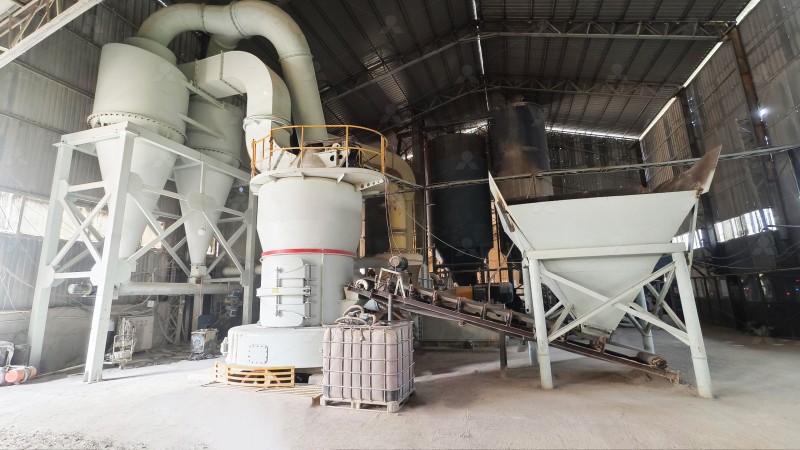
Understanding the Challenges of Talc Grinding for Paint Applications
Talc is a soft mineral with a Mohs hardness of 1, but its lamellar structure makes it challenging to grind to ultra-fine sizes without producing excessive heat or causing roll wear. In Indonesia, local talc sources often contain impurities, and the high humidity in tropical regions can affect material handling. Paint fillers require extremely low iron content to avoid discoloration. Therefore, selecting the right grinding mill is not just about capacity—it is about achieving consistent particle size distribution, maintaining whiteness, and ensuring energy efficiency. Indonesian buyers often face equipment failures due to improper mill selection, leading to downtime and quality issues.
Many traditional ball mills struggle with talc because they generate high iron contamination and have poor classification efficiency. Jet mills, while producing fine powder, are energy-intensive. This is where advanced roller mills and vertical mills shine, as they combine low energy consumption with high fineness and minimal metal contamination.
Key Factors to Consider When Choosing a Talc Grinding Mill in Indonesia
First, consider the required fineness. For paint fillers, a fineness of d97 ≤ 10 microns is common. Mills that offer adjustable classification between 325 and 2500 mesh provide flexibility. Second, evaluate the capacity. Indonesian operations range from small-scale producers needing 0.5 tph to large plants requiring 20 tph or more. Third, examine the dust control and noise reduction features. Indonesian environmental regulations are becoming stricter, especially in Java and Sumatra. Fourth, assess the ease of maintenance. Mills with external lubrication systems and no rolling bearings in the grinding chamber reduce downtime significantly. Fifth, check the availability of spare parts and local service support. A mill from a manufacturer with a strong distribution network in Southeast Asia is preferable.

Why the MW Ultrafine Grinding Mill is an Excellent Choice for Talc Paint Filler
For Indonesian paint manufacturers seeking a dedicated talc grinding solution, the MW Ultrafine Grinding Mill from LIMING stands out. This mill accepts feed sizes up to 20 mm and delivers capacities from 0.5 to 25 tph, covering the needs of both small batch producers and large-scale factories. Its key advantage is the adjustable fineness between 325 and 2500 meshes, achieved through a German-designed cage-type powder selector. This allows operators to precisely control the particle size distribution, ensuring that the talc filler meets the exact specifications for paint formulations.
The MW mill features no rolling bearings or screws inside the grinding chamber, a design that eliminates common failure points. The lubricating device is mounted externally, allowing oil changes without stopping production—critical for continuous 24-hour operations. Equipped with an efficient pulse dust collector and silencer, the MW mill operates cleanly and quietly, complying with Indonesian environmental standards. The grinding curves of the roller and ring have been newly engineered to enhance efficiency; compared to jet and stirred mills, the MW mill yields 40% higher capacity under the same power consumption. For a paint factory in Jakarta or Surabaya, this translates directly to lower operating costs and faster return on investment.
Furthermore, the digitalized manufacturing process ensures high precision for core parts, reducing wear and tear. LIMING provides sufficient spare parts and technical services, which is a major advantage in the Indonesian archipelago where logistics can be challenging. If you need ultra-fine talc with high whiteness and low iron content, the MW Ultrafine Grinding Mill is a proven solution.
Another Top Contender: LUM Ultrafine Vertical Grinding Mill for Higher Capacity Needs
For operations that require higher throughput—between 5 and 18 tph—the LUM Ultrafine Vertical Grinding Mill is an ideal alternative. This mill integrates ultrafine grinding, grading, and transport in one unit, simplifying the plant layout. It incorporates Taiwan grinding roller technology and German powder separation technology, ensuring that the finished talc powder has uniform particle shape and excellent flowability. The LUM mill’s double position-limiting technology prevents destructive vibrations, which is vital when processing talc with varying hardness levels. Its reversible structure makes maintenance of the grinding roller easier, reducing shutdown time. The energy consumption is 30-50% lower than that of common grinding mills, a significant advantage for Indonesian factories facing rising electricity costs.

Both the MW and LUM mills are built by LIMING, a manufacturer that takes responsibility for its products and offers original spare parts. Whether you choose the MW for its flexibility in fineness and lower capacity or the LUM for its energy efficiency and higher throughput, you are investing in reliable technology that minimizes downtime.
Practical Advice for Sourcing and Purchasing in Indonesia
Start by requesting a sample grinding test. Reputable suppliers will grind your talc feed material and provide the finished powder for analysis. Confirm that the mill can achieve d97 ≤ 10 microns while maintaining the desired brightness. Ask about the installation requirements: some mills need specific foundations or air intake systems. In Indonesia, consider the local agent’s capability for after-sales service. Machines that require frequent calibration or part replacement can become liabilities if no local technician is available. Also, evaluate the total cost of ownership, including electricity, wear parts, and dust filter bags. A mill that seems cheap upfront may cost more in the long run if it consumes excessive power or requires constant maintenance.
Finally, think about scalability. As your paint business grows, you may need to expand capacity. Mills like the MW Ultrafine Grinding Mill can be integrated into larger systems or used in parallel. The LM Vertical Grinding Mill, with its high capacity range of 3-340 tph, is another option for very large-scale operations, though it may be oversized for standard paint filler production. For most paint filler applications, the MW and LUM mills offer the best balance of performance, cost, and reliability.

Conclusion
Finding the right grinding mill for talc paint filler in Indonesia requires careful evaluation of fineness requirements, capacity needs, environmental compliance, and total operational costs. The MW Ultrafine Grinding Mill and LUM Ultrafine Vertical Grinding Mill from LIMING are both excellent choices that address the specific challenges of talc processing. They combine high efficiency, low iron contamination, and eco-friendly operation. By partnering with a manufacturer that offers strong local support and proven technology, Indonesian paint producers can secure a stable supply of high-quality talc filler, ensuring their products meet international standards.
Frequently Asked Questions (FAQs)
Q1: What is the ideal fineness for talc used as a paint filler?
A: Typically, paint fillers require a fineness of d97 between 10 and 40 microns (325 to 1250 mesh). For high-end paints, a fineness of d97 ≤ 5 microns (2500 mesh) may be needed.
Q2: Can the MW Ultrafine Grinding Mill process wet talc?
A: The MW mill is designed for dry grinding. The feed material should have a moisture content below 6% for optimal performance. For higher moisture, a pre-drying step is recommended.
Q3: Is there a risk of iron contamination when grinding talc with these mills?
A: Both the MW and LUM mills are designed to minimize iron contamination. The grinding chambers have no metal-to-metal contact between the rollers and the ring/table, which significantly reduces wear and iron pickup.
Q4: What is the power consumption of the LUM Ultrafine Vertical Grinding Mill per ton of talc?
A: Power consumption varies with fineness. For a talc product of 800 mesh, the specific power consumption is typically between 30 and 45 kWh per ton.
Q5: How long do the grinding rollers and rings last in talc grinding?
A: With proper operation, the wear parts on the MW mill can last 12 to 18 months when processing pure talc. The actual lifespan depends on the abrasiveness of the feed material.
Q6: Do you have a distributor in Indonesia?
A: LIMING has established distribution and service networks in Southeast Asia, including local agents in Indonesia. Please contact our sales team for the nearest authorized dealer in your region.
Q7: Can I use the same mill for talc and other minerals like calcium carbonate?
A: Yes, both the MW and LUM mills can process a range of minerals including limestone, calcite, and dolomite. However, switching materials requires thorough cleaning to avoid cross-contamination.
Q8: What is the delivery lead time for an MW Ultrafine Grinding Mill to Indonesia?
A: Standard delivery times range from 45 to 60 days after order confirmation, depending on the model and shipping logistics.