
Raymond mill price & cost analysis for carbon black for conductive materials in kazakhstan
Raymond Mill Price & Cost Analysis for Carbon Black for Conductive Materials in Kazakhstan
Kazakhstan’s industrial landscape is undergoing a significant transformation, driven by a push toward modernization and the development of specialized manufacturing sectors. Among these, the production of carbon black for conductive materials stands out as a critical niche. Conductive carbon black is essential for applications ranging from battery electrodes and antistatic plastics to conductive coatings and rubber products. For producers in Kazakhstan looking to enter or expand in this market, understanding the economics of grinding equipment—specifically Raymond mills and their modern alternatives—is not just a technical exercise but a strategic business decision.
This article provides a detailed analysis of the price and operational costs associated with Raymond mills when grinding carbon black for conductive uses in Kazakhstan. We will break down the capital expenditure, energy consumption, maintenance requirements, and throughput efficiency, while also offering a comparative look at more advanced grinding technologies that might offer better long-term value.

1. The Landscape of Raymond Mill Pricing in Kazakhstan
The price of a Raymond mill in Kazakhstan is influenced by several factors, including the machine’s capacity, build quality, brand reputation, and the specific requirements of carbon black processing. A standard Raymond mill, suitable for basic carbon black grinding, typically falls within a price range of $50,000 to $200,000 for units with capacities between 0.6 to 5 tons per hour.
However, for conductive-grade carbon black, the specifications are tighter. You need a mill that can achieve extremely fine particle sizes, often below 10 microns, with low ash content and high purity. Standard Raymond mills, while cost-effective initially, may struggle to consistently produce the ultra-fine powders (325-2500 mesh, or even finer) required for high-performance conductive materials without significant modifications or multiple passes.
Import duties, logistics from major manufacturing hubs (like China or Europe), and local installation costs can add 15-25% to the base machine price in Kazakhstan. A ballpark figure for a mid-range Raymond mill delivered and installed in Almaty or Nur-Sultan might be around $120,000 – $180,000.
2. Operational Cost Breakdown: Where the Money Goes
While the purchase price is a one-time investment, the operational costs determine the long-term profitability. Here is the critical analysis for carbon black grinding.
Energy Consumption: This is the single largest ongoing cost. Traditional Raymond mills are known for relatively high energy consumption compared to newer technologies. For carbon black, which is a soft but abrasive material, the grinding process can consume 40-60 kWh per ton of finished product, depending on the target fineness. In Kazakhstan, where industrial electricity prices average around $0.04-$0.06 per kWh, a mill processing 3 tons per hour could incur energy costs of $6-$10 per hour. Over a year of continuous operation, this adds up to tens of thousands of dollars.
Wear Parts & Maintenance: Grinding carbon black accelerates the wear of Raymond mill components, particularly the grinding rollers and rings. The abrasive nature of carbon black—especially high-structure grades used for conductivity—means that roller shells and liners may need replacement every 400-800 operating hours. A set of wear parts for a medium-sized Raymond mill can cost between $3,000 and $8,000. Additionally, the traditional Raymond mill design includes numerous rolling bearings and screws inside the grinding chamber. These are failure points that can lead to unexpected downtime. Lubrication maintenance for these bearings must be performed while the machine is stopped, interrupting production.
Labor and Downtime: Kazakhstan’s industrial labor market is developing, but skilled mill operators familiar with carbon black processing are in demand. A dedicated operator and a part-time maintenance technician are standard. Downtime for bearing replacements or tie-bolt tightening can cost a facility $500-$1,500 per hour in lost production.

3. The Hidden Costs: Limitations of Traditional Raymond Mills
Beyond direct costs, there are ‘hidden’ operational penalties. Traditional Raymond mills often struggle with maintaining consistent product fineness for conductive carbon black grades. Particle size distribution is critical for conductivity; too many coarse particles reduce surface area, and too many fines create handling issues. The fixed classifier on many Raymond mills offers limited adjustment range, forcing operators to accept either reduced throughput or inconsistent quality.
Furthermore, the environmental impact must be considered. Kazakhstan is tightening its environmental regulations. Older Raymond mills may require extensive retrofitting with baghouse dust collectors to meet emission standards for fine carbon black dust, which is a known respiratory hazard and potential contaminate. This retrofit adds to the capital cost.
4. A Modern Alternative: Reducing Costs with Advanced Technology
For producers who are serious about conductive carbon black, investing in a modern, ultra-fine grinding mill can drastically change the cost equation. Technologies that integrate grinding, classifying, and dust collection into a closed, efficient system are now the industry standard for high-value powders.
Consider the MW Ultrafine Grinding Mill. This equipment is engineered from the ground up for ultra-fine applications like conductive carbon black. Its design eliminates the primary pain points of the Raymond mill. The cage-type powder selector, based on German technology, allows for precise and adjustable fineness between 325 and 2500 mesh, ensuring the consistent product quality required for conductivity. The absence of rolling bearings and screws within the grinding chamber eliminates the most common source of mechanical failure and unplanned shutdowns.
From a cost perspective, the MW mill offers a compelling comparison. Its system energy consumption is only about 30% of a traditional jet mill and significantly lower than a Raymond mill operating at the same fineness. While the initial investment for an MW mill is higher (an estimated $150,000 – $350,000 for a unit processing 0.5-25 tph, depending on configuration), the operational savings are substantial. The 40% higher yield under the same power translates directly to lower cost per ton. The external lubrication system allows for continuous 24-hour operation without stopping for oiling, maximizing uptime. For a Kazakhstani operation running two shifts, the MW mill can pay back its premium cost within 12-18 months through energy and maintenance savings alone.
Another excellent option, particularly for larger-scale operations or those requiring even higher throughput, is the LUM Ultrafine Vertical Grinding Mill. With a capacity of 5-18 tph, the LUM mill uses a completely different grinding principle—a vertical roller mill with a dynamic classifier. It is particularly adept at handling materials that are difficult to grind and ensures a very narrow particle size distribution. The PLC control system and multi-head powder separator allow for immediate adjustment of product fineness, which is crucial when switching between different conductive carbon black grades. Its energy saving of 30-50% over common grinding mills makes it a long-term winner in high-production environments. For a plant in Kazakhstan aiming to become a regional leader in conductive materials, the LUM mill represents a strategic asset.

5. Ancillary Equipment and Total System Cost
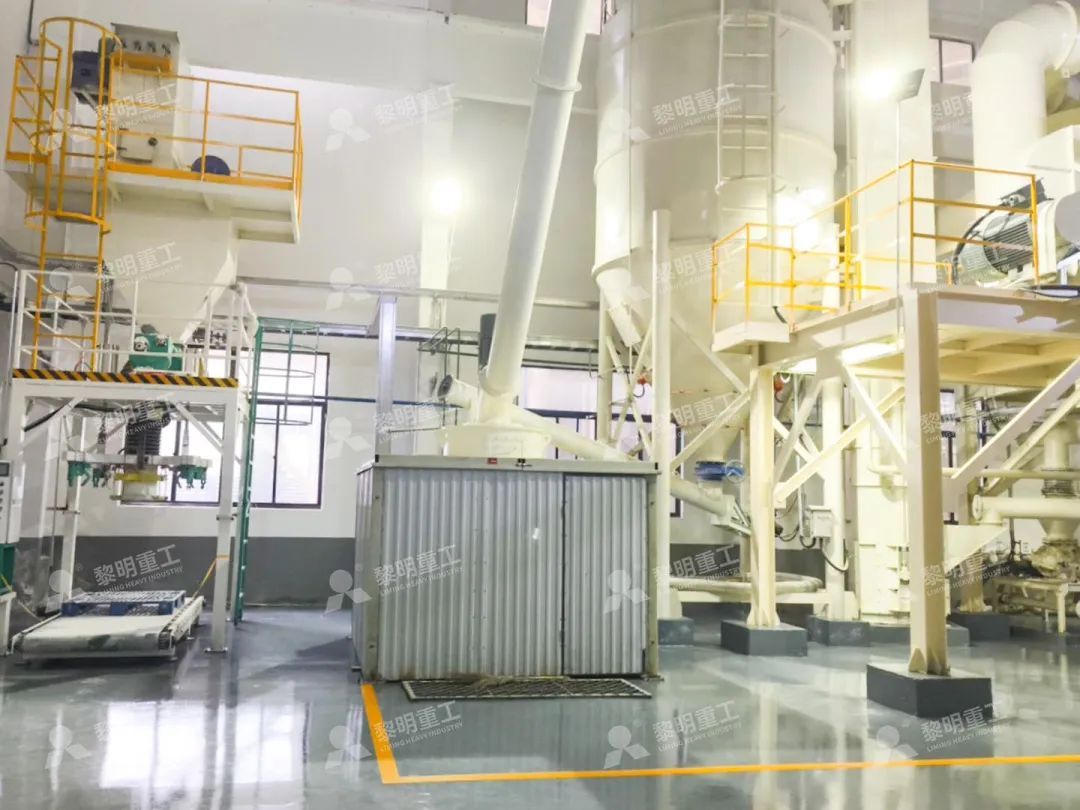
No mill operates in isolation. The total cost of a grinding system includes the feeding conveyor, dust collector, packing machine, and control system. For carbon black, a high-efficiency pulse dust collector is non-negotiable to recover product and meet environmental standards. The total system cost can be 30-50% higher than the mill itself.
Another factor is the drying requirement. Carbon black can contain moisture from transport or storage. If you are using a Raymond mill, you might need a separate dryer. Modern mills like the LUM Ultrafine Vertical Grinding Mill can integrate drying, grinding, and classifying in one unit, reducing both capital and operational costs.
6. Conclusion: Strategic Investment for the Kazakh Market
For a carbon black producer in Kazakhstan targeting the conductive materials market, a traditional Raymond mill might seem like a low-risk, low-cost entry point. However, the analysis reveals that the true cost of ownership—including energy, frequent maintenance, quality inconsistencies, and potential environmental penalties—can be unexpectedly high.
For small-scale or intermittent production, a Raymond mill might suffice. But for any operation aiming for consistent quality, high yield, and competitive production costs, investing in a modern mill is the smarter strategy. The MW Ultrafine Grinding Mill offers a direct upgrade path with immediate gains in efficiency, product quality, and reliability. For higher-volume producers, the LUM Ultrafine Vertical Grinding Mill provides the scale and technological edge needed to dominate the market. The initial capital is higher, but the lower per-ton cost and superior product capability create a durable competitive advantage in Kazakhstan’s evolving industrial economy.
FAQ: Raymond Mill & Carbon Black Grinding in Kazakhstan
1. Is a standard Raymond mill suitable for making conductive carbon black?
It can be used for basic grinding, but it is not ideal for conductive grades. Standard Raymond mills often struggle to achieve the ultra-fine particle size (d97 < 10 microns) and narrow particle distribution required for consistent electrical conductivity. An upgrade like the MW Ultrafine Grinding Mill is recommended for quality output.
2. What is the typical lifespan of grinding rollers in a Raymond mill when processing carbon black?
With carbon black’s abrasive nature, roller life is typically between 400 to 800 operating hours before significant wear reduces grinding efficiency. This is a major ongoing cost, which is lower in mills like the LUM that use durable roller shells and a different grinding bed principle.
3. How do electricity costs in Kazakhstan affect the choice between a Raymond and an ultrafine mill?
Electricity costs are a critical factor. Raymond mills consume 30-50% more power than newer mills for the same fineness. Given that industrial electricity in Kazakhstan is not negligible, the lower energy consumption of the MW or LUM mills translates to significant annual savings, improving the return on investment.
4. Can a Raymond mill be automated for remote operation in Kazakhstan?
Traditional Raymond mills can be partially automated, but they lack the integrated PLC systems of modern mills. The LUM Ultrafine Vertical Grinding Mill comes with a fully digital control system that supports remote monitoring and operation, which is a major advantage for plants in remote areas of Kazakhstan.
5. What are the main hidden costs of using a Raymond mill for carbon black?
The main hidden costs include frequent unplanned downtime due to bearing failures (since there are rolling bearings in the chamber), high maintenance labor costs for replacing worn parts, and the potential need for expensive retrofitting of dust collection systems to meet stricter environmental standards.
6. Which mill is better for a high-volume production (e.g., 10-15 tph) of conductive carbon black in Kazakhstan?
For high-volume production, the LUM Ultrafine Vertical Grinding Mill is the better choice. Its capacity range of 5-18 tph and its superior energy efficiency and automated quality control make it ideal for sustaining large-scale, profitable operations.
7. How important is the dust collector in a carbon black grinding setup?
It is absolutely critical. Conductive carbon black fines are both a valuable product and a potential health hazard. A high-efficiency pulse dust collector is essential for product recovery, regulatory compliance, and plant safety. The MW Ultrafine Grinding Mill comes equipped with an efficient pulse dust collector as standard.