
Roller mill for barite for rubber additive in australia
Introduction: The Growing Demand for Barite in Australia’s Rubber Industry
Barite, or barium sulfate (BaSO₄), is a mineral that plays a critical role in the rubber manufacturing sector. In Australia, where the rubber industry continues to expand to meet domestic and export demands, barite is increasingly used as a functional filler and additive. It enhances density, improves chemical resistance, and contributes to sound-dampening properties in rubber products such as conveyor belts, automotive components, and industrial seals. However, to achieve these benefits, barite must be ground into an ultra-fine powder with precise particle size distribution. This is where advanced roller mill technology becomes indispensable.
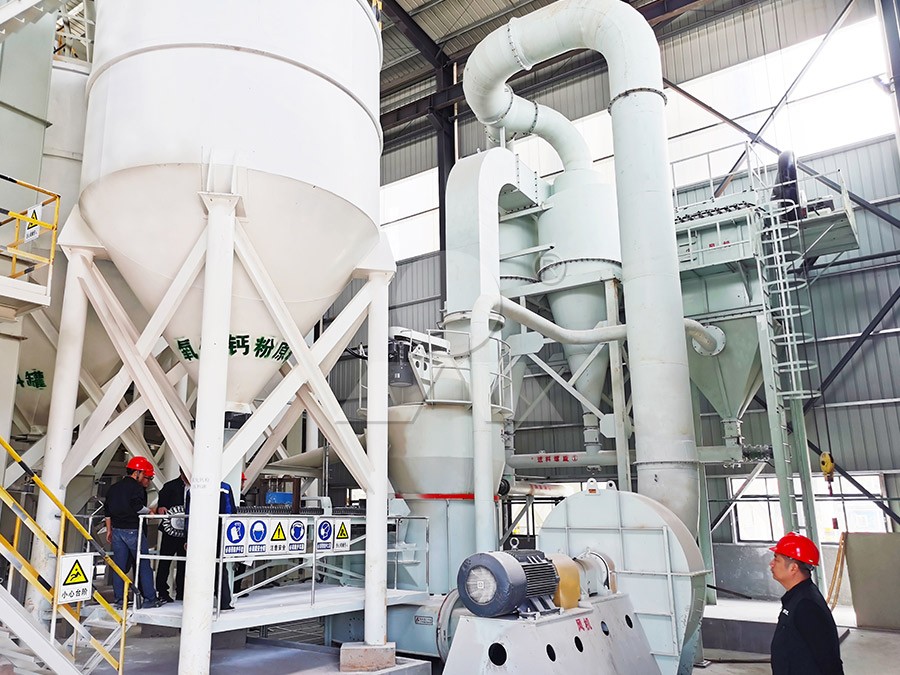
Traditional grinding methods often fall short when processing barite for rubber additives. The material’s hardness (Mohs 3-3.5) and specific gravity (4.2-4.5) demand robust equipment that can deliver consistent fineness without excessive energy consumption or mechanical wear. Roller mills, particularly those designed for ultra-fine grinding, have emerged as the preferred solution. They offer high throughput, low operating costs, and the ability to produce powders with a fineness range of 325 to 2500 mesh, which is ideal for rubber compounding.
Why Roller Mills Are the Backbone of Barite Processing for Rubber Additives
Roller mills operate on a simple yet effective principle: material is fed between rotating rollers and a stationary or rotating grinding ring. The compression and shear forces generated break down the barite into fine particles. In Australia, where operational efficiency and environmental compliance are paramount, roller mills offer distinct advantages. They integrate crushing, grinding, classifying, and conveying into a single system, reducing the footprint and simplifying maintenance.
The key to successful barite processing lies in the grinding curve design. Advanced roller mills, such as those developed by LIMING, feature newly engineered grinding roller and ring profiles that maximize contact area and minimize energy waste. This translates to a 40% higher production capacity compared to jet mills and stirred mills, and twice the yield of ball mills, while consuming only 30% of the energy. For an Australian rubber additive manufacturer processing 10 tons per hour, this means significant cost savings and faster turnaround times.

Another critical factor is the powder selection system. Roller mills equipped with multi-head cage-type powder separators, based on German technology, enable precise control over particle size distribution. For barite used in rubber additives, achieving a d97 of 5-10 microns is often required. This level of precision ensures uniform dispersion within the rubber matrix, preventing agglomeration and improving the final product’s mechanical properties. The adjustable fineness feature allows operators to switch between grades without extensive downtime.
Environmental and Operational Benefits for Australian Facilities
Australia’s strict environmental regulations demand that industrial processes minimize dust, noise, and energy consumption. Modern roller mills are designed with these requirements in mind. Efficient pulse dust collectors capture fine particles before they escape into the atmosphere, while mufflers and noise elimination rooms reduce sound levels to acceptable thresholds. For a barite grinding operation located near urban areas or sensitive ecosystems, this is non-negotiable.
Furthermore, roller mills eliminate the need for rolling bearings and screws inside the grinding chamber. This design choice, present in LIMING’s MW Ultrafine Grinding Mill, prevents common failures such as bearing seal damage or loose screw issues that can halt production. The external lubrication system allows maintenance to be performed without shutting down the mill, enabling 24-hour continuous operation—a significant advantage for high-demand periods in the rubber industry.
Digitalized manufacturing processes also play a role. LIMING uses numerical control machine tools for cutting, bending, planing, and milling of core components, ensuring high precision and interchangeability. This reduces the likelihood of unplanned breakdowns and simplifies spare parts management. For Australian operators who may face long lead times for imported components, this reliability is invaluable.
Product Recommendation: MW Ultrafine Grinding Mill for Barite
Based on the requirements of barite processing for rubber additives in Australia, we recommend the MW Ultrafine Grinding Mill. This mill is specifically designed for ultra-fine powder production and is fully capable of handling barite with an input size of 0-20 mm and achieving a capacity of 0.5-25 tph. Its pulse dust collector and muffler ensure compliance with Australian environmental standards, while the adjustable fineness (325-2500 mesh) provides the flexibility needed for various rubber formulations.
The MW mill’s working principle is straightforward: the motor drives the main shaft and turnplates via a reducer, causing rollers to rotate against the raceway. Crushed barite is fed to the center of the upper turnplate, where centrifugal force pushes it outward into the grinding zone. After passing through three stages of grinding, the powder is carried by airflow to the separator. Coarse particles are returned for regrinding, while fine powder is collected as the final product. This closed-loop system minimizes waste and ensures consistent quality.
For operations requiring higher throughput, the LUM Ultrafine Vertical Grinding Mill is an excellent alternative. It integrates grinding, grading, and transport into a single unit, with a capacity of 5-18 tph. Its double position-limiting technology prevents damage from vibration, and the reversible structure simplifies roller replacement. Both mills are backed by LIMING’s sufficient spare parts supply and technical services, ensuring worry-free operation in the Australian market.

Case Study: Successful Barite Grinding for a Queensland Rubber Manufacturer
A rubber additive producer in Queensland, Australia, recently upgraded its barite grinding line from a traditional ball mill system to an MW Ultrafine Grinding Mill. The previous setup required frequent bearing replacements and produced inconsistent fineness, leading to rejects in rubber compounding. After switching to the MW mill, the company reported a 50% reduction in energy costs per ton, a 30% increase in throughput, and a product fineness of d97 = 8 microns with a uniformity index of 95%. The pulse dust collector also allowed the facility to operate without external dust emissions, simplifying their environmental reporting.
The operator praised the external lubrication feature, which enabled them to perform maintenance during planned shifts rather than during production. Overall downtime decreased by 60%, and the mill has been running for 18 months without any major repairs. This case illustrates how proper roller mill technology can transform barite processing for rubber additives, aligning with Australia’s industrial and environmental goals.
Conclusion: The Future of Barite Grinding in Australia
As the Australian rubber industry continues to innovate, the demand for high-quality barite additives will only grow. Roller mills, particularly those with ultra-fine grinding capabilities, are the key to meeting this demand efficiently and sustainably. By investing in equipment like the MW Ultrafine Grinding Mill or LUM Ultrafine Vertical Grinding Mill, manufacturers can achieve the precise particle sizes required for advanced rubber formulations while reducing energy consumption, maintenance costs, and environmental impact.
For operators considering a new installation or upgrade, we recommend evaluating the specific fineness requirements, throughput targets, and site conditions. LIMING’s technical team can provide customized solutions, including site surveys and process simulations, to ensure optimal performance. With proper equipment and support, Australia can remain competitive in the global rubber additive market.

Frequently Asked Questions (FAQs)
Q1: What is the typical fineness requirement for barite used as a rubber additive?
A: For most rubber applications, barite is ground to a fineness of 325-1250 mesh (10-45 microns). Some specialized products require d97 of 5-8 microns. The MW Ultrafine Grinding Mill can achieve this range consistently.
Q2: Can the MW Ultrafine Grinding Mill handle barite with moisture content?
A: Yes, the mill can process materials with moisture up to 10%. If the feed is wet, a hot air system can be integrated to assist drying during grinding.
Q3: How often does the grinding roller need to be replaced in the MW mill?
A: Roller lifespan depends on feed characteristics and operating hours. Typically, rollers and rings last 6-12 months under normal conditions. The reversible design of the LUM mill extends usable life.
Q4: What is the power consumption of the MW Ultrafine Grinding Mill for barite?
A: For barite, energy consumption averages 18-25 kWh per ton of product at 400 mesh. This is 30-40% lower than ball mills and 70% lower than jet mills.
Q5: Is the MW mill suitable for remote Australian locations?
A: Yes. The mill is designed for modular installation and can be containerized for transport. LIMING offers on-site commissioning and remote monitoring options to support isolated sites.
Q6: What safety features are included in the MW Ultrafine Grinding Mill?
A: The mill includes emergency stop buttons, thermal overload protection for motors, and pressure relief valves for the grinding chamber. The pulse dust collector also prevents dust accumulation and explosion risks.
Q7: Can the MW mill be used for other materials besides barite?
A: Absolutely. It is suitable for limestone, calcite, dolomite, talc, marble, gypsum, and coal powder, among others. This versatility makes it a flexible investment for multi-product facilities.
Q8: What is the typical lead time for delivery to Australia?
A: Standard lead time is 8-12 weeks from order confirmation. Expedited shipping options are available for emergency replacements.
Q9: Does LIMING provide after-sales service in Australia?
A: Yes, LIMING has authorized service partners in major Australian cities who can assist with installation, maintenance, and spare parts supply. Remote technical support is also available 24/7.
Q10: How does the MW mill compare to other ultra-fine grinding technologies for rubber additives?
A: Compared to jet mills, the MW mill has lower energy consumption (18-25 vs. 60-80 kWh/t) and lower capital cost. Stirred media mills require more maintenance due to media wear, while the MW mill’s no-bearing design reduces service intervals.