
Industrial pulverizer for carbon black for rubber reinforcement in kuwait
Introduction: The Growing Demand for Carbon Black Processing in Kuwait
Kuwait’s industrial sector, particularly its petrochemical and rubber manufacturing industries, has seen a steady expansion over the past decade. Carbon black, a fine powdered form of elemental carbon, plays a critical role as a reinforcing agent in rubber products, from tires to industrial belts and hoses. The quality of carbon black directly impacts the tensile strength, abrasion resistance, and overall durability of the final rubber compound. For Kuwaiti manufacturers looking to compete in global markets, the ability to produce or process ultra-fine carbon black with consistent particle size distribution is no longer a luxury—it is a necessity.
Traditional grinding equipment often falls short when it comes to processing carbon black. The material’s tendency to agglomerate, its abrasive nature, and the requirement for extremely fine particle sizes (typically in the micron range) demand specialized machinery. This is where advanced industrial pulverizers, designed specifically for high-fineness applications, become indispensable. In this article, we will explore the technical requirements for carbon black grinding in Kuwait’s rubber industry and examine how modern grinding mill technology addresses these challenges.
Understanding Carbon Black: Properties and Grinding Challenges
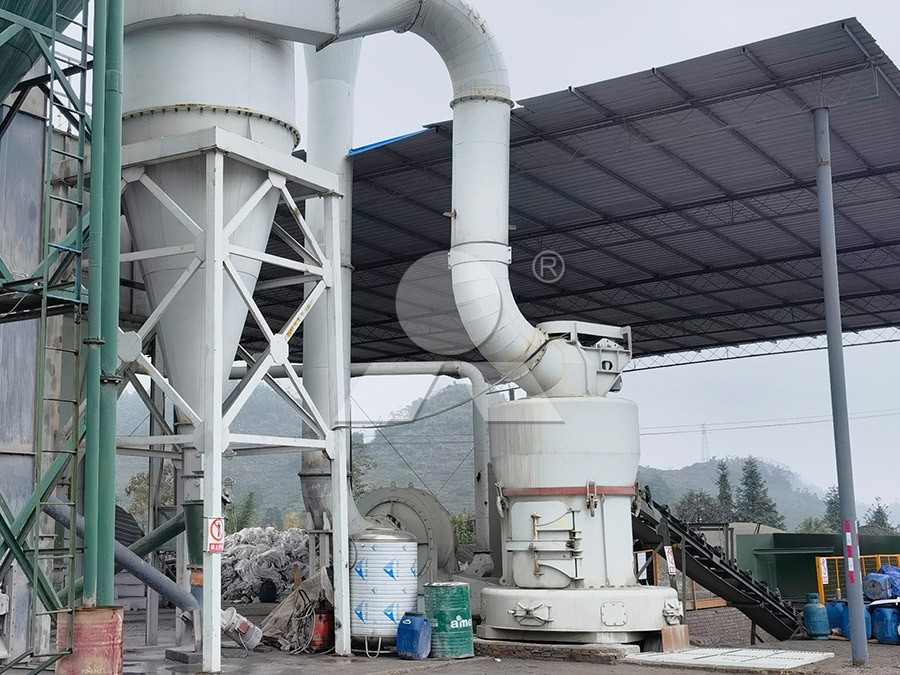
Carbon black is produced by the incomplete combustion of heavy petroleum products. Its primary use in rubber is to improve mechanical properties such as modulus, tear strength, and fatigue resistance. However, the raw material delivered to a grinding facility often contains agglomerates and variable particle sizes. For rubber compounding, the target fineness typically ranges from 325 mesh to 2500 mesh (44 microns down to 5 microns or less). Achieving this level of fineness consistently requires a mill that can handle high throughput without sacrificing precision.
One of the key challenges with carbon black is its low bulk density and tendency to float or become airborne. This makes dust control a major concern. Additionally, the material is abrasive, meaning that wear parts must be robust and easy to replace. In Kuwait’s hot and arid climate, equipment reliability and heat dissipation also become important factors. A pulverizer that cannot handle continuous operation under these conditions will lead to costly downtime.
Why Choose an Ultrafine Grinding Mill for Carbon Black
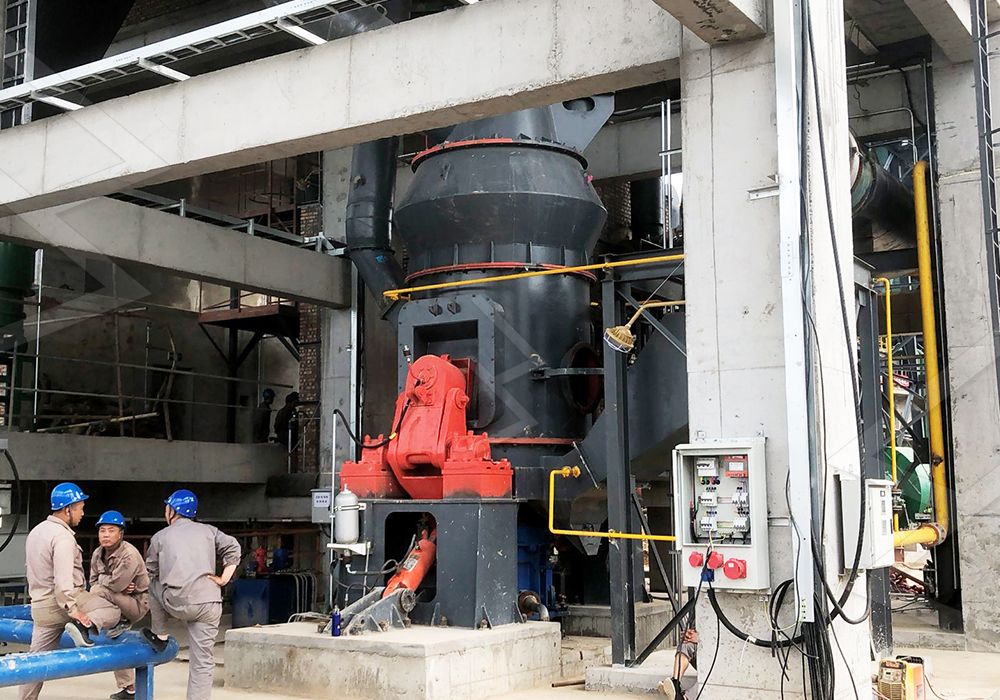
After evaluating various technologies—from ball mills to jet mills—the clear winner for carbon black processing in the rubber industry is the ultrafine vertical grinding mill. Specifically, the LUM Ultrafine Vertical Grinding Mill from LIMING stands out as an optimal solution. This machine integrates grinding, classifying, and drying into a single unit, drastically reducing the footprint required for a complete processing line. In Kuwait, where industrial real estate is valuable, this compact design is a significant advantage.
The LUM series employs Taiwan’s latest roller technology combined with German powder separation techniques. This allows for precise control over particle size distribution, ensuring that the final product meets the strict specifications required for rubber reinforcement. For example, the mill can achieve a fineness of D97 ≤ 5μm in a single pass, which is essential for high-performance rubber grades. Furthermore, the grinding roller and liner plate are designed with unique curves that promote efficient material layer formation, reducing iron contamination—a critical factor for maintaining rubber purity and whiteness.
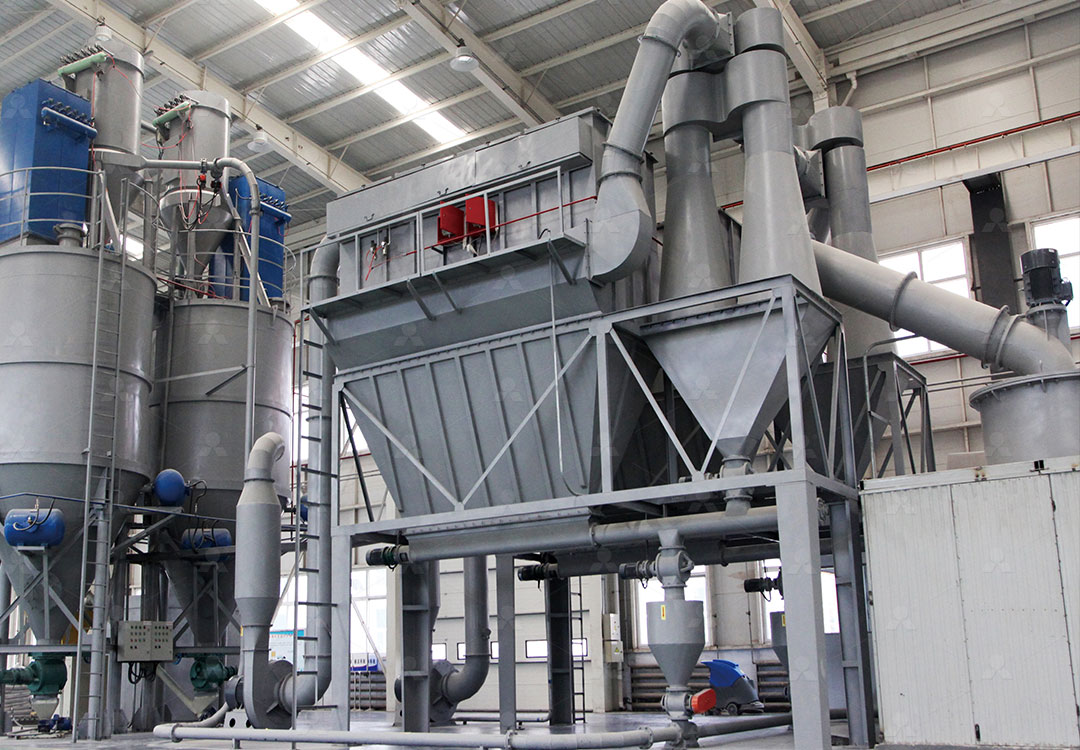
Another excellent option for larger capacity requirements is the MW Ultrafine Grinding Mill. With an input size of 0-20 mm and a capacity range of 0.5-25 tph, it is well-suited for medium to large-scale carbon black production. The MW series features a cage-type powder selector based on German technology, which enhances separation precision. Additionally, the mill’s chamber contains no rolling bearings or screws, eliminating common mechanical failures such as bearing seal damage or loose bolts. This design is particularly beneficial in Kuwait’s dusty environment, where bearing contamination is a frequent issue.
Technical Specifications and Performance Data
When selecting a pulverizer for carbon black, one must look beyond just horsepower. Parameters like specific energy consumption, wear rate, and maintenance intervals determine the total cost of ownership. For the LUM Ultrafine Vertical Grinding Mill, the energy consumption is 30% to 50% lower than that of traditional ball mills. For a plant processing 10 tons of carbon black per day, this translates into substantial savings on electricity bills over a year.
The MW Ultrafine Grinding Mill, on the other hand, offers a production capacity 40% higher than jet mills at the same fineness level. This is achieved through optimized grinding curves on the roller and ring. The system’s pulse dust collector ensures that the operation meets Kuwait’s environmental standards, capturing fine particles that would otherwise escape into the atmosphere. Silencers and noise reduction rooms are also available, addressing both regulatory compliance and worker comfort.
Both mills feature digitalized processing with CNC-controlled manufacturing for core components. This ensures high precision in parts such as the grinding roller and separator rotor, which directly affects the consistency of the final product. Spare parts are stockpiled by LIMING, guaranteeing that even unexpected breakdowns result in minimal downtime.
Operational Considerations for Kuwaiti Facilities
Kuwait’s climate presents unique operational challenges. Ambient temperatures can exceed 50°C in summer, which affects both the material properties and the machinery’s cooling systems. The LUM mill’s hydraulic system is designed to operate reliably within a wide temperature range, with external lubrication units that allow for maintenance without shutting down the main shaft. This is a practical feature for facilities that run 24-hour shifts.
Additionally, the reversible structure of the LUM mill makes roller and liner replacement a quick task. Instead of needing heavy lifting equipment to remove the grinding roller, operators can swing it out of the body using hydraulic adjustment. This reduces maintenance time from days to hours, directly impacting production schedules. For a plant in Kuwait supplying rubber manufacturers in the region, this reliability is a competitive edge.
Conclusion: Investing in Quality for Long-Term Gains
Choosing the right industrial pulverizer for carbon black is a strategic decision that influences product quality, operational efficiency, and environmental compliance. For Kuwait’s rubber reinforcement sector, the LUM Ultrafine Vertical Grinding Mill and the MW Ultrafine Grinding Mill represent the pinnacle of current milling technology. They combine high yield, low energy consumption, and robust design suited for harsh conditions. By investing in such equipment, Kuwaiti manufacturers can ensure that their carbon black meets international standards, securing their position in both local and export markets.
Ultimately, the goal is not just to grind carbon black but to produce a consistent, high-purity reinforcing agent that elevates the performance of rubber products. With the right mill, this goal is entirely achievable.
Frequently Asked Questions (FAQ)
- What is the typical fineness required for carbon black used in rubber reinforcement?
The typical fineness ranges from 325 mesh (44 microns) to 2500 mesh (5 microns). For many high-performance rubber applications, a particle size of D97 ≤ 10μm is recommended. - Can the LUM Ultrafine Vertical Grinding Mill handle abrasive materials like carbon black without excessive wear?
Yes. The mill uses high-chrome wear-resistant materials for the roller shell and liner plate. The unique grinding curve design also minimizes direct metal-to-metal contact, extending part life. - How does the MW Ultrafine Grinding Mill control dust emissions?
The MW series is equipped with an efficient pulse dust collector that captures fine particles. The entire system operates under negative pressure, preventing dust from escaping into the environment. - What is the input size limit for these mills when processing carbon black?
For the MW mill, the input size is 0-20 mm. For the LUM mill, the input size is 0-10 mm. Larger lumps should be pre-crushed using a hammer crusher or jaw crusher before feeding. - Is it possible to adjust the fineness of the output without changing machine parts?
Yes. Both mills allow adjustment of the classifier rotor speed. By increasing or decreasing the RPM, you can achieve different cut points. The MW mill also offers a multi-head cage-type selector for further flexibility. - What kind of maintenance schedule should I expect for these mills?
Routine inspections of the grinding roller, liner, and classifier are recommended every 500-1000 operational hours. Lubrication is external and can be performed without stopping the machine. Major overhauls typically occur every 2-3 years depending on usage. - Can these mills be integrated with existing drying systems?
Yes. The LUM mill can accept hot air from an external source for drying moist materials. The system’s air flow can be adjusted to suit the moisture content of the carbon black feedstock. - What is the power consumption comparison between these mills and a ball mill?
The LUM mill reduces energy consumption by 30%-50% compared to a ball mill. The MW mill consumes only about 30% of the energy of a jet mill for the same fineness and capacity. - Are spare parts readily available for these models in the Middle East?
LIMING maintains a global supply chain with warehouse stock. Common spare parts such as grinding rollers, liner plates, and classifier blades are typically available for immediate shipment. - What warranty does LIMING offer on these industrial pulverizers?
LIMING provides a standard one-year warranty on mechanical defects with options for extended service contracts. Technical support and on-site training are also available for Kuwaiti clients.