
Roller mill price & cost analysis for kaolin for rubber reinforcement in suriname
Introduction: The Growing Demand for Reinforced Rubber in Suriname
Suriname’s industrial landscape, while modest in global terms, presents specific challenges for local manufacturers. Rubber processing, particularly for products requiring high tensile strength and wear resistance, relies heavily on the quality of reinforcing fillers. Kaolin, a naturally occurring clay mineral, has emerged as a cost-effective alternative to carbon black and silica in certain rubber compounds. However, the economic viability of using kaolin hinges on the grinding technology employed. This article provides a comprehensive price and cost analysis of roller mills for kaolin processing in Suriname, with a focus on achieving the ultra-fine particle sizes necessary for rubber reinforcement.
The journey from raw kaolin ore to a functional rubber additive is not straightforward. It involves crushing, drying, grinding, and classification. The grinding stage is the most capital and energy-intensive. Selecting the wrong mill can lead to high operating costs, inconsistent product quality, and ultimately, a non-competitive rubber product. We will break down the cost components of owning and operating a roller mill in the Surinamese context, comparing traditional options with modern, high-efficiency solutions.
Understanding the Kaolin-to-Rubber Value Chain
Before diving into machinery costs, it is crucial to understand what the rubber industry demands from kaolin. For rubber reinforcement, the kaolin particles must be extremely fine, typically with a top cut of 10 microns and a median particle size (d50) of less than 2 microns. This is where the ‘roller mill’ concept becomes critical. Older technologies like ball mills or simple Raymond mills struggle to achieve this fineness economically. The energy required for mechanical grinding increases exponentially as particle size decreases.
In Suriname, where electricity costs can be volatile and logistics for spare parts are challenging, the total cost of ownership (TCO) of a grinding mill is paramount. The TCO includes not just the purchase price, but installation, energy consumption, maintenance, and downtime. A slightly more expensive machine that offers 40% lower energy consumption and significantly longer wear life will pay for itself within months in this application.

Roller Mill Price Analysis: Initial Investment vs. Long-Term Value
The upfront price of a roller mill for kaolin can vary dramatically, from $50,000 USD for a small, manual Raymond mill to over $500,000 USD for a fully automated, high-capacity vertical grinding mill. The price is often the first thing a buyer looks at, but it is a poor indicator of true cost. For the specific application of rubber reinforcement in Suriname, we recommend focusing on mills that offer the following features, which are directly tied to lower operating costs.
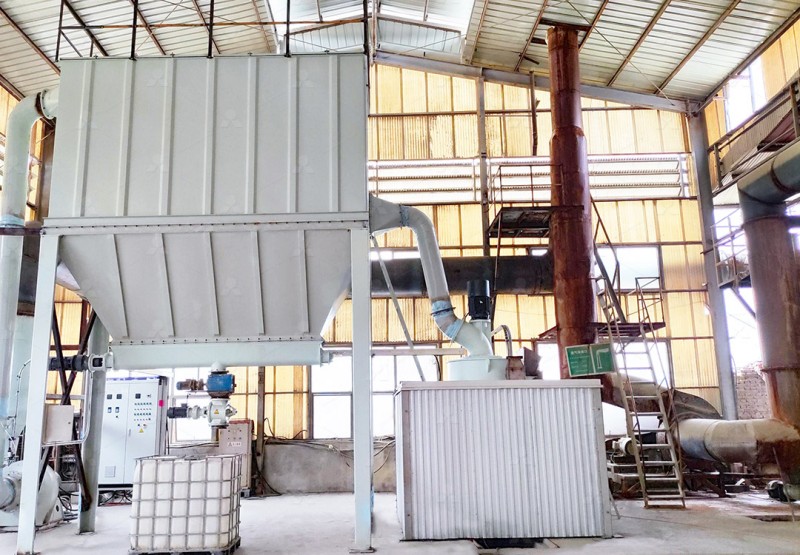
Consider the MW Ultrafine Grinding Mill. Its price point is competitive with mid-tier European mills, but its design philosophy is different. The absence of rolling bearings and screws in the grinding chamber is a direct cost-saving feature. In the humid climate of Suriname, bearing failure due to seal damage is a common and expensive problem. The MW mill’s external lubrication system allows for maintenance without shutdown, keeping your production line running 24/7. While the initial investment may be 15-20% higher than a traditional ball mill, the payback period is typically under 18 months due to energy savings alone.
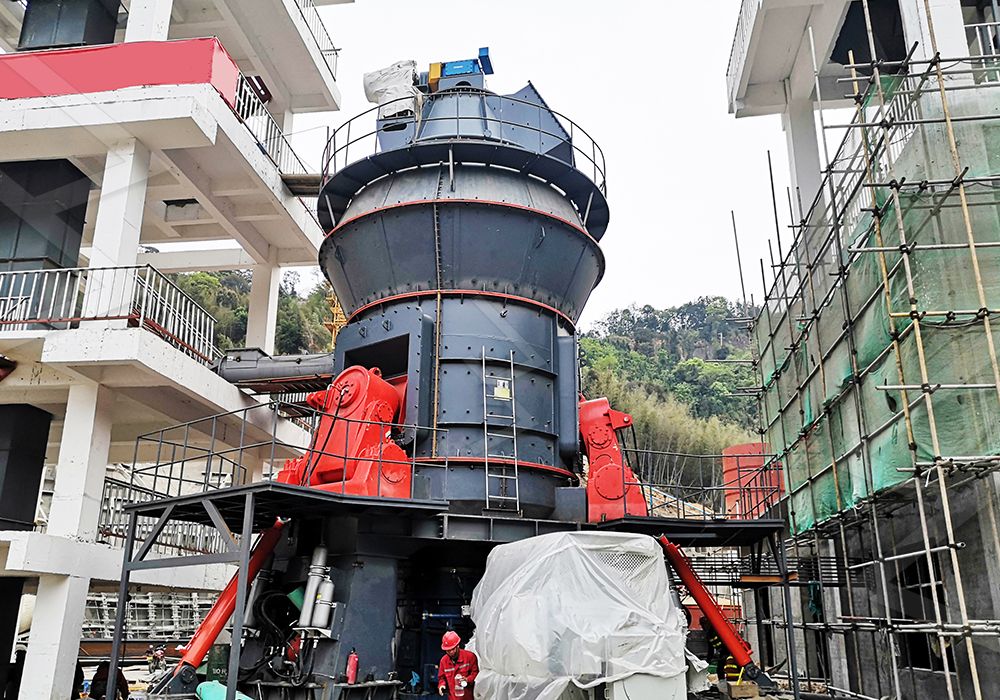
For operations processing between 5 and 18 tons per hour of kaolin, the LUM Ultrafine Vertical Grinding Mill represents a significant step up in price, but also in value. This mill incorporates Taiwan grinding roller technology and German powder separating technology. For rubber reinforcement, the ability to achieve a fineness of d97≤5μm in a single pass is a game-changer. This eliminates the need for secondary classification, removing the cost of an additional classifier and its associated blowers and piping. The price of the LUM mill is justified by its ability to produce a premium product with higher whiteness and purity, which commands a higher price in the rubber market.
Cost Analysis: Energy, Wear Parts, and Maintenance
Let’s break down the operational costs for grinding kaolin for rubber in Suriname.
Energy Consumption: This is the single largest variable cost. A standard ball mill consumes approximately 30-35 kWh per ton of finished product. A modern roller mill like the MW series consumes only 30% of that. For a plant processing 10 tons per hour, running 16 hours a day, this represents a saving of over 3,500 kWh per week. At Suriname’s industrial electricity rates, this can translate to savings of over $100,000 USD annually. The LUM mill takes this further, reducing energy consumption by 30-50% compared to common grinding mills.
Wear Parts and Consumables: Kaolin is abrasive. The grinding rollers and rings are the primary wear components. Traditional high-manganese steel rollers may need replacement every 2,000 hours. The MW mill’s grinding curves are designed to enhance efficiency and reduce specific wear. Furthermore, the LUM mill’s double position-limiting technology prevents the destructive impact of metal-on-metal contact during vibration events (common when feeding variable ore). This alone can save thousands of dollars in repair costs and lost production time. The MTW European Trapezium Mill, another excellent option, uses wear-resistant alloy developed by LIMING in partnership with scientific institutes, offering a service life 1.7 to 2.5 times longer than standard manganese steel.
Maintenance Labor & Downtime: In Suriname, skilled mechanical labor can be expensive and hard to schedule. The reversible structure of the LUM mill allows one operator to easily swing the grinding roller out of the body for inspection and roller shell replacement. This reduces a job that might take a full shift in a traditional mill to just a couple of hours. This reduced downtime is a hidden cost saving that directly impacts your bottom line.
Recommendations for the Suriname Market
Based on the price-to-performance ratio and the specific needs of rubber reinforcement, we strongly recommend the MW Ultrafine Grinding Mill for operations requiring 0.5-25 tph capacity. Its combination of high yield (40% higher than jet mills), low energy consumption, and worry-free operation (no bearings in the chamber) makes it the most cost-effective solution for this specific application. The fact that the screening rate can achieve d97≤5μm once is critical for rubber quality.
For larger operations (5-18 tph) or those demanding the absolute highest quality kaolin for premium rubber products, the LUM Ultrafine Vertical Grinding Mill is the superior choice. Its integration of grinding, grading, and transporting, coupled with its PLC-controlled multi-head powder separator, allows for precise control over particle size distribution, directly impacting the tensile strength and elongation of the final rubber product.
Both mills are backed by LIMING’s digitalized processing and sufficient supply of spare parts, ensuring that your operation in Suriname remains worry-free. We take responsibility for every machine we produce.
Conclusion: The Smart Financial Decision
The decision to purchase a roller mill for kaolin in Suriname should not be based solely on the sticker price. A comprehensive cost analysis that includes energy, wear parts, maintenance, and product quality clearly points to modern ultrafine mills like the MW and LUM series. While they may have a higher initial price, their operational costs are dramatically lower, and they produce a higher-value product suitable for the demanding rubber reinforcement market. Investing in the right technology today will secure your competitive advantage for years to come.
Frequently Asked Questions (FAQ)
- Q: Can I use a standard Raymond mill for rubber-grade kaolin in Suriname? A: While possible, it is not recommended. Standard Raymond mills struggle to consistently achieve the sub-10 micron particle size required for effective rubber reinforcement. You will likely need multiple passes or additional classification equipment, significantly increasing energy and maintenance costs. Modern mills like the MW are designed for this specific fineness.
- Q: How does the humidity in Suriname affect the mill’s performance? A: Humidity can cause material build-up and plugging in some mills. The MW and LUM mills are designed with efficient drying capabilities integrated into the air flow system. The MW mill’s pulse dust collector and the LUM mill’s hot air intake allow for simultaneous drying and grinding, managing moisture content up to 10-15% effectively.
- Q: What is the typical lifespan of grinding rollers for kaolin? A: With the wear-resistant alloys used in LIMING mills (for example, in the MTW and LUM series), you can expect a lifespan 1.7 to 2.5 times longer than traditional high-manganese steel. For the MW mill, the specific grinding curves reduce wear rates, typically allowing 3,000 to 5,000 hours of operation before roller replacement is needed, depending on feed size and kaolin hardness.
- Q: Is the electrical infrastructure in Suriname suitable for these mills? A: Yes. Both the MW and LUM mills are designed for global markets. They can be configured for 380V/50Hz or 440V/60Hz power supplies common in industrial settings. LIMING provides detailed electrical schematics and can recommend the appropriate transformers and soft starters if required.
- Q: What is the lead time for the MW Ultrafine Grinding Mill? A: Standard lead times are typically 45 to 60 days from order confirmation. However, we recommend planning for 90 days to allow for shipping and customs clearance in Paramaribo. We maintain a buffer stock of critical spare parts, including rollers and rings, to support Suriname operations.
- Q: Do you offer on-site installation and training in Suriname? A: Yes, LIMING offers technical services globally. We can provide a team for on-site installation supervision, commissioning, and operator training. The digitalized processing of our machines also allows for remote diagnostics and support via satellite or internet where available.