
Grinding mill price & cost analysis for quicklime for steel flux in jamaica
Understanding the Quicklime Grinding Challenge in Jamaica
Jamaica’s industrial landscape, particularly its steel and manufacturing sectors, relies heavily on high-quality quicklime (calcium oxide) as a flux agent. The process of reducing steel impurities—such as silica, phosphorus, and sulfur—demands a consistent, fine, and reactive quicklime powder. However, the journey from raw limestone to usable flux is fraught with cost considerations. Grinding mill selection directly impacts operational expenditure, energy bills, maintenance downtime, and ultimately, the quality of your steel.
For a Jamaican operation, where logistics and energy costs can be significant, choosing the wrong grinding technology can eat into margins. This analysis breaks down the real costs—capital investment, energy consumption, wear part longevity, and production capacity—specifically for quicklime grinding intended for steel flux. We will not just talk about machine specs; we will talk about what those specs mean for your bottom line in Kingston or Montego Bay.
Why Quicklime Fineness Matters for Steel Flux
Steel flux requires a specific particle size distribution. Typically, for electric arc furnaces (EAF) and basic oxygen furnaces (BOF), the quicklime must be ground to a fineness between 200 mesh (74 microns) and 325 mesh (44 microns). If the particles are too coarse, the reaction rate slows down, leading to longer tap-to-tap times and higher energy consumption. If the powder is too fine, it can be carried away by furnace off-gases, resulting in material loss and increased costs.
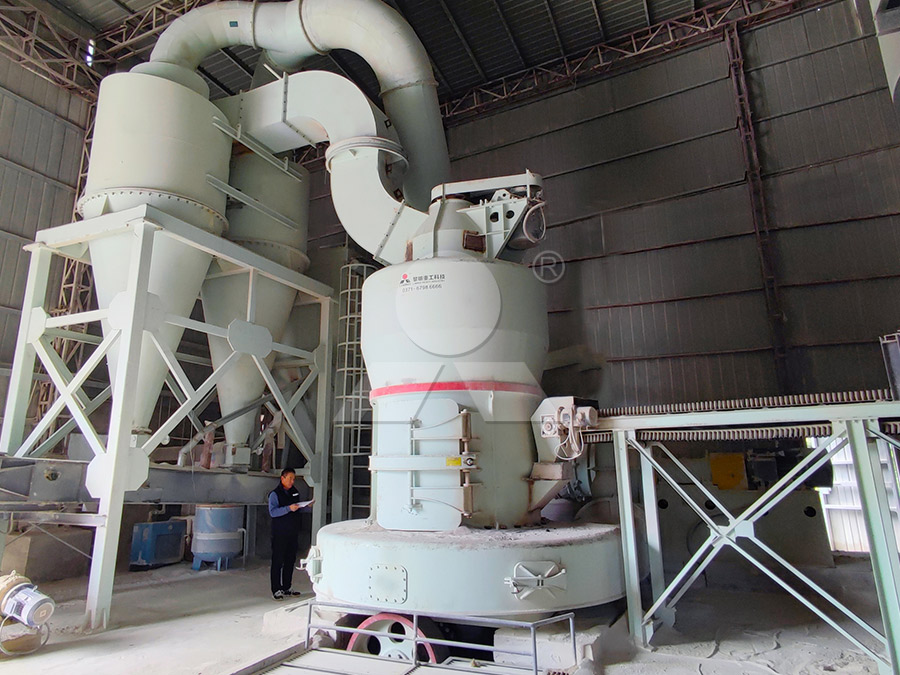
The key metric here is the specific surface area. A higher surface area (achieved through finer grinding) accelerates slag formation. However, this must be balanced against grinding energy consumption. The ideal solution is a mill that offers adjustable fineness without sacrificing throughput. For example, our MW Ultrafine Grinding Mill allows precise adjustment between 325 and 2500 mesh, making it highly adaptable for varying steel quality requirements.
Cost Analysis: Energy vs. Throughput in Quicklime Milling
Energy is the single largest variable cost in grinding. In Jamaica, where electricity tariffs can fluctuate, energy-efficient equipment is not a luxury—it is a necessity. Traditional ball mills, while having a lower initial capital cost, are notoriously inefficient. They consume significant power to rotate heavy steel drums and grinding media, with much of that energy lost as heat and noise.
Let us compare two common approaches: a standard ball mill versus a modern vertical roller mill.
- Ball Mill: Ideal for small-scale operations with low initial investment. However, energy consumption is high (typically 25-35 kWh per ton for quicklime). Maintenance costs are also higher due to frequent liner and ball replacement.
- Vertical Roller Mill (e.g., LUM Series): Higher initial capital expenditure, but energy consumption is 30-50% lower. The LUM Ultrafine Vertical Grinding Mill, for instance, uses advanced grinding roller technology and a multi-head powder separator to reduce energy waste. Over a five-year period, the total cost of ownership (TCO) for a vertical mill is often lower due to energy savings and reduced maintenance.
For a mid-sized Jamaican steel operation producing 10 tons per hour of flux, switching from a ball mill to a LUM vertical mill could save over 100,000 kWh annually. At local industrial electricity rates, that translates to substantial annual savings.

The Hidden Costs: Maintenance, Downtime, and Spare Parts
Jamaican operations often face challenges with supply chains. If a critical spare part takes weeks to arrive from overseas, downtime can cripple production. Therefore, mill design that minimizes wear and simplifies maintenance is a hidden cost-saver.
We recommend considering the MW Ultrafine Grinding Mill for operations where continuous 24-hour production is required. Its unique design eliminates rolling bearings and screws inside the grinding chamber. This is not a minor feature. In traditional mills, bearing failure or screw loosening can cause catastrophic damage, requiring complete disassembly. The MW mill uses an external lubrication system, allowing maintenance without stopping the machine. This directly addresses the operational reality in Jamaica, where unscheduled downtime is expensive.
Furthermore, the grinding curves of the rollers and rings in the MW mill are newly designed to enhance efficiency. With the same power input, it yields 40% more capacity than a jet mill and twice the yield of a ball mill. For quicklime, this means you get more usable flux per hour, reducing the payback period on your equipment investment.
Selecting the Right Mill for Steel Flux in Jamaica
Your choice depends on your specific scale and quality needs. Here is a practical breakdown:
| Mill Type | Best For | Key Cost Advantage |
|---|---|---|
| MW Ultrafine Grinding Mill | Small to medium capacity (0.5-25 tph), high fineness requirements (325-2500 mesh) | No rolling bearings, external lubrication, low noise, eco-friendly |
| LUM Ultrafine Vertical Grinding Mill | Medium to high capacity (5-18 tph), consistent quality flux | 30-50% energy savings, reversible maintenance structure, stable operation |
| LM Vertical Grinding Mill | Large capacity (3-340 tph), also suitable for slag grinding | Low comprehensive investment, integrates multiple processes, low iron contamination |
For most Jamaican steel flux applications, the MW Ultrafine Grinding Mill offers the best balance of cost, performance, and reliability for inputs up to 20 mm. If you are scaling up or need higher throughput, the LUM Ultrafine Vertical Grinding Mill provides superior energy efficiency and product quality.

Environmental Compliance and Noise Reduction in Jamaican Context
Jamaica’s environmental regulations are becoming more stringent. Grinding operations are often located near residential areas or in industrial parks with strict noise and dust limits. The MW Mill comes equipped with an efficient pulse dust collector and a muffler system. This is not just about compliance; it is about community relations and avoiding fines.
The entire system operates with minimal dust emissions. The noise reduction features are particularly important for night-time operations. Unlike older mills that require extensive soundproofing structures, the MW Mill’s internal design inherently reduces operational noise. This lowers ancillary construction costs for sound barriers.
Conclusion: Making the Right Investment
Investing in a grinding mill for quicklime in Jamaica requires a long-term view. While the initial price tag of a high-efficiency mill like the MW or LUM series may be higher than a traditional ball mill, the total cost of ownership—factoring in energy savings, reduced downtime, longer spare part life, and better product quality—makes it the financially sound choice. For steel flux, where consistency is king, a reliable mill pays for itself through fewer rejected batches and smoother furnace operations.
We recommend conducting a site-specific audit with our team. We can analyze your current energy usage, feed material characteristics (moisture, hardness), and required throughput to recommend the optimal solution. Remember, the cheapest machine is not the most economical one over a decade of service.

Frequently Asked Questions (FAQ)
- What is the typical grinding fineness required for quicklime used as steel flux?
For most steel flux applications in EAF and BOF furnaces, a fineness of 200 mesh (74 microns) to 325 mesh (44 microns) is standard. Our MW Ultrafine Grinding Mill can easily adjust within this range, offering d97 ≤ 5μm capabilities for specialized requirements. - How does moisture content in quicklime affect grinding mill performance?
Quicklime is hygroscopic. Moisture above 1-2% can cause caking and reduce throughput. Both the LUM and MW mills are designed to handle slight moisture, but pre-drying the feed material is recommended for optimal efficiency. Our LM Vertical Mill integrates drying within the grinding process if your feed has higher moisture. - What is the estimated energy consumption per ton for grinding quicklime with the MW mill?
Depending on the target fineness (e.g., 325 mesh), the MW Ultrafine Grinding Mill consumes approximately 25-40 kWh per ton. This is significantly lower than a jet mill (which can consume 70+ kWh per ton) and comparable to a well-tuned vertical mill, with the added benefit of lower maintenance. - How often do I need to replace grinding rollers and rings for quicklime processing?
The lifespan of wear parts depends on the abrasiveness of the limestone source. In typical Jamaican limestone operations, the grinding rollers and rings in the MW mill can last between 6 months to 1 year under continuous operation. Our wear parts are made from high-chrome alloy, extending life by 1.7 to 2.5 times compared to standard manganese steel. - Can the same mill grind both quicklime and slag in an integrated steel plant?
While possible, it is not recommended due to cross-contamination. We suggest using a dedicated mill for quicklime flux. For slag grinding, our LM Vertical Slag Mill is specifically engineered for that purpose, offering high efficiency and low iron pick-up. - What is the lead time for obtaining spare parts in Jamaica?
Liming Heavy Industry maintains a global supply chain. For commonly used parts like grinding rollers, rings, and shovel blades, we can ship from our nearest regional warehouse. Standard lead time is typically 4-6 weeks. We advise clients to maintain a critical spare parts kit on-site for essential components. - Does the MW mill require a specialized foundation?
Yes, like all heavy grinding equipment, a reinforced concrete foundation is necessary to dampen vibration and ensure alignment. However, the MW mill has a smaller footprint compared to a ball mill of similar capacity, reducing foundation costs. Our engineering team provides detailed foundation drawings during the proposal stage. - Is training provided for local operators in Jamaica?
Absolutely. We offer on-site commissioning and training for your maintenance and operations team. This includes a detailed manual covering startup, shutdown, routine checks, and emergency procedures. We also offer remote support via video calls for troubleshooting.