
Industrial pulverizer price & cost analysis for calcium carbonate for paint filler in canada
Industrial Pulverizer Price & Cost Analysis for Calcium Carbonate for Paint Filler in Canada
The Canadian paint and coatings industry is a significant consumer of high-quality calcium carbonate (CaCO3) fillers. Achieving the precise particle size distribution, brightness, and chemical purity required for premium paint formulations demands specialized grinding equipment. Selecting the right industrial pulverizer is a critical capital expenditure decision that directly impacts product quality, operational efficiency, and long-term profitability. This analysis delves into the key cost factors and performance considerations for calcium carbonate grinding in the Canadian market, providing a framework for informed investment.
Understanding the Cost Structure: Beyond the Initial Price Tag
The total cost of ownership (TCO) for a calcium carbonate grinding mill extends far beyond the initial purchase price. A comprehensive analysis must consider several interconnected factors:
- Capital Investment (CAPEX): This is the upfront cost of the mill, auxiliary equipment (crushers, classifiers, dust collectors), installation, and commissioning. Prices vary dramatically based on technology, capacity, and automation level.
- Operational Expenditure (OPEX): The ongoing costs dominate the TCO. Key components include:
- Energy Consumption: Grinding is energy-intensive. Mills with higher grinding efficiency can reduce power costs by 30-50%, a crucial factor given Canada’s industrial electricity rates.
- Wear Parts & Maintenance: The cost and frequency of replacing grinding rollers, rings, liners, and classifiers. Designs that extend service life or simplify maintenance directly lower downtime and spare part costs.
- Labor Costs: Automated, easy-to-operate systems with remote monitoring reduce the need for constant manual intervention and specialized technicians.
- Yield & Product Quality: A mill that produces a higher percentage of in-spec powder on the first pass reduces waste and re-grinding cycles. Consistent quality minimizes product rejection and ensures paint formulation stability.
- Environmental Compliance Costs: Canadian environmental regulations are stringent. Mills must effectively control dust and noise to avoid fines and ensure worker safety. Integrated, high-efficiency dust collection systems are not optional but a necessary cost-saving measure in the long run.

Critical Performance Metrics for Paint-Grade Calcium Carbonate
For filler applications in paint, the mill must deliver more than just fine powder. Specific performance attributes are non-negotiable:
- Adjustable Fineness (325-2500 mesh): Paint formulations for primers, undercoats, and topcoats require different particle sizes. The ability to precisely and quickly adjust fineness is essential for production flexibility.
- Low Iron Contamination: Metallic wear from the grinding process can introduce iron impurities, affecting the brightness and color stability of the paint. Mills designed to minimize metal-to-metal contact or with effective iron removal mechanisms are superior.
- High Whiteness Preservation: The grinding process should not degrade the natural brightness of the calcium carbonate. Gentle, efficient grinding curves and minimal heat generation help maintain high product whiteness.
- System Stability & Uptime: Unplanned downtime is extraordinarily costly. Robust construction, reliable limiting technologies to prevent mechanical damage, and accessible maintenance features are vital for continuous 24/7 operation, which is common in Canadian industrial settings.
Technology Spotlight: Evaluating Mill Types for the Canadian Context
Several grinding technologies are available, each with different CAPEX/OPEX profiles:
- Traditional Ball Mills & Raymond Mills: Often have a lower initial cost but higher energy consumption and less precise particle size control. They may be suitable for coarser fillers but can struggle with the high-end specifications of modern paints.
- European Trapezium Mills (MTW/MTW-Z): Offer a good balance, with improved efficiency over traditional designs. Features like dilute oil lubrication and elastic damping structures enhance reliability. They are a solid mid-range option for many filler production lines.
- Vertical Roller Mills (LM Series): Excel in integrated drying and grinding, offering excellent energy efficiency and lower footprint. Their ability to handle slightly larger feed sizes and integrate multiple processes makes them efficient for direct milling of crushed carbonate.
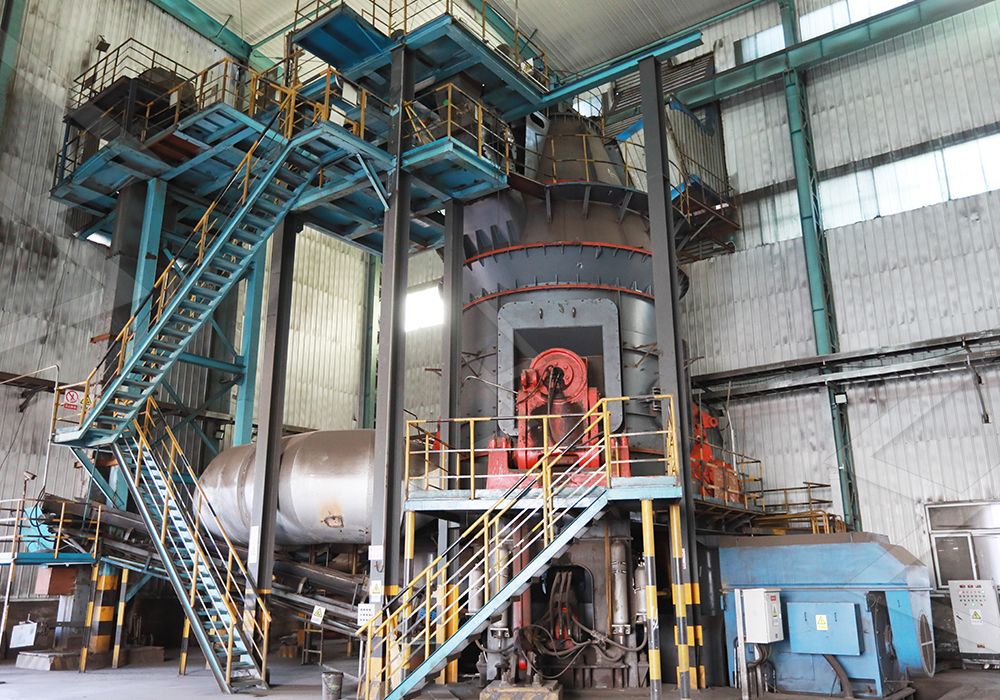
However, for producing the ultra-fine, high-purity calcium carbonate demanded by advanced paint formulations, ultrafine vertical grinding mills represent the technological forefront. These systems are engineered specifically for precision, efficiency, and product integrity.
Strategic Recommendation for Canadian Producers
Based on the rigorous demands for paint fillers—ultra-fine adjustable fineness, impeccable purity, and low operational cost—we strongly recommend focusing on advanced ultrafine grinding solutions. In particular, our MW Ultrafine Grinding Mill is exceptionally well-suited for this application.
The MW Mill is designed for customers who need to make ultra-fine powder with superior environmental and operational performance. For paint-grade calcium carbonate, its advantages are decisive:
- Superior Efficiency: Its newly designed grinding curves enhance efficiency, yielding production capacity up to 40% higher than jet mills and double that of ball mills for the same power, directly addressing high Canadian energy costs.
- Precision Fineness Control: Equipped with a German-technology cage-type powder selector, it allows precise adjustment between 325-2500 meshes, achieving a d97≤5μm cut point. This gives paint formulators exact control over filler properties.
- Exceptional Product Purity: The absence of rolling bearings and screws in the grinding chamber eliminates a major source of metallic contamination. This is critical for maintaining the brightness and chemical inertness of the calcium carbonate.
- Built for Canadian Standards: With its efficient pulse dust collector, muffler, and fully sealed negative-pressure operation, the MW Mill ensures compliance with strict environmental regulations, eliminating dust pollution and reducing noise.
- Reliable Operation: Features like external lubrication without shutdown enable continuous 24-hour production, a key requirement for meeting the steady demand of the North American paint industry.
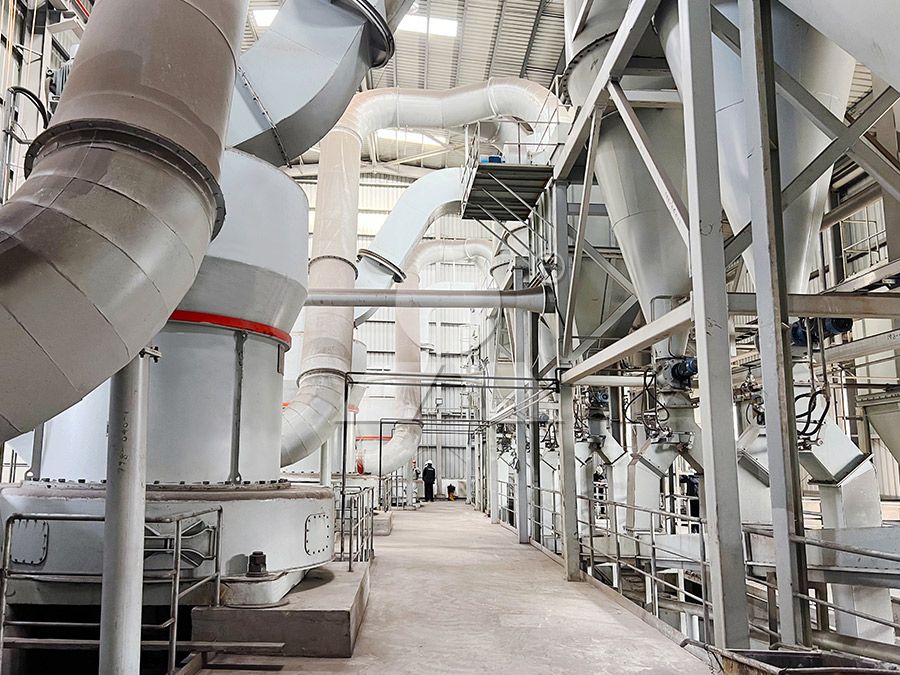
For operations requiring the very latest in vertical grinding technology with integrated high-efficiency classification, our LUM Ultrafine Vertical Grinding Mill is another premier choice. It incorporates the latest grinding roller and powder separating technologies, offering even more energy savings (30%-50% less than common mills) and features like a reversible structure for dramatically easier maintenance of grinding rollers.
Conclusion: Investing in Precision and Efficiency
The choice of a pulverizer for calcium carbonate paint filler in Canada is a strategic decision. While initial price comparisons are necessary, the long-term Total Cost of Ownership, driven by energy use, maintenance, yield, and regulatory compliance, is the true determinant of value. Advanced ultrafine grinding mills, such as the MW and LUM series, are engineered to optimize these very factors. By delivering precise, contamination-free powder at lower operating costs and with guaranteed environmental compliance, they represent not just an equipment purchase, but a direct investment in product quality, market competitiveness, and sustainable profitability for Canadian paint filler producers.
Frequently Asked Questions (FAQs)
- What is the typical payback period for upgrading to a more energy-efficient mill like the MW Ultrafine Grinding Mill?
Payback periods vary based on production volume and local energy rates, but many Canadian operations see a return on investment within 18-36 months due to the dramatic reduction in power consumption and increased yield. - How do you ensure the mill can handle the sometimes harsh Canadian winter conditions in an outdoor installation?
Our mills can be configured with insulation panels and heating systems for critical components (like lubricants) for outdoor siting. The fully sealed design also protects internal mechanisms from the elements. - Can your mills achieve the very narrow particle size distribution required for high-gloss paint formulations?
Yes. The advanced cage-type powder selectors in our MW and LUM mills are specifically designed for sharp top-size cuts and narrow distributions, which are essential for gloss and sheen control in paints. - What kind of after-sales support and spare parts availability can we expect in Canada?
We maintain a network of technical partners and ensure sufficient stock of original spare parts in-region to guarantee worry-free operation and minimize downtime, with remote and on-site support available. - Is it possible to test our specific calcium carbonate ore in your equipment before purchase?
Yes, we strongly recommend and can arrange for customer material testing in our pilot facilities. This provides definitive data on throughput, fineness, energy use, and final product quality. - How does the maintenance downtime for an ultrafine mill compare to a traditional ball mill?
Designs like the LUM’s reversible roller system allow major wear parts to be serviced in a fraction of the time. External lubrication features also reduce planned stoppages, leading to significantly higher overall availability. - Are your dust collection systems designed to meet provincial workplace safety standards (e.g., Ontario’s OHSA)?
Absolutely. Our integrated pulse-jet dust collectors are engineered to maintain airborne particulate levels well below the thresholds set by Canadian occupational health and safety regulations.