
Industrial pulverizer for talc for paint filler in usa
Industrial Pulverizer for Talc for Paint Filler in the USA: A Technical Guide to Achieving Superior Fineness and Performance
The American paint and coatings industry is a demanding arena where quality, consistency, and efficiency are non-negotiable. A critical component in many formulations, especially primers, matte finishes, and industrial coatings, is the functional filler. Talc, a hydrated magnesium silicate, stands out for its ability to improve sanding properties, control sheen, enhance suspension, and provide reinforcement. However, the efficacy of talc is intrinsically tied to its particle size distribution and purity. This is where the selection of an industrial pulverizer transitions from a simple procurement decision to a strategic investment in product quality and operational excellence.
For engineers and plant managers across the USA, the challenge lies in identifying grinding technology that can consistently deliver ultra-fine talc powder (often in the range of 325 to 2500 mesh) without compromising on throughput, energy efficiency, or introducing contaminants. The wrong equipment can lead to inconsistent batch quality, high maintenance downtime, excessive energy bills, and environmental compliance headaches.

The Critical Demands of Talc Processing for Coatings
Processing talc for premium paint fillers is not merely about reduction in size. It’s a precision operation with specific goals:
- Ultra-Fine & Consistent Particle Size: The fineness directly impacts opacity, gloss control, and film smoothness. A narrow particle size distribution is crucial for predictable performance.
- Low Iron Contamination: Metallic wear from the mill itself can introduce iron particles, which may cause discoloration (yellowing) and reduce the whiteness of the talc—a key selling point.
- High Production Efficiency: The system must offer high yield with lower specific energy consumption (kWh/ton) to maintain competitiveness.
- Environmental & Operational Cleanliness: Dust control is paramount for worker safety and EPA compliance. Noise levels and system sealing are also major operational considerations.
- Product Purity & Whiteness: The grinding process must preserve, or even enhance, the natural brightness of the talc, avoiding any heat-induced or mechanical degradation.
Traditional ball mills, while common, often struggle with high energy consumption, potential for contamination, and limited ability to achieve the finest cuts efficiently. Jet mills, though capable of fine grinding, carry high operational costs related to compressed air. The modern solution lies in advanced, mechanical grinding mills designed specifically for ultrafine applications.

Advanced Milling Technology: Matching the Machine to the Mission
Leading manufacturers have developed next-generation pulverizers that directly address the pain points of talc processing. When evaluating equipment, focus on these technological differentiators:
- Precision Particle Classification: Look for integrated, high-efficiency classifiers (like cage-type or turbine separators) that allow real-time, adjustable control over fineness from 325 to 2500 meshes without stopping the mill.
- Innovative Grinding Geometry: The design of the grinding rollers and raceway/table is critical. Curved profiles engineered to create a stable material bed and promote inter-particle grinding lead to higher efficiency and better product quality.
- Contamination-Free Design: Mills that eliminate rolling bearings and screws from the actual grinding chamber virtually eradicate a primary source of iron contamination. External lubrication systems further protect product purity.
- Integrated Environmental Systems: A true turnkey system includes a high-efficiency pulse jet dust collector and silencers, ensuring the entire operation meets stringent U.S. environmental standards right out of the gate.
- Smart & Stable Operation: Features like PLC control systems, hydraulic roller systems for easy maintenance, and mechanical limiting devices to prevent grinding component contact ensure stable, automated, and worry-free 24/7 operation.
Engineered Solutions for American Paint Manufacturers
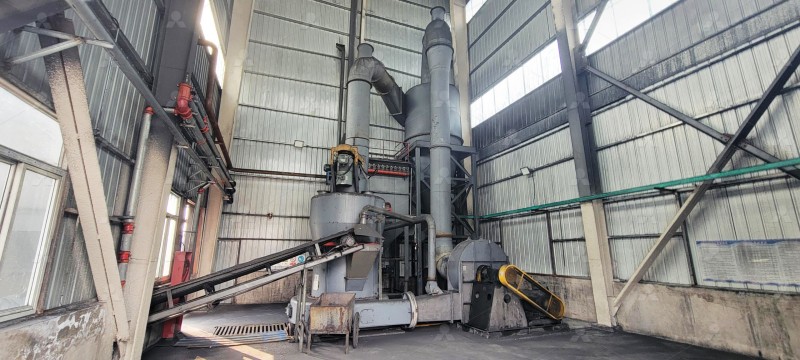
Based on years of R&D and global application experience, specific mill series have proven exceptionally effective for talc filler production. For operations requiring top-tier ultrafine powder with outstanding whiteness and cleanliness, the MW Ultrafine Grinding Mill is a standout choice.
This mill is engineered for customers dedicated to making ultra-fine powder. It handles an input size of 0-20 mm with a capacity ranging from 0.5 to 25 tph, making it suitable for various production scales. A key advantage for paint-grade talc is its design: there are no rolling bearings or screws in the grinding chamber. This eliminates concerns about bearing seal failure and associated metallic contamination, safeguarding the critical whiteness of your talc filler. Furthermore, its German-technology-derived cage-type powder selector allows precise fineness adjustment between 325-2500 meshes, achieving a d97 ≤5μm in a single pass. Coupled with its efficient pulse dust collector and muffler, the MW Mill delivers higher yield with lower energy consumption in an environmentally sound package.

For applications demanding the pinnacle of vertical grinding technology with exceptional drying capabilities, the LUM Ultrafine Vertical Grinding Mill presents another compelling option. With an input size of 0-10 mm and capacity of 5-18 tph, it integrates ultrafine grinding, grading, and transporting. Its unique roller shell and lining plate grinding curve are designed to generate a material layer easily, enabling a high rate of finished product in a single pass. This not only boosts efficiency but also improves the whiteness and cleanliness of the talc—a direct benefit for premium paint formulations. Its reversible structure allows grinding rollers to be easily swung out for maintenance, minimizing downtime.
Conclusion: Investing in Precision
Selecting an industrial pulverizer for talc in the U.S. paint industry is a decision that reverberates through your product quality, operational costs, and regulatory standing. By moving beyond conventional milling and adopting advanced technologies that emphasize precision classification, contamination control, and energy efficiency, manufacturers can secure a significant competitive edge. Partnering with a supplier that provides comprehensive technical support and genuine spare parts ensures this edge is maintained over the long haul, turning your talc grinding operation from a cost center into a cornerstone of quality and reliability.
Frequently Asked Questions (FAQs)
- What is the typical fineness range required for talc in paint fillers?
Most paint applications require talc fillers in the range of 325 mesh (45 microns) to 2500 mesh (5 microns). Finer grades are used for higher gloss control and smoother film surfaces. - How does the milling process affect the brightness (whiteness) of talc?
Mechanical wear from metal parts and excessive heat can introduce contaminants and degrade whiteness. Mills designed without internal bearings/screws and with efficient grinding geometries minimize this risk. - What are the key advantages of a vertical grinding mill over a traditional ball mill for talc?
Vertical mills typically offer 30-50% lower energy consumption, integrated drying (if needed), a smaller footprint, better control over particle size, and significantly lower iron contamination. - How important is the classifier in an ultrafine talc grinding system?
It is critical. A high-precision classifier (e.g., cage-type) determines the final particle size distribution. It allows on-the-fly adjustment and ensures only properly sized particles exit the mill, maximizing efficiency. - Can these grinding systems handle other minerals used in paint production?
Absolutely. Advanced mills like the MW and LUM series are also perfectly suited for grinding calcium carbonate, barite, kaolin, and mica, offering flexibility for multi-mineral processing plants. - What kind of dust control is integrated into modern pulverizers?
Modern systems are sold as closed-loop circuits with high-efficiency pulse jet baghouse dust collectors, ensuring dust emissions are far below EPA and OSHA requirements. - What is the expected maintenance interval for the grinding rollers and rings?
This depends on material abrasiveness and throughput. However, wear parts made from advanced alloys can last thousands of operating hours. Designs that allow easy external inspection and replacement further reduce downtime. - Is remote monitoring and operation possible with these milling systems?
Yes, most advanced mills come with PLC-based control systems that allow for full automation, data logging, and can be integrated into plant-wide SCADA systems for remote monitoring and control.