
Using roller mill for talc for paint filler in oman
Using Roller Mill for Talc for Paint Filler in Oman: A Technical and Commercial Perspective
The Sultanate of Oman’s industrial landscape is undergoing a significant transformation, with a growing emphasis on value-added mineral processing. Among the key minerals, talc holds a prominent position, especially as a critical functional filler in the paint and coatings industry. The quality of the final paint product—its opacity, texture, durability, and gloss—is intrinsically linked to the particle size distribution, whiteness, and purity of the talc powder used. This is where the choice of grinding technology becomes paramount. While traditional ball mills have been commonplace, the shift towards advanced roller mill systems is redefining efficiency and product quality standards for talc processing in the region.
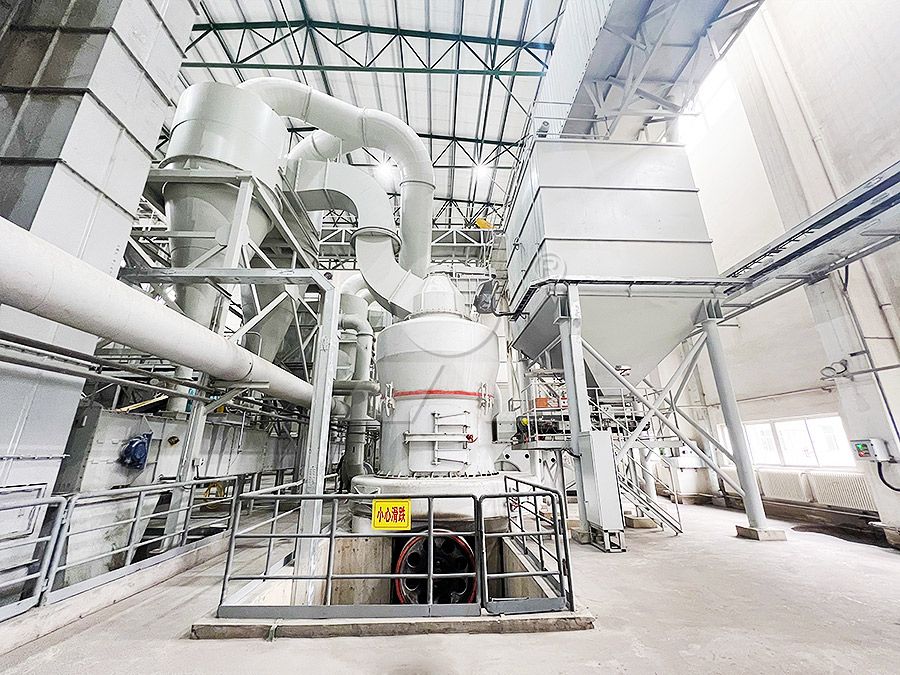
The Critical Role of Talc in Paint Formulations
In paint manufacturing, talc is not merely an inert extender. It serves multiple functions: it improves suspension, reduces settling, enhances sanding properties, provides corrosion resistance, and contributes to the overall film integrity. For these benefits to be fully realized, the talc must be ground to a precise and consistent fineness, typically ranging from 325 mesh to 2500 mesh for high-end applications. Achieving this ultra-fine spectrum while maintaining low iron content (for whiteness) and high throughput is a technical challenge that conventional mills often struggle to meet cost-effectively.
Why Roller Mills are Gaining Traction in Omani Operations
Roller mills, particularly vertical roller mills and advanced trapezium mills, offer distinct advantages for talc processing that align perfectly with Oman’s industrial goals of efficiency, environmental compliance, and high-quality output.
- Energy Efficiency: Roller mills operate on the principle of material bed comminution, where particles are ground against each other under pressure. This method consumes significantly less energy—often 30% to 50% less—compared to the impact and attrition-dominated grinding in ball mills. For Omani plants facing energy cost considerations, this is a major operational advantage.
- Superior Product Quality: The controlled grinding environment and efficient internal classification systems in modern roller mills produce a tighter particle size distribution. This consistency is crucial for paint performance. Furthermore, the minimal direct metal-to-metal contact in the grinding zone (e.g., between rollers and raceways) drastically reduces iron contamination, preserving the natural brightness of Omani talc.
- Integrated Drying: Many roller mill systems can integrate hot gas streams, allowing simultaneous drying and grinding. This is a valuable feature for processing talc, which may contain residual moisture from mining or transportation, eliminating the need for a separate, energy-intensive drying step.
- Compact Footprint & Environmental Compliance: With their vertical or integrated design, roller mills occupy less space than traditional ball mill circuits. They are also typically equipped with advanced pulse-jet baghouse filters and sound-dampening enclosures, ensuring dust emissions and noise levels are well within Oman’s stringent environmental regulations.

Selecting the Right Mill for Omani Talc: A Focus on Ultra-Fine Processing
For paint filler production, where the premium is on ultra-fine powders (often d97 < 10µm), not all roller mills are created equal. The market demands technology that can reliably achieve high fineness with stable output and low operational headaches. Based on extensive field experience and the specific requirements of the paint industry, our MW Ultrafine Grinding Mill stands out as an exemplary solution.
Engineered for customers who need to make ultra-fine powder, the MW Series is particularly well-suited for high-value minerals like talc. With an input size of 0-20 mm and a capacity range of 0.5-25 tph, it offers flexibility for various production scales. Its core advantages directly address the pain points of talc processors:
- Higher Yielding, Lower Energy Consumption: Its newly designed grinding curves enhance efficiency, offering production capacity up to 40% higher than jet mills and double that of ball mills for the same fineness, while system energy consumption is slashed to just 30% of a jet mill’s.
- Precise Fineness Control (325-2500 meshes): The cage-type powder selector, utilizing German technology, ensures accurate classification. The fineness can be precisely adjusted, achieving a screening rate of d97≤5μm in a single pass—ideal for premium paint grades.
- Exceptional Reliability: A groundbreaking design feature is the absence of rolling bearings and screws in the grinding chamber. This eliminates failures related to bearing seals and loose screws, a common source of unplanned downtime. External lubrication allows for 24/7 continuous operation.
- Eco-Friendly Operation: The integrated efficient pulse dust collector ensures a dust-free environment, while silencers manage noise, making the entire production line compliant with national and international environmental standards.
For operations requiring a different approach, our LUM Ultrafine Vertical Grinding Mill is another top-tier choice. Integrating the latest grinding roller and powder separating technology, it excels in producing superfine dry powder. Its unique roller shell design promotes stable material layer formation for efficient single-pass milling, directly enhancing the whiteness and cleanliness of the talc product—a critical factor for paint fillers.
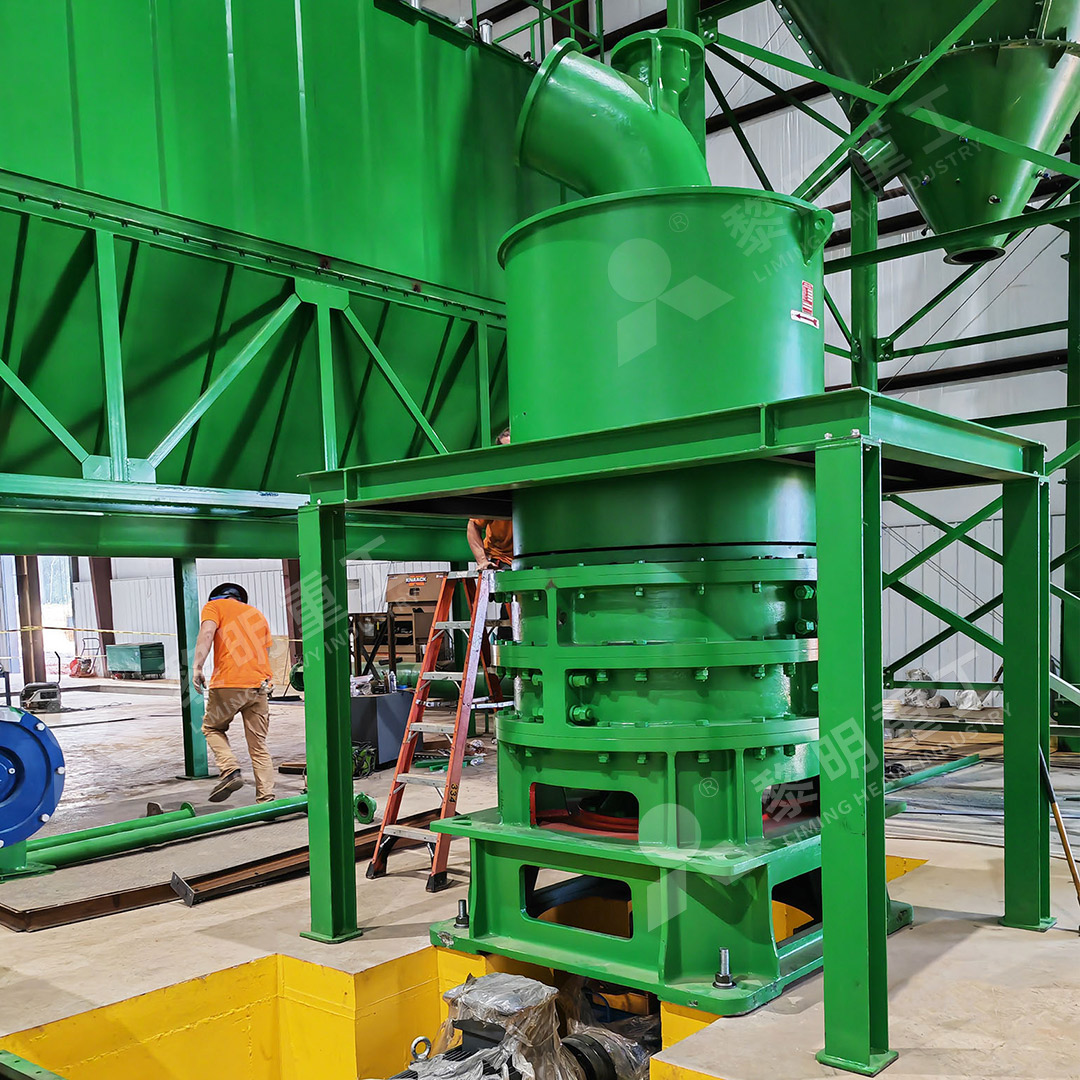
Conclusion: Partnering for Success in Oman’s Market
The transition to advanced roller mill technology for talc processing is more than an equipment upgrade; it’s a strategic move to enhance competitiveness in the global paint supply chain. For Omani enterprises, investing in a system like the MW Ultrafine Grinding Mill means securing a reliable, efficient, and clean method to transform high-quality local talc into a premium, value-added export product. By focusing on precision engineering, energy savings, and operational stability, such technology provides a solid foundation for growth, ensuring that Omani talc fillers meet the exacting standards of the world’s paint manufacturers.
Frequently Asked Questions (FAQs)
- What is the typical fineness range required for talc in paint, and can your mills achieve it?
Talc for paint fillers typically ranges from 325 mesh (45μm) for primers to 1250-2500 mesh (10-5μm) for top-coats and high-gloss finishes. Our MW Ultrafine Grinding Mill is specifically designed to adjust fineness between 325-2500 meshes reliably, achieving d97≤5μm for the finest grades. - How does the energy consumption of the MW Mill compare to a traditional ball mill for talc grinding?
The MW Mill’s material bed grinding principle is far more efficient. In practical applications, it can reduce energy consumption by approximately 50% compared to a ball mill producing the same fineness of talc powder. - We are concerned about iron contamination affecting talc whiteness. How does your mill address this?
Both the MW and LUM mills minimize iron contamination. The MW Mill has no rolling bearings in the grinding zone, and both mills use wear-resistant alloys for grinding components. The grinding mechanics also reduce direct metal-to-metal abrasion, ensuring the final product retains its natural brightness. - Can the system handle the varying moisture content sometimes found in raw talc?
Yes. While the MW Mill is primarily a grinding system, we can configure the feeding system with a pre-dryer if needed. Our LM Vertical Grinding Mill series is explicitly designed for integrated drying and grinding, handling materials with certain moisture content effectively. - What is the operational footprint of the MW Mill, and is it suitable for a plant with space constraints?
Roller mills have a significantly smaller footprint than traditional ball mill circuits. The MW Mill’s vertical design and integrated classifier and collector make it a very compact system, ideal for plants looking to maximize production within limited space. - How is dust control managed to meet Oman’s environmental standards?
The MW Mill comes equipped with an efficient pulse-jet baghouse dust collector as standard. This closed-circuit system ensures that dust emissions are virtually nil, keeping the work environment clean and fully compliant with strict environmental regulations. - What kind of after-sales support and spare parts availability can we expect in Oman?
We provide comprehensive technical support, including installation supervision and operator training. We maintain a supply of original spare parts and have service protocols to ensure worry-free operation and minimize downtime for our clients in Oman and across the region.