
Using raymond mill for calcium carbonate for paper coating in uganda
Using Raymond Mill for Calcium Carbonate for Paper Coating in Uganda: A Practical Guide
The Ugandan paper industry is on a promising growth trajectory, driven by increasing local demand for packaging, printing, and educational materials. A critical component in producing high-quality coated paper is the filler and coating pigment, where finely ground calcium carbonate (GCC) plays a starring role. For many Ugandan manufacturers, balancing production efficiency, product quality, and investment cost is paramount. This is where the proven technology of the Raymond Mill comes into sharp focus.
Calcium carbonate used in paper coating requires a specific particle size distribution. It must be fine enough to provide a smooth, opaque, and bright surface, yet the grinding process must be economical and reliable. The traditional Raymond Mill, a first-generation grinding mill, has been a workhorse in mineral processing for decades. Its principle is straightforward: materials are fed into the grinding chamber where rotating rollers oscillate outward to press against a stationary ring, crushing the material into powder. A built-in classifier ensures only particles of the desired fineness proceed to the collection system.
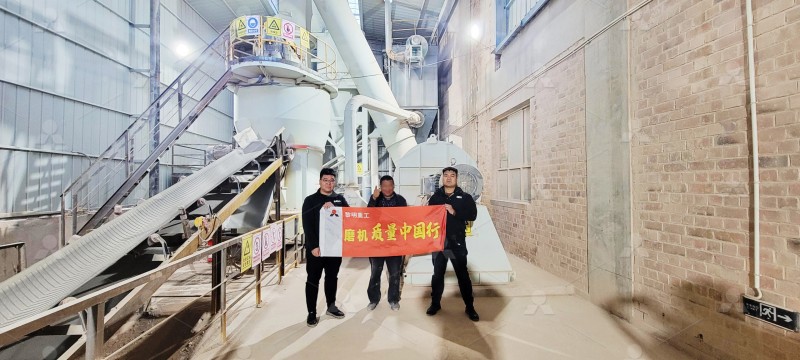
For a Ugandan paper coating plant with moderate capacity needs, the standard Raymond Mill offers distinct advantages. Its structure is simple, leading to a lower initial investment compared to more complex systems. The machine covers a small area, which is beneficial where industrial space is at a premium. Furthermore, its operation and maintenance are relatively straightforward, a crucial factor where access to highly specialized technical expertise might be limited. With an input size of <25 mm and a capacity range of 0.6-5 tph, it can be well-suited for small to medium-scale coating pigment production lines.
Beyond the Basics: When to Consider Advanced Grinding Solutions
While the classic Raymond Mill is a viable entry point, the quest for higher productivity, superior product fineness, and lower energy consumption per ton is relentless. As Ugandan paper mills aim to compete regionally, the specifications for coating-grade calcium carbonate become more stringent. This often demands grinding to finer meshes with tighter particle distribution and higher whiteness—factors directly influenced by the grinding technology.
This is where modern, evolved grinding technologies demonstrate their value. For operations that have outgrown their initial setup or are planning new, future-proof facilities, considering advanced mills is a strategic move. For instance, the MW Ultrafine Grinding Mill represents a significant leap forward. Designed specifically for ultra-fine powder production, it addresses several limitations of older designs. Its cage-type powder selector, incorporating German technology, allows precise fineness adjustment between 325-2500 meshes, easily achieving the d97≤5μm fineness often required for high-grade paper coatings. Notably, its grinding chamber eliminates rolling bearings and screws, removing common failure points and enabling worry-free, continuous 24-hour operation—a key feature for maintaining consistent production schedules.
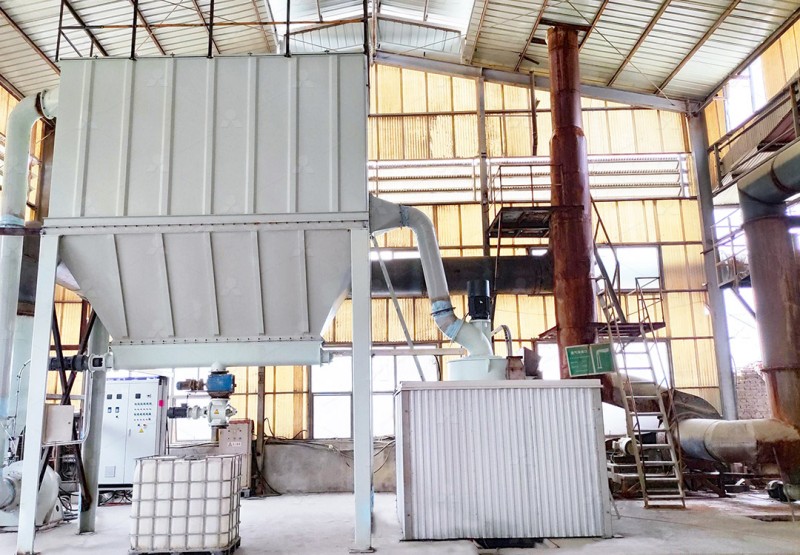
Another formidable contender for high-quality calcium carbonate production is the LUM Ultrafine Vertical Grinding Mill. It integrates grinding, classifying, and transporting in a single, compact tower. Its unique roller and lining plate curve is designed to generate a stable material layer, promoting efficient inter-particle grinding. This results in a higher once-through yield rate, better product whiteness, and lower iron contamination—critical for coating brightness. The LUM mill also features a reversible structure, allowing grinding rollers to be easily swung out for maintenance, drastically reducing downtime for wear part inspection and replacement.
Key Considerations for Ugandan Operators
Selecting the right equipment goes beyond technical specifications. Practical, on-the-ground factors must weigh heavily in the decision:
- Power Stability & Energy Efficiency: Grinding mills are significant power consumers. Mills with higher grinding efficiency and lower specific energy consumption, like the MW or LUM series, can offer substantial savings on operating costs and are more forgiving in environments with expensive or fluctuating power.
- Dust Control & Environmental Compliance: Modern mills are designed with integrated, efficient pulse dust collectors and silencers. This closed, negative-pressure system ensures a clean workshop and meets environmental standards, which are increasingly important.
- After-Sales Support & Spare Parts: Reliable access to technical services and genuine spare parts is non-negotiable for minimizing operational risk. Partnering with a manufacturer that guarantees this support, like LIMING which provides original spare parts and technical backing for all its machines, is a critical aspect of a worry-free investment.
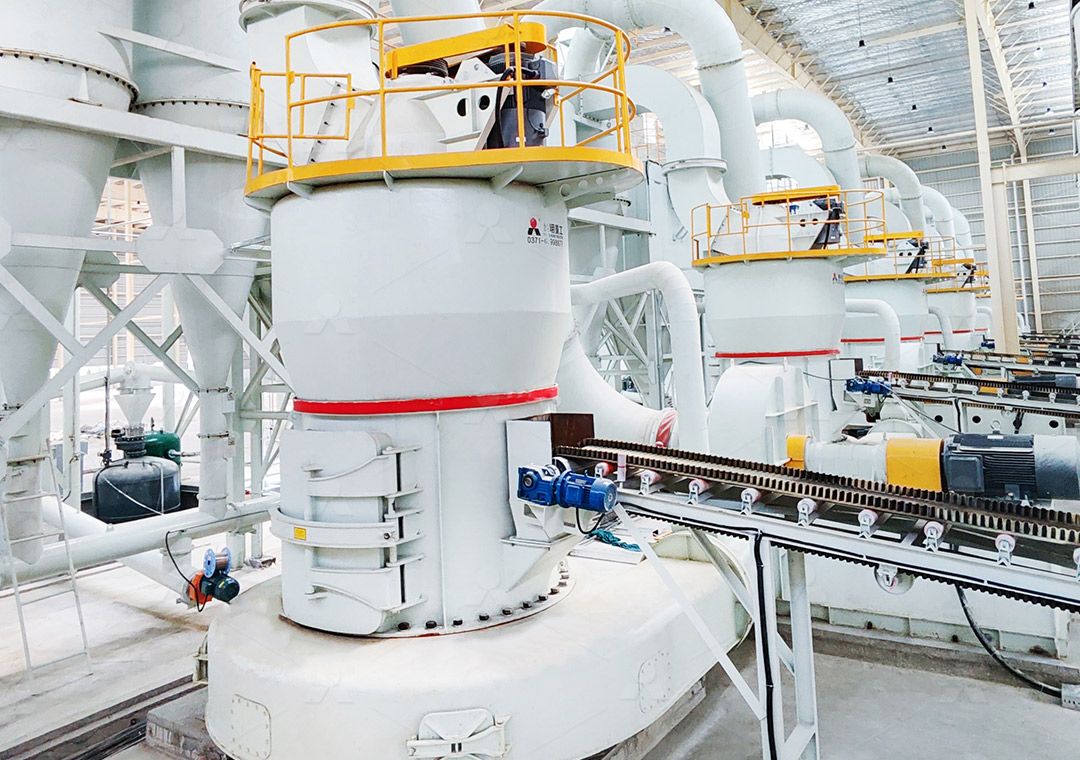
In conclusion, the classic Raymond Mill provides a solid, cost-effective foundation for entering the calcium carbonate grinding market for paper coating in Uganda. However, for producers targeting higher efficiency, superior product quality for premium paper grades, and lower long-term operating costs, advanced solutions like the MW Ultrafine Grinding Mill or the LUM Ultrafine Vertical Grinding Mill are compelling investments. They embody the technological progress that can empower Ugandan manufacturers to not only meet local demand but also build a competitive edge in the broader East African market.
Frequently Asked Questions (FAQs)
- What is the typical fineness range needed for calcium carbonate in paper coating, and can Raymond Mills achieve it?
For paper coating, calcium carbonate often requires a top cut (d97) of 2 to 5 microns. While traditional Raymond Mills can produce fine powder, achieving consistent results in this ultra-fine range (<5μm) with high efficiency is better handled by advanced mills like the MW series, which is engineered for 325-2500 mesh (approximately 45-5 microns) with high precision. - How significant is the energy consumption difference between a Raymond Mill and newer models like the MW Mill?
The difference can be substantial. Advanced mills incorporate optimized grinding curves and efficient classifiers. For example, the MW Ultrafine Grinding Mill can have a system energy consumption as low as 30% of some jet mills and offers significantly higher yield per unit of energy compared to traditional ball mills, leading to major operational cost savings. - We have issues with frequent bearing failures in our current equipment. Is there a solution?
Yes. This is a known pain point in some grinding systems. The MW Ultrafine Grinding Mill is designed specifically to address this. Its grinding chamber has no rolling bearings or screws, eliminating these common failure modes entirely and greatly enhancing operational reliability. - How easy is it to adjust the product fineness on these mills to switch between different coating recipes?
Modern mills offer much easier and more precise control. The MW and LUM mills feature advanced, multi-head cage-type powder selectors. Their fineness can be adjusted quickly and accurately, often via a control system, to meet different production demands without requiring lengthy mechanical changes. - What about dust pollution? Our plant needs to maintain a clean environment.
Contemporary grinding systems are designed as closed-loop, negative-pressure systems. Both the MW and LUM mills come equipped with high-efficiency pulse dust collectors, ensuring that dust generated during grinding is captured and contained. This makes the operation eco-friendly and compliant with workplace and environmental health standards. - Is the maintenance for a vertical mill like the LUM more complicated than for a traditional Raymond Mill?
Interestingly, it can be simpler for major wear parts. The LUM mill’s reversible structure allows the heavy grinding rollers to be hydraulically swung out of the mill body. This provides easy access for checking, replacing roller shells, and performing maintenance without complex disassembly, potentially reducing downtime compared to some traditional designs. - Can these mills handle the raw calcium carbonate stone commonly available in the region?
Absolutely. These mills are built to process non-metallic minerals like calcite, limestone, and marble—the primary sources of calcium carbonate. As long as the feed material is crushed to the required input size (e.g., 0-20mm for the MW mill, 0-10mm for the LUM), they will handle it efficiently.