
Using industrial pulverizer for bentonite for drilling mud in india
Optimizing Bentonite Processing for Drilling Mud in India: A Technical Guide to Industrial Pulverization
The Indian drilling industry, a cornerstone of the nation’s energy and infrastructure development, relies heavily on high-quality bentonite for its drilling mud formulations. Bentonite’s unique properties—its ability to swell, form viscous suspensions, and provide colloidal stability—are critical for lubrication, cooling, borehole stabilization, and cuttings removal. However, the efficacy of bentonite is intrinsically linked to its particle size distribution and purity. This is where the selection of an appropriate industrial pulverizer becomes a decisive factor for operational success and cost efficiency.
Processing raw bentonite into a consistent, ultra-fine powder suitable for drilling mud presents specific challenges. The ideal mill must achieve a precise fineness (typically targeting a high percentage of particles below 75 microns) to maximize swelling capacity and gel strength. It must also handle the sometimes-moist feed material efficiently, minimize iron contamination (which can affect mud chemistry), and operate reliably in demanding industrial environments. A suboptimal grinding solution can lead to inconsistent mud performance, increased additive consumption, and higher operational downtime.
Key Considerations for Bentonite Pulverizer Selection
When evaluating grinding equipment for bentonite, engineers and plant managers must scrutinize several technical parameters:
- Fineness Control & Adjustability: The ability to precisely control and adjust the product’s mesh size is non-negotiable. Different drilling applications may require slightly different particle profiles. A mill with an advanced, adjustable powder classifier is essential.
- Grinding Efficiency & Energy Consumption: Bentonite processing is energy-intensive. Modern mills designed with optimized grinding curves and efficient transmission systems can drastically reduce power consumption per ton of output, directly impacting the bottom line.
- System Integration & Environmental Compliance: A complete grinding system should integrate drying (if needed), grinding, classifying, and conveying with effective dust collection. Given India’s stringent environmental norms, a mill equipped with a high-efficiency pulse dust collector and noise reduction features is not just an option but a necessity for sustainable operation.
- Maintenance & Operational Stability: The abrasive nature of minerals demands robust construction. Designs that simplify maintenance—such as external lubrication systems or reversible rollers—minimize unplanned shutdowns and ensure continuous production.
Among the array of grinding technologies available, vertical roller mills and advanced trapezium mills have proven particularly effective for bentonite. Their ability to simultaneously dry and grind, coupled with efficient internal classification, makes them a preferred choice for modern plants.

Advanced Milling Solutions for Superior Bentonite Powder
For operations demanding the highest levels of fineness and purity for specialized drilling muds, the MW Ultrafine Grinding Mill presents a compelling solution. Engineered for ultra-fine powder production, this mill excels in processing bentonite to fineness levels between 325 and 2500 meshes. Its defining feature is a German-technology, cage-type powder selector that ensures precise particle separation, achieving a screening rate of d97≤5μm in a single pass. This results in bentonite powder with exceptional colloidal activity.
Operational reliability is built into its design. The absence of rolling bearings and screws within the grinding chamber eliminates common failure points and concerns about seal damage. Furthermore, its external lubrication system allows for maintenance without shutdowns, supporting 24/7 production cycles crucial for meeting India’s drilling project demands. With an input size of 0-20 mm and a capacity range of 0.5-25 tph, it offers flexibility for various scale operations, all while its integrated pulse dust collector ensures an environmentally clean process.
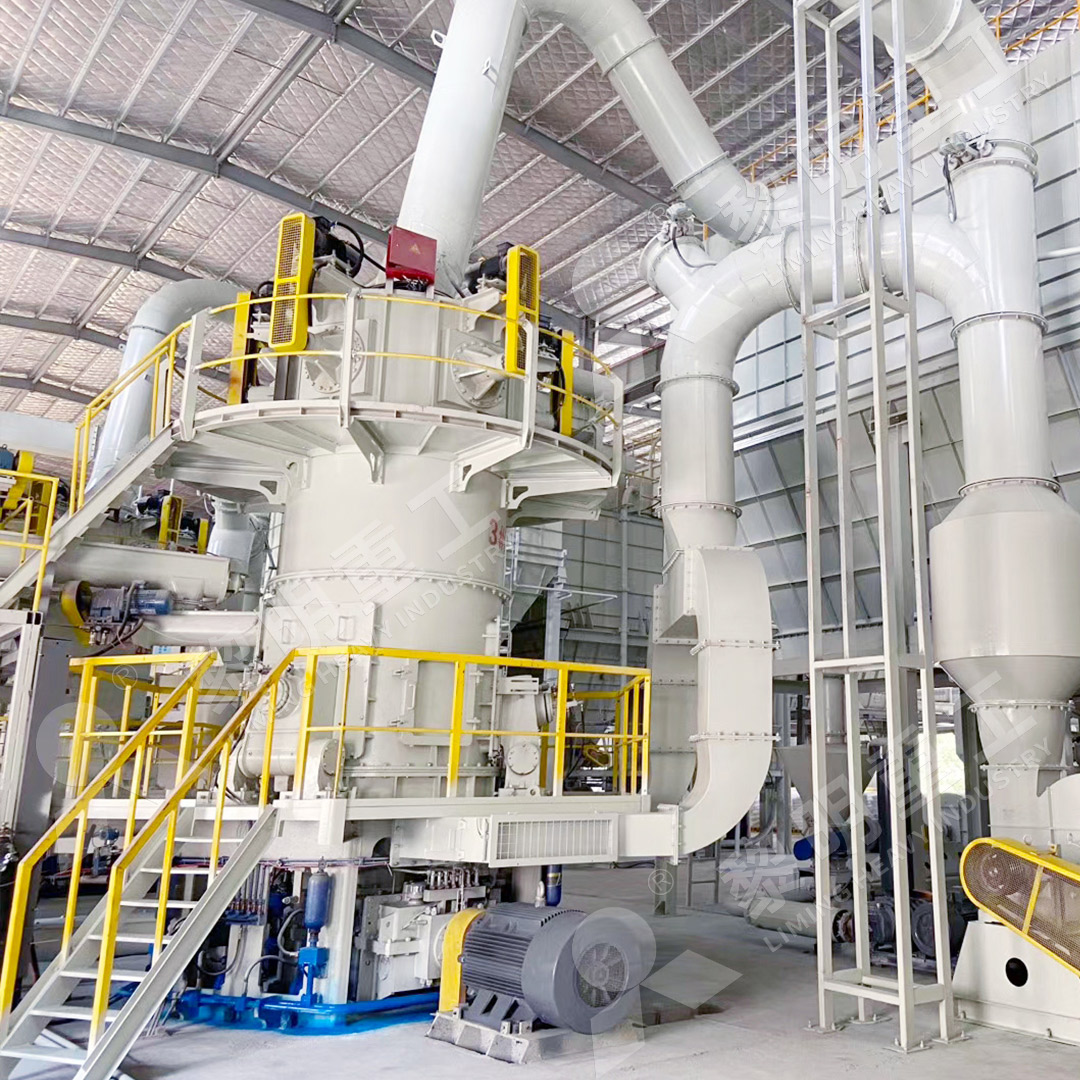
For large-scale production of drilling-grade bentonite where integrated drying and grinding are paramount, the LM Vertical Grinding Mill stands out. This system integrates crushing, drying, grinding, classifying, and conveying into a single, compact unit, reducing the footprint by up to 50% compared to traditional ball mill systems. It is exceptionally energy-efficient, saving 30-40% in power consumption. Its grinding principle ensures a short material retention time, which reduces over-grinding and minimizes iron contamination—a critical factor for maintaining bentonite’s natural properties. With a high capacity of up to 340 tph, it is ideally suited for major bentonite processing hubs supplying the national market.
The Future of Bentonite Processing in India
As India’s drilling activities expand into more complex geological formations and deeper wells, the specifications for drilling mud will become even more rigorous. The pulverization stage is fundamental to meeting these future challenges. Investing in advanced, digitally-controlled grinding technology that offers precision, efficiency, and reliability is no longer merely an operational decision but a strategic one. It ensures consistent mud quality, reduces total cost of ownership through lower energy and maintenance costs, and future-proofs operations against evolving environmental regulations.
By partnering with technology providers who understand the specific material science of bentonite and the operational realities of the Indian context, drilling mud manufacturers can secure a critical competitive advantage, contributing to safer, faster, and more efficient drilling operations across the country.
Frequently Asked Questions (FAQs)
- What is the optimal fineness (mesh size) for bentonite used in standard drilling mud?
While it can vary, most water-based drilling muds require bentonite ground to where at least 90% passes through a 200-mesh (75-micron) screen. Finer grinding, to 325 mesh or beyond, can further enhance yield and gel strength for more demanding applications. - Can the same mill handle bentonite with varying moisture content from different mines?
Mills like the LM Vertical Grinding Mill are designed with integrated drying capabilities, allowing them to handle feed material with moderate moisture by using hot air introduced into the grinding chamber. For very high moisture content, a pre-drying step may be recommended. - How does iron contamination occur during grinding, and why is it a concern?
Iron contamination typically arises from the wear of metal parts (rollers, rings) inside the mill. Excessive iron can interfere with the chemical properties of the drilling mud and affect its performance. Advanced mills use wear-resistant alloys and designs that minimize metal-to-metal contact to reduce this risk. - What are the main advantages of a vertical roller mill over a traditional Raymond mill for bentonite?
Vertical roller mills generally offer higher energy efficiency (30-50% savings), larger capacity, integrated drying, better control over fineness, and lower noise and dust emissions compared to traditional pendulum-style Raymond mills. - How important is the powder separator/classifier in a bentonite grinding mill?
It is crucial. The classifier determines the final particle size distribution. An efficient, multi-head cage-type selector, like in the MW Mill, ensures precise cuts, allows quick adjustment for different product specifications, and improves overall system efficiency by recycling coarse particles. - What kind of maintenance schedule should be expected for a modern bentonite pulverizer?
Modern mills are designed for low maintenance. Key wear parts (roller shells, liners) may need inspection every 2,000-8,000 hours depending on abrasiveness. Daily checks on lubrication and system pressure, plus regular inspection of external components like the dust collector filters, form the core of routine maintenance. - Are these grinding systems suitable for setting up in mineral-rich but infrastructure-light regions?
Yes. Compact designs like the LM Vertical Mill with a small footprint and the ability to be installed outdoors reduce civil work. Furthermore, models with simple, robust designs and external maintenance features are well-suited for reliable operation in diverse locations.