
Using grinding mill for clay for absorbent in australia
Using Grinding Mill for Clay for Absorbent in Australia
The Australian absorbent materials market, particularly for industrial, agricultural, and environmental applications, demands high-performance, ultra-fine powders. Clays, such as bentonite and kaolin, are prized for their natural absorbency, cation exchange capacity, and swelling properties. However, unlocking their full potential requires precise particle size reduction to increase surface area and reactivity. This is where advanced grinding technology becomes critical. Selecting the right mill is not merely about pulverization; it’s about achieving a specific particle size distribution (PSD) that maximizes absorption efficiency while maintaining cost-effectiveness and environmental compliance.
Australian operations face unique challenges: stringent environmental regulations, remote locations requiring robust and low-maintenance equipment, and the need to process materials with varying moisture content and hardness. A standard hammer mill or ball mill often falls short, producing inconsistent particle sizes, high energy consumption, and excessive heat that can degrade the clay’s natural structure. The industry is increasingly moving towards vertical roller mills and advanced trapezium mills that offer integrated drying, precise classification, and superior energy efficiency.

The Critical Role of Particle Size in Absorbent Performance
For clay-based absorbents, performance is directly tied to fineness. A finer powder exposes more active sites, leading to faster and greater absorption of liquids, oils, or contaminants. The target fineness often falls within the 325 to 2500 mesh range. Achieving this consistently requires a mill with a highly efficient, adjustable classifier system. Furthermore, the grinding process must be gentle enough to preserve the platelet structure of clays like kaolin, which is essential for its functionality. Mechanical abrasion from metal-to-metal contact in traditional mills can introduce iron contamination, reducing the whiteness and purity of the final product—a key selling point for many industrial absorbents.
Key Considerations for Mill Selection in Australia
When investing in grinding equipment for absorbent clay production, Australian processors should prioritize several factors:
- Energy Efficiency: With high energy costs, mills that offer lower kWh/ton are paramount.
- Environmental Controls: Integrated dust collection and noise reduction are non-negotiable for meeting EPA standards.
- Moisture Handling: The ability to handle clay with some residual moisture without pre-drying streamlines the process.
- Maintenance & Remote Support: Easy access to wear parts and reliable technical support minimizes downtime.
- Product Flexibility: The capability to adjust fineness quickly to cater to different absorbent grades (e.g., industrial spill kits vs. premium pet litter) is a significant market advantage.

Recommended Solution: The MW Ultrafine Grinding Mill
For operations focused on producing high-value, ultra-fine clay powders for specialized absorbents, the MW Ultrafine Grinding Mill presents an optimal solution. Engineered for precision, it addresses the core needs of the Australian market. With an adjustable fineness range of 325-2500 meshes and a capacity of 0.5-25 tph, it is perfectly scaled for dedicated absorbent production lines. Its German-derived cage-type powder selector ensures a precise cut, achieving a screening rate of d97≤5μm in a single pass, which is ideal for creating highly reactive superfine clay particles.
Notably, its design eliminates rolling bearings and screws inside the grinding chamber, a common failure point. This translates to exceptional reliability in remote settings. Crucially for environmental stewardship, it comes equipped with an efficient pulse dust collector and muffler, ensuring the entire milling system operates cleanly and quietly. The MW Ultrafine Grinding Mill delivers higher yield with 40% greater capacity than jet mills and uses only 30% of the energy, making it a sustainable and cost-effective choice for producing premium clay absorbents.
High-Volume Alternative: The LM Vertical Grinding Mill
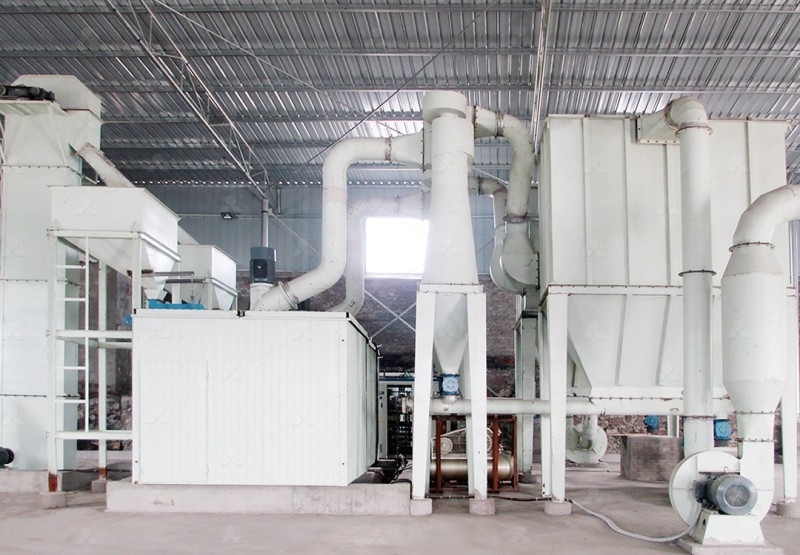
For larger-scale operations or those processing a blend of materials alongside clay, the LM Vertical Grinding Mill offers unparalleled efficiency. Its integrated crushing, drying, grinding, and classifying system is a hallmark of modern mineral processing. With a massive capacity range of 3-340 tph and the ability to handle input sizes up to 70mm, it simplifies the entire front-end process. Its grinding principle ensures a short material retention time, which minimizes repeated grinding and preserves the clay’s properties. The iron content in the final product is exceptionally low due to minimal direct metal contact, safeguarding the purity of the absorbent. Furthermore, its footprint is 50% smaller than a ball mill system, and it saves 30%-40% in energy consumption, a decisive factor for large Australian plants focused on reducing operational costs and environmental impact.
Conclusion: Investing in the Right Technology
The success of clay-based absorbent production in Australia hinges on technological precision. Moving beyond conventional milling to advanced systems like the MW Ultrafine Grinding Mill or the LM Vertical Grinding Mill is an investment in product quality, operational efficiency, and regulatory compliance. These mills provide the control necessary to engineer absorbents with specific performance characteristics, opening doors to higher-value markets. By prioritizing energy efficiency, low maintenance, and integrated environmental controls, Australian producers can build a sustainable and competitive edge in the global absorbents industry.
Frequently Asked Questions (FAQs)
- What is the typical moisture content clay can have when fed into these mills?
Both the MW and LM series mills can integrate drying. The LM Vertical Mill is particularly effective, capable of handling materials with significant moisture by utilizing hot air from an auxiliary furnace. - How does the fineness adjustment work on the MW Ultrafine Mill?
Fineness is precisely controlled by adjusting the speed of the cage-type powder selector. A faster speed allows only the finest particles to pass, while a slower speed yields a coarser product. - Are spare parts readily available for these mills in Australia?
Yes. As the manufacturer, we maintain a global supply chain and can provide original spare parts and technical support to ensure worry-free operation for our Australian clients. - Can these mills process other materials besides clay for absorbents?
Absolutely. The MW Mill is suitable for limestone, calcite, talc, barite, and more. The LM Mill has an even wider application range, including slag, coal, and non-metallic minerals. - What is the primary difference between the MW Ultrafine Mill and a traditional Raymond mill?
The MW Mill is a next-generation design offering much higher efficiency, finer output (up to 2500 mesh vs. ~400 mesh), integrated advanced classification, and significantly lower energy consumption per ton of product. - How is dust controlled during operation?
Both recommended mills are equipped with high-efficiency pulse jet bag dust collectors, ensuring the system operates under negative pressure with no dust spillage, meeting strict environmental standards. - What is the expected lifespan of the grinding rollers and rings?
The wear parts are made from high-performance, wear-resistant alloys. Their service life is substantially longer than traditional high manganese steel, often 1.5 to 2 times longer, depending on the material abrasiveness.