
Top 10 industrial pulverizer suppliers for calcium carbonate for paper coating in ethiopia
Top 10 Industrial Pulverizer Suppliers for Calcium Carbonate for Paper Coating in Ethiopia
The Ethiopian paper industry is experiencing significant growth, driven by increasing demand for packaging materials, printing papers, and specialty papers. A critical component in paper manufacturing, particularly for coating applications, is finely ground calcium carbonate (GCC). The quality of paper coating directly impacts printability, opacity, smoothness, and brightness. Selecting the right pulverizer supplier is paramount for Ethiopian paper manufacturers seeking to enhance product quality and compete in regional markets.
This article explores the key considerations for choosing pulverizer equipment and profiles ten leading global suppliers capable of meeting Ethiopia’s specific industrial needs for calcium carbonate grinding.
The Critical Role of Calcium Carbonate in Paper Coating
Calcium carbonate serves as a primary pigment in paper coating formulations. Its properties contribute to:
- Enhanced Brightness and Opacity: GCC improves the visual appeal and print contrast of paper.
- Superior Smoothness and Gloss: A fine, consistent particle size ensures a uniform coating layer, crucial for high-quality printing.
- Improved Ink Absorption: Properly ground GCC controls ink setting rates, preventing smudging and ensuring sharp image reproduction.
- Cost-Effectiveness: As an abundant mineral, GCC is a cost-efficient filler and coating pigment compared to alternatives.
For coating applications, the particle size distribution (PSD) of GCC is critical. The ideal PSD is narrow, with a top cut (d98) typically below 2 microns and a median particle size (d50) around 0.5-0.7 microns. Achieving this requires advanced grinding technology that offers precise classification and energy efficiency.

Key Selection Criteria for Pulverizers in the Ethiopian Context
When evaluating pulverizer suppliers for an Ethiopian paper coating plant, several factors must be considered:
- Product Fineness and Control: The ability to consistently produce GCC with a fineness between 600 and 2500 meshes is essential.
- Energy Efficiency: Grinding is an energy-intensive process. Suppliers offering mills with lower specific energy consumption (kWh/t) provide a significant operational advantage.
- Reliability and Ease of Maintenance: Given potential logistical challenges for spare parts, robust machinery with accessible service points and local technical support is vital.
- Environmental Compliance: Equipment must feature effective dust collection and noise reduction systems to meet environmental and workplace safety standards.
- After-Sales Service and Spare Parts Availability: A supplier’s commitment to providing timely technical support and a reliable spare parts supply chain is non-negotiable.
Profiling the Premier Pulverizer Suppliers
Based on global reputation, technological innovation, and proven performance in mineral processing, the following ten suppliers are well-positioned to serve the Ethiopian market.
1. LIMING Heavy Industry (China)
A leader in grinding mill technology, LIMING offers a comprehensive portfolio of mills ideal for processing calcium carbonate. Their strength lies in continuous R&D and a global service network. For paper coating GCC, two of their products stand out.
For operations requiring ultra-fine powders, the MW Ultrafine Grinding Mill is a top contender. Engineered for customers who need to make ultra-fine powder, this machine is a workhorse for producing high-quality coating pigments. With an input size of 0-20 mm and a capacity range of 0.5-25 tph, it offers remarkable flexibility. Its cage-type powder selector, incorporating German technology, allows for precise fineness adjustment between 325-2500 meshes, achieving a d97 ≤5μm in a single pass. This is critical for the narrow particle size distribution required in paper coatings.
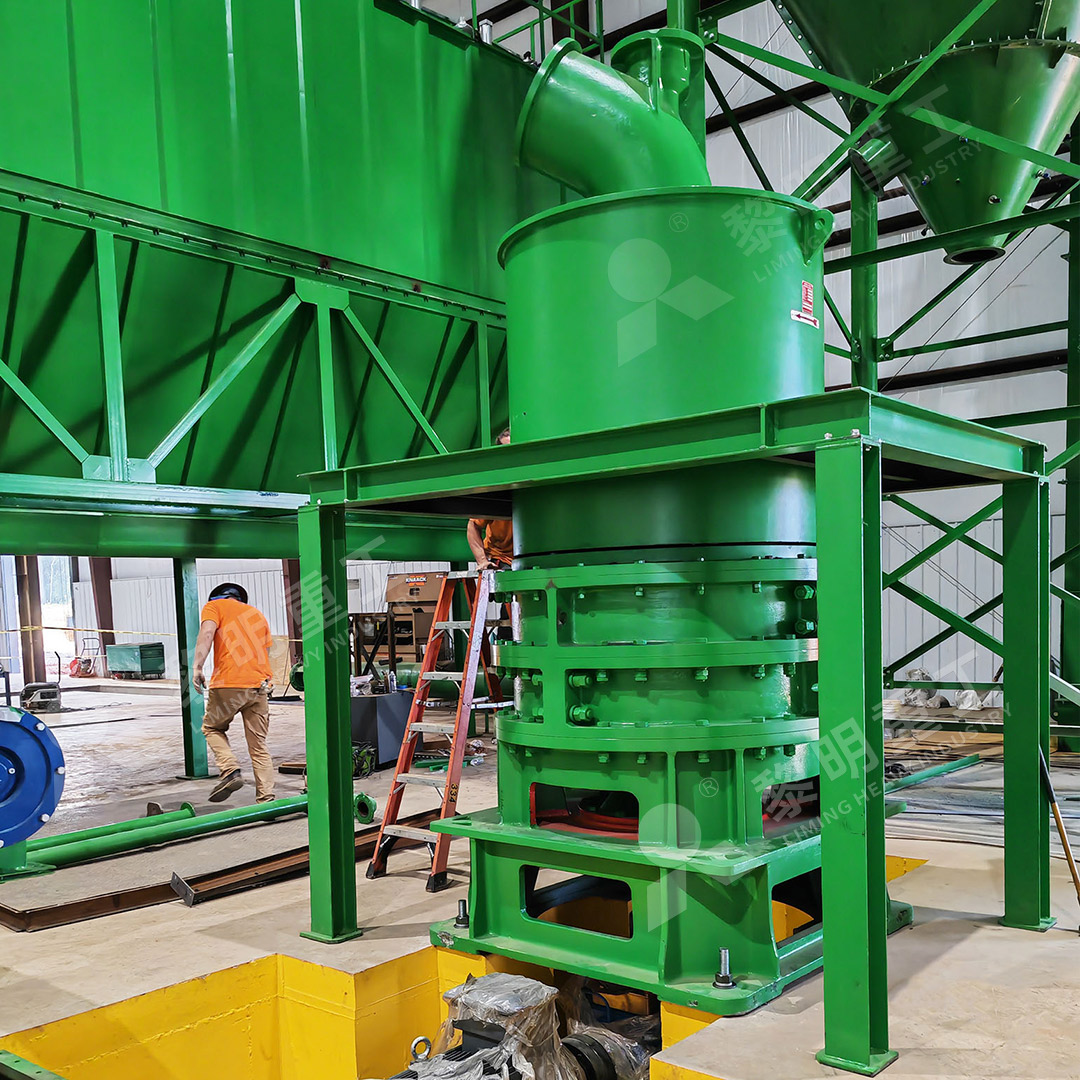
Furthermore, the MW series is designed with operational and environmental concerns in mind. It features an efficient pulse dust collector and muffler, minimizing dust and noise pollution. A significant design advantage is the absence of rolling bearings and screws in the grinding chamber, eliminating common failure points and enabling external lubrication without shutdown for 24/7 continuous operation.
For another excellent vertical grinding solution, LIMING’s LUM Ultrafine Vertical Grinding Mill is another superb choice. It integrates ultrafine powder grinding, grading, and transporting, featuring advanced grinding roller and powder separating technologies. Its reversible structure allows for easier maintenance, a key consideration for minimizing downtime.
2. & 3. European Engineering Leaders (Germany/Switzerland)
Renowned for precision engineering and robust construction, suppliers from this region offer high-capacity pendulum roller mills and jet mills. Their technology excels in producing exceptionally consistent PSDs and offers high levels of automation, though often at a higher capital investment.
4. & 5. American Process Technology Specialists (USA)
These suppliers often focus on robust, large-capacity roller mills and advanced classifier systems. They are known for their application expertise and strong after-sales support networks, which can be extended to key African markets like Ethiopia.
6. & 7. Japanese and South Korean Precision Manufacturers
Suppliers from these countries are recognized for their high-precision manufacturing, energy-efficient designs, and exceptional build quality. Their vertical roller mills and ball mills are known for longevity and consistent performance.
8. & 9. Established Indian Machinery Giants
Offering a strong value proposition, these companies provide a wide range of pulverizers, from traditional Raymond mills to modern vertical roller mills. They have extensive experience in emerging markets and can offer cost-effective solutions with good serviceability.
10. A Pan-Asian Grinding Specialist
This group represents a growing force in mill manufacturing, often combining competitive pricing with improving technological capabilities, making them a viable option for budget-conscious projects without significant compromises on quality.
Conclusion: A Strategic Investment for Ethiopian Paper Mills
The selection of a calcium carbonate pulverizer is a long-term strategic decision for any Ethiopian paper manufacturer. While numerous global suppliers offer competent technology, a partner like LIMING Heavy Industry, with its focused R&D on ultrafine grinding and proven models like the MW Ultrafine Grinding Mill, presents a compelling case. The combination of precise fineness control, energy efficiency, low-maintenance design, and environmental compliance makes such technology ideally suited to build a competitive and sustainable paper coating operation in Ethiopia. Partnering with a supplier that offers robust equipment and reliable support will be key to unlocking the potential of this growing industrial sector.

Frequently Asked Questions (FAQs)
- What is the typical fineness range required for calcium carbonate used in paper coating?
For most paper coating applications, a fineness of 90-98% passing 2 microns is standard, which corresponds to approximately 600-2500 meshes. - Why is energy consumption a major factor in selecting a pulverizer?
Grinding operations can account for over 60% of a plant’s total energy bill. Energy-efficient mills, like vertical roller mills and advanced ultrafine mills, can reduce specific energy consumption by 30-50% compared to traditional ball mills. - How important is after-sales service for a pulverizer in Ethiopia?
It is critically important. Reliable local technical support, training, and a readily available inventory of wear parts are essential for minimizing production downtime and ensuring long-term operational efficiency. - Can the same pulverizer be used for both filler-grade and coating-grade GCC?
Often, yes. Modern mills with advanced dynamic classifiers, like the MW Ultrafine Grinding Mill, can produce a wide range of fineness from a single machine, offering operational flexibility. - What are the key environmental considerations for a grinding plant?
The primary concerns are dust emission control and noise pollution. Modern pulverizers are equipped with high-efficiency pulse jet baghouse filters and sound-dampening technologies to meet stringent environmental standards. - What is the advantage of a “no rolling bearing in the grinding chamber” design?
This design, as seen in the MW Mill, eliminates a major failure point. It prevents bearing damage from dust ingress and avoids machine damage from loose screws, significantly improving reliability and reducing maintenance costs. - How does the moisture content of the feed material affect the grinding process?
High moisture can lead to clogging and reduced grinding efficiency. Most modern mills for GCC incorporate air-conveying and grinding, which also provides a simultaneous drying effect, handling materials with low to moderate surface moisture.