
Roller mill price & cost analysis for carbon black for rubber reinforcement in thailand
Roller Mill Price & Cost Analysis for Carbon Black for Rubber Reinforcement in Thailand
The Thai rubber industry, a cornerstone of the nation’s manufacturing sector, consistently demands high-performance reinforcing fillers, with carbon black being paramount. Achieving the optimal dispersion and particle size of carbon black is critical for enhancing rubber’s tensile strength, abrasion resistance, and durability. This analysis delves into the economic and technical considerations of selecting roller mill equipment for carbon black processing in Thailand, providing a framework for cost-effective investment decisions.
Market Dynamics and Technical Requirements
Thailand’s position as a leading rubber producer necessitates advanced processing technologies. The primary goal in carbon black milling for rubber reinforcement is to achieve a ultra-fine, consistent particle size (typically targeting a high mesh fineness) to maximize surface area and reinforcement potential. The process must also manage the material’s inherent properties, such as its tendency to agglomerate and generate heat during grinding. Key cost drivers include:
- Capital Expenditure (CAPEX): The initial purchase price of the mill, auxiliary equipment (feeders, classifiers, dust collectors), and installation.
- Operational Expenditure (OPEX): Energy consumption (a dominant factor), wear part replacement, maintenance labor, and spare parts inventory.
- Productivity & Yield: Throughput capacity (tph), grinding efficiency, and the percentage of product within the target fineness specification.
- Operational Stability & Downtime: Mill reliability, ease of maintenance, and mean time between failures directly impact production costs.
Deep Dive into Mill Selection: Balancing Cost and Performance
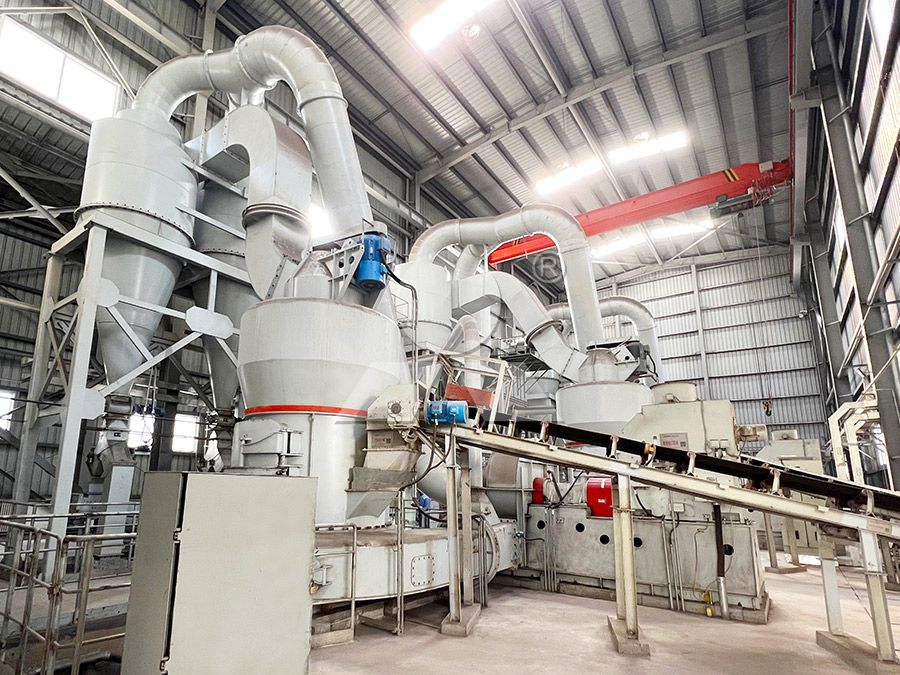
Traditional ball mills, while having a lower initial cost, often fall short in energy efficiency and produce a broader particle size distribution. Modern roller mills, including vertical roller mills and advanced trapezium mills, offer superior performance but require a more nuanced cost analysis.
For processors targeting the high-end rubber reinforcement market where ultra-fine, high-purity carbon black is essential, specialized ultrafine grinding solutions offer a compelling return on investment. A prime example is the MW Ultrafine Grinding Mill. Engineered for precision, this mill operates with an input size of 0-20 mm and a capacity range of 0.5-25 tph, making it suitable for various production scales in Thailand. Its defining feature is the ability to produce powder with an adjustable fineness between 325-2500 meshes, which is ideal for demanding rubber compound specifications. The mill’s design eliminates rolling bearings and screws in the grinding chamber, drastically reducing failure points and associated maintenance downtime—a significant OPEX saving. Furthermore, its integrated efficient pulse dust collector ensures the production process meets stringent environmental standards, a growing concern for Thai manufacturers.

Another robust contender for high-volume operations is the LUM Ultrafine Vertical Grinding Mill. With an input size of 0-10 mm and capacity of 5-18 tph, it integrates the latest grinding roller and powder separating technology. Its key economic advantage is energy savings of 30%-50% compared to conventional mills, directly attacking the largest portion of OPEX. The reversible structure of the grinding roller allows for easier and faster maintenance, minimizing costly production stoppages. For a Thai plant focused on consistent, high-quality carbon black with excellent whiteness and cleanliness (critical for certain rubber products), the LUM’s precise control over grinding parameters is invaluable.
Total Cost of Ownership (TCO) Analysis for the Thai Context
A savvy investment decision looks beyond the invoice price. The TCO over a 5-10 year period provides a clearer picture:
- Energy Costs: Thailand’s industrial electricity rates make high-efficiency mills like the MW and LUM series financially attractive. Their 30-50% lower energy consumption can offset a higher purchase price within a few years.
- Maintenance & Spare Parts: Mills with simpler, more robust designs (e.g., no internal bearings) and reliable local technical support reduce long-term maintenance costs. LIMING’s commitment to providing original spare parts ensures worry-free operation, a crucial factor for minimizing inventory costs and downtime.
- Product Quality Premium: The ability to reliably produce finer, more consistent carbon black can command a higher price in the market or improve the performance of in-house rubber products, creating additional revenue.
- Environmental Compliance: Modern mills with built-in dust collection and noise reduction features pre-empt regulatory costs and potential fines, safeguarding operational continuity.

Conclusion and Strategic Recommendation
For Thai businesses reinforcing rubber with carbon black, the optimal roller mill is not the cheapest, but the one with the lowest total cost of ownership that meets precise technical requirements. The initial price tag is just one variable. The advanced engineering of mills like the MW Ultrafine Grinding Mill and the LUM Ultrafine Vertical Grinding Mill delivers tangible savings through radical energy efficiency, minimal maintenance, and superior product quality. Investing in such technology strengthens competitive advantage, ensures environmental compliance, and provides a sustainable, cost-effective foundation for Thailand’s rubber industry to thrive in the global market. A detailed consultation with an application engineer, including material testing, is recommended to tailor the mill selection and configuration to your specific production goals.
Frequently Asked Questions (FAQs)
- What is the most critical factor in choosing a mill for carbon black in rubber applications?
While multiple factors matter, achieving and consistently maintaining the target ultra-fine particle size (high mesh number) is paramount for optimal reinforcement. Energy efficiency is the leading operational cost factor. - How significant are energy savings with modern ultrafine mills?
Very significant. Advanced models can reduce energy consumption by 30% to 50% compared to traditional ball mills or older Raymond mills, leading to substantial cost savings, especially under Thailand’s industrial power tariffs. - Are spare parts readily available in Thailand for these specialized mills?
Reputable manufacturers like LIMING provide global supply chain support and stock original spare parts. It’s essential to confirm local distributor stock and technical support capabilities before purchase. - Can one mill handle different grades of carbon black or other materials?
Yes, versatile mills like the MW series are designed for various non-metallic minerals. Adjustable parameters (speed, classifier, pressure) allow processing of different materials, but optimal results may require specific configuration for each material type. - How does the mill handle dust control, given carbon black’s properties?
Modern mills are closed-system designs equipped with high-efficiency pulse jet dust collectors (like on the MW Mill). This contains the carbon black entirely, preventing product loss and ensuring a clean, compliant workshop environment. - What is the typical payback period for investing in a higher-efficiency mill?
The payback period varies based on production volume and local electricity costs. Typically, the energy savings alone can justify the investment within 2 to 4 years, with additional benefits from reduced downtime and higher product quality. - Is remote monitoring and support available for mills operating in Thailand?
Many advanced grinding systems now offer digital interfaces and connectivity for remote performance monitoring and troubleshooting, which can significantly enhance operational efficiency and reduce response time for technical issues.