
Roller mill price & cost analysis for calcium carbonate for paint filler in saudi arabia
Navigating the Saudi Arabian Calcium Carbonate Market: A Strategic Cost Analysis for Paint Manufacturers
The Saudi Arabian paint and coatings industry is experiencing robust growth, driven by expansive construction projects, industrial development, and a rising focus on high-quality finishes. At the heart of many premium paint formulations lies calcium carbonate (CaCO3), a critical filler and extender that influences opacity, durability, sheen control, and overall cost-efficiency. For manufacturers and processors in the Kingdom, selecting the right grinding technology is not merely an equipment purchase; it’s a long-term strategic decision impacting product quality, operational expenditure, and competitive edge. This analysis delves into the key cost factors for roller mills processing calcium carbonate for paint filler applications in the Saudi context.
Core Cost Drivers Beyond the Initial Price Tag
While the upfront capital investment (CAPEX) in a grinding mill is significant, a holistic Total Cost of Ownership (TCO) analysis reveals several other, often dominant, factors:
- Energy Consumption: With industrial electricity tariffs being a major operational cost, the mill’s power efficiency is paramount. Traditional ball mills can be energy-intensive, whereas modern roller mills designed with advanced grinding curves and efficient classifiers offer substantial savings.
- Production Yield & Target Fineness: Paint fillers often require a fine and tightly controlled particle size distribution (PSD), typically ranging from 325 to 2500 meshes. Mills that can achieve high single-pass yields at the desired fineness reduce re-grinding cycles, boosting effective capacity and lowering per-ton energy and wear costs.
- Wear Parts & Maintenance Downtime: The abrasiveness of calcium carbonate leads to wear on grinding elements. The frequency of replacement, cost of spare parts (rollers, rings, liners), and the ease of maintenance directly affect operational costs and plant availability. Mills designed for easy access and with durable, wear-resistant alloys provide long-term value.
- Environmental Compliance Costs: Saudi Arabia’s environmental regulations are increasingly stringent. Dust emission control is non-negotiable. A mill with an integrated, high-efficiency pulse dust collection system eliminates the need for costly add-on filtration and mitigates the risk of fines, while integrated noise reduction features address workplace health standards.
- Footprint & Installation: Space in industrial areas comes at a premium. Vertical and compact mill designs with integrated systems (drying, grinding, classifying, conveying) can significantly reduce the required floor area and associated civil works costs.
Technology Spotlight: Achieving Ultra-Fine Filler Specifications
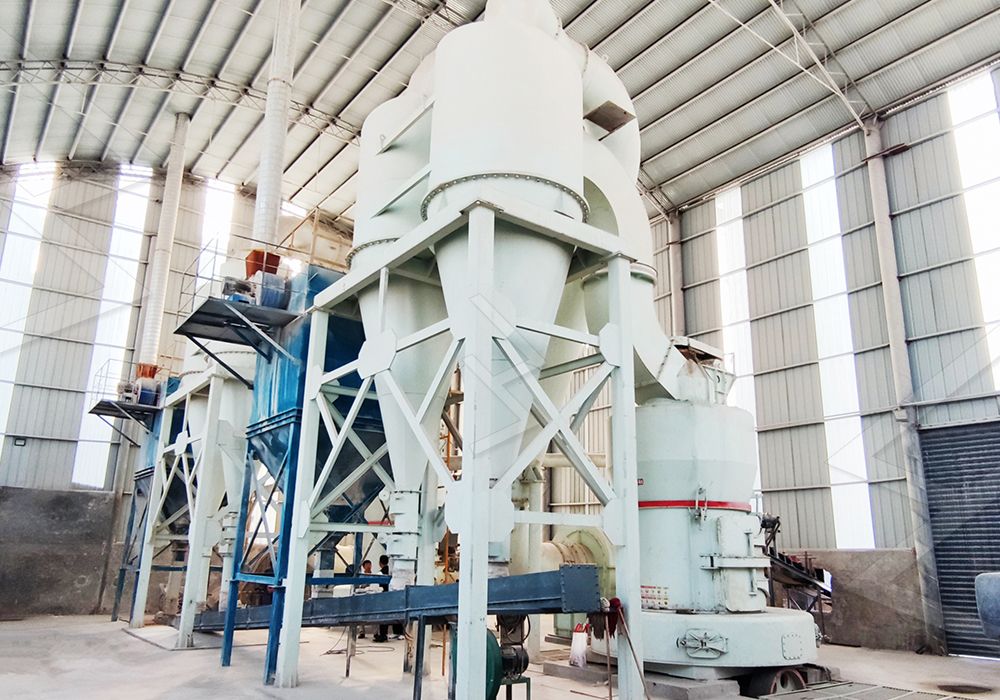
For high-end paint applications demanding ultra-fine, high-brightness calcium carbonate, specialized grinding mills are essential. In this segment, the MW Ultrafine Grinding Mill presents a compelling solution tailored for Saudi processors. Engineered for customers requiring precise ultra-fine powder between 325-2500 meshes, its design directly addresses key cost drivers.
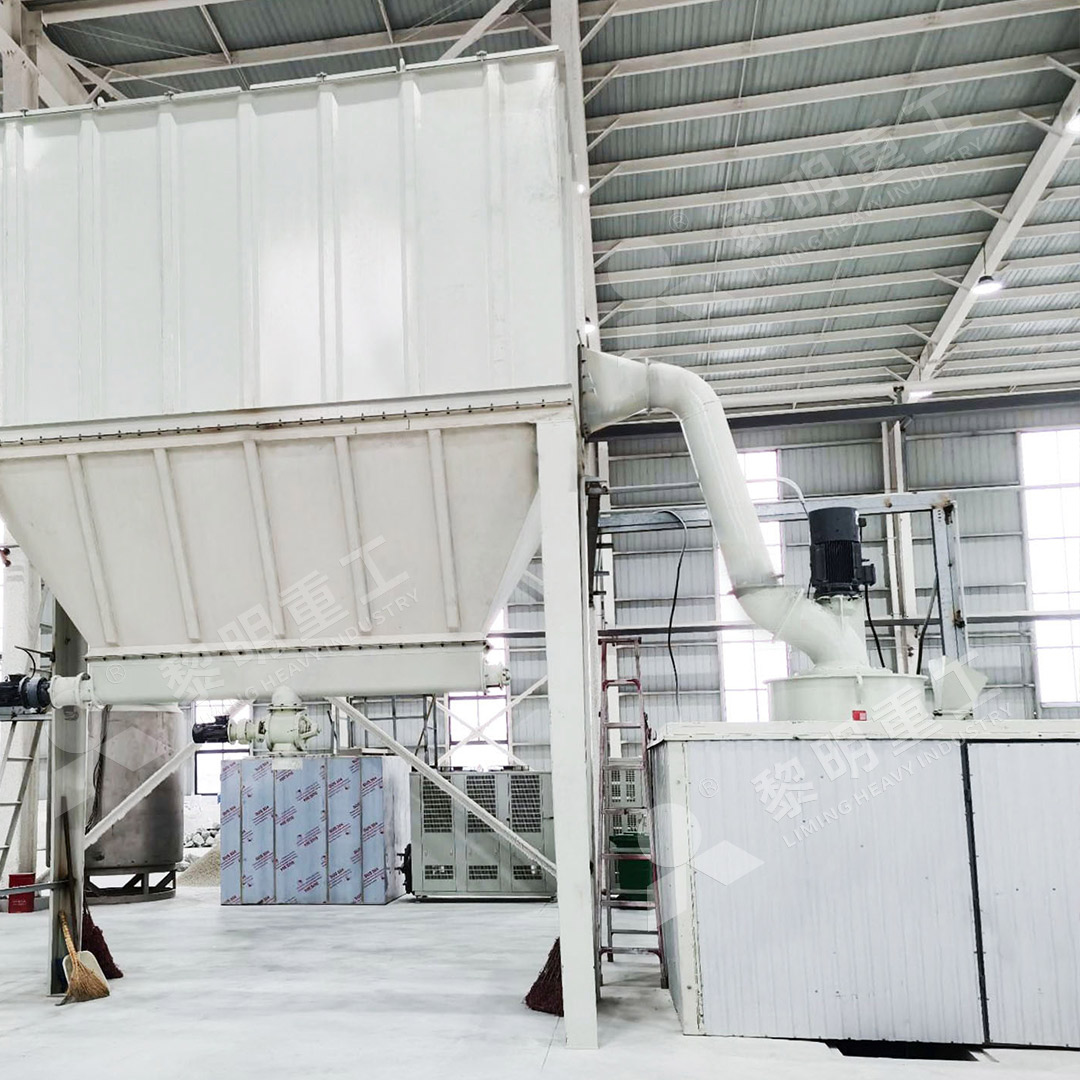
The MW mill’s newly designed grinding curves enhance efficiency, offering a production capacity reported to be 40% higher than some alternative fine-grinding technologies at the same power input, directly tackling energy costs. Its German-technology cage-type powder selector ensures precise classification, achieving a fine cut point (d97≤5μm) in a single pass, which maximizes yield for target paint-grade products. Critically for maintenance planning in remote locations, its grinding chamber eliminates rolling bearings and screws, removing common failure points. Furthermore, the mill is equipped as standard with an efficient pulse dust collector and silencer, ensuring the entire production process meets environmental standards without additional investment. With an input size of 0-20 mm and a capacity range of 0.5-25 tph, it offers scalability for various production needs within the Kingdom.
Strategic Recommendations for Saudi Arabian Buyers
- Prioritize Lifecycle Costing: Move beyond the initial quote. Model your operational costs over 5-10 years, factoring in local electricity rates, expected maintenance labor costs, and spare parts logistics.
- Demand Local Support & Spare Parts Assurance: Verify the supplier’s presence or partnership in the GCC. Ensure guaranteed access to original spare parts and technical support to minimize costly downtime. Our company, LIMING, stands behind every machine with a full suite of technical services and genuine parts supply, ensuring worry-free operation.
- Request a Material Test: Before finalizing any decision, provide a sample of your specific calcium carbonate feedstock to the manufacturer for a grinding test. This validates the mill’s performance for your required fineness and output.
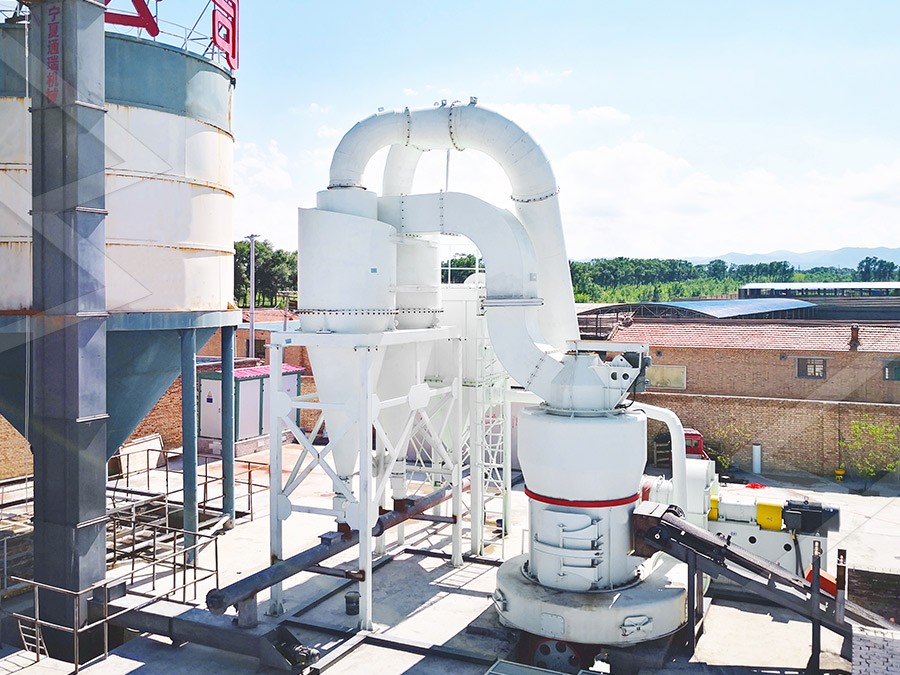
- Consider Future-Proofing: Evaluate if the mill technology can handle other materials you might process, like talc or barite, adding operational flexibility. The versatility of our LUM Ultrafine Vertical Grinding Mill, for instance, with its advanced roller technology and reversible structure for easier maintenance, makes it an excellent choice for processors looking to produce superfine powders from a variety of non-metallic minerals beyond just calcium carbonate.
Conclusion: Investing in Efficiency and Quality
The choice of a roller mill for calcium carbonate in Saudi Arabia’s paint industry is a balance between precision engineering and economic pragmatism. By focusing on total operational costs—energy, yield, maintenance, and compliance—manufacturers can unlock greater profitability and product consistency. Partnering with a technology provider that offers robust, efficient, and well-supported grinding solutions, such as the featured MW and LUM mills, is a strategic step towards securing a leading position in the region’s vibrant and quality-driven market.
Frequently Asked Questions (FAQs)
- What is the typical payback period for investing in a more energy-efficient roller mill versus a standard ball mill for calcium carbonate grinding?
While variable, the payback period often ranges from 1.5 to 3 years based on energy savings alone, with additional benefits from higher yield and lower maintenance costs accelerating the return on investment. - How does the humidity of the raw calcium carbonate feedstock affect mill selection and cost in Saudi Arabia?
High humidity can lead to clogging and reduced efficiency in some mills. Integrated drying systems or mills designed to handle a slight moisture content are crucial. This may influence the choice towards vertical roller mills with hot air intake capabilities. - Are there specific certifications or standards required for grinding equipment used in Saudi industrial zones?
Yes, equipment typically needs to comply with SASO (Saudi Standards, Metrology and Quality Organization) standards and may require CE certification. It’s vital to confirm the supplier’s equipment meets these local regulatory requirements. - What is the lead time for delivery and installation of a medium-capacity roller mill in Saudi Arabia?
Lead times vary by manufacturer and model complexity but generally range from 4 to 8 months from order to commissioning, including shipping, customs clearance, and installation supervision. - Can the fineness of the final product be adjusted easily to produce different grades for various paint lines?
Modern mills with advanced, externally adjustable classifiers (like cage-type or rotor-type separators) allow for quick and precise changes to product fineness without stopping the mill, enabling flexible production scheduling. - What are the key differences in operating costs between roller mills and traditional Raymond mills for fine calcium carbonate?
Roller mills generally offer lower energy consumption per ton, higher single-pass efficiency for fine grades, and often better wear characteristics, leading to lower overall operating costs despite a potentially higher initial investment. - How critical is after-sales service availability within the Kingdom, and what should a comprehensive service agreement include?
Extremely critical. A good agreement should include commissioning, operator training, preventative maintenance plans, guaranteed spare parts availability (with local stock if possible), and remote diagnostic support to ensure maximum uptime.