
Raymond Mill Price & Cost Analysis for Gypsum Soil Conditioner in Australia
Raymond Mill Price & Cost Analysis for Gypsum Soil Conditioner in Australia
The Australian agricultural sector faces unique challenges with soil quality across its diverse landscapes. Gypsum has emerged as a crucial soil conditioner, particularly for addressing sodic soils prevalent in many farming regions. However, the effectiveness of gypsum applications depends heavily on particle size and purity, making the choice of grinding equipment a critical business decision.

Understanding the Australian Gypsum Market
Australia’s agricultural lands, particularly in regions like Western Australia, Victoria, and New South Wales, frequently encounter soil sodicity issues. Gypsum (calcium sulfate dihydrate) works by replacing sodium ions with calcium ions in soil clay particles, improving soil structure and water infiltration. The market demand for high-quality gypsum soil conditioner has grown steadily, with farmers recognizing the long-term benefits for crop productivity.
The grinding fineness required for optimal soil conditioning typically ranges between 150-500 meshes. Coarser particles dissolve too slowly to be effective, while excessively fine powder can create dust issues during application. This specification window makes certain milling technologies more suitable than others.
Cost Factors in Gypsum Processing
When evaluating milling equipment for gypsum processing, operators must consider both initial investment and long-term operational costs. The total cost of ownership encompasses several key elements:
- Equipment Purchase Price: Varies significantly based on technology, capacity, and features
- Installation and Commissioning: Site preparation, foundation work, and system integration
- Energy Consumption: Power requirements differ substantially between mill types
- Maintenance and Spare Parts: Regular servicing, replacement part costs, and downtime expenses
- Labor Requirements: Operating personnel needs and technical expertise
- Environmental Compliance: Dust control, noise management, and emissions handling

Raymond Mill Economics for Australian Operations
Traditional Raymond mills have been workhorses in mineral processing for decades, offering reasonable initial costs and proven reliability. For small to medium-scale gypsum processing operations in Australia, basic Raymond mill systems typically range from AUD $50,000 to $200,000 depending on capacity and configuration.
However, traditional Raymond technology presents certain limitations for modern soil conditioner production. The grinding efficiency decreases significantly when pursuing finer particle sizes below 325 meshes, and energy consumption can become prohibitive for operations targeting the premium soil conditioner market where superior fineness commands better prices.
Advanced Alternatives: The MW Ultrafine Grinding Mill Advantage
For operations targeting higher-value gypsum products or requiring superior fineness control, advanced grinding technologies offer compelling advantages. Our MW Ultrafine Grinding Mill represents a significant technological leap forward, specifically engineered for customers requiring ultra-fine powder production with enhanced efficiency.
With an input size capability of 0-20 mm and capacity ranging from 0.5-25 tph, the MW series fits perfectly with Australian gypsum processing requirements. The innovative design delivers 40% higher production capacity compared to jet mills and stirred grinding mills at equivalent fineness and power consumption levels. For operations processing gypsum for soil conditioning, this translates to substantially lower operating costs per ton while achieving the precise particle size distribution that maximizes agricultural effectiveness.
The MW Ultrafine Grinding Mill’s adjustable fineness between 325-2500 meshes provides exceptional flexibility for soil conditioner producers. Australian operators can fine-tune their output to match specific regional soil requirements and customer preferences. The unique design without rolling bearings or screws in the grinding chamber eliminates common failure points, reducing maintenance costs and unplanned downtime—a crucial consideration in remote Australian mining and processing locations.
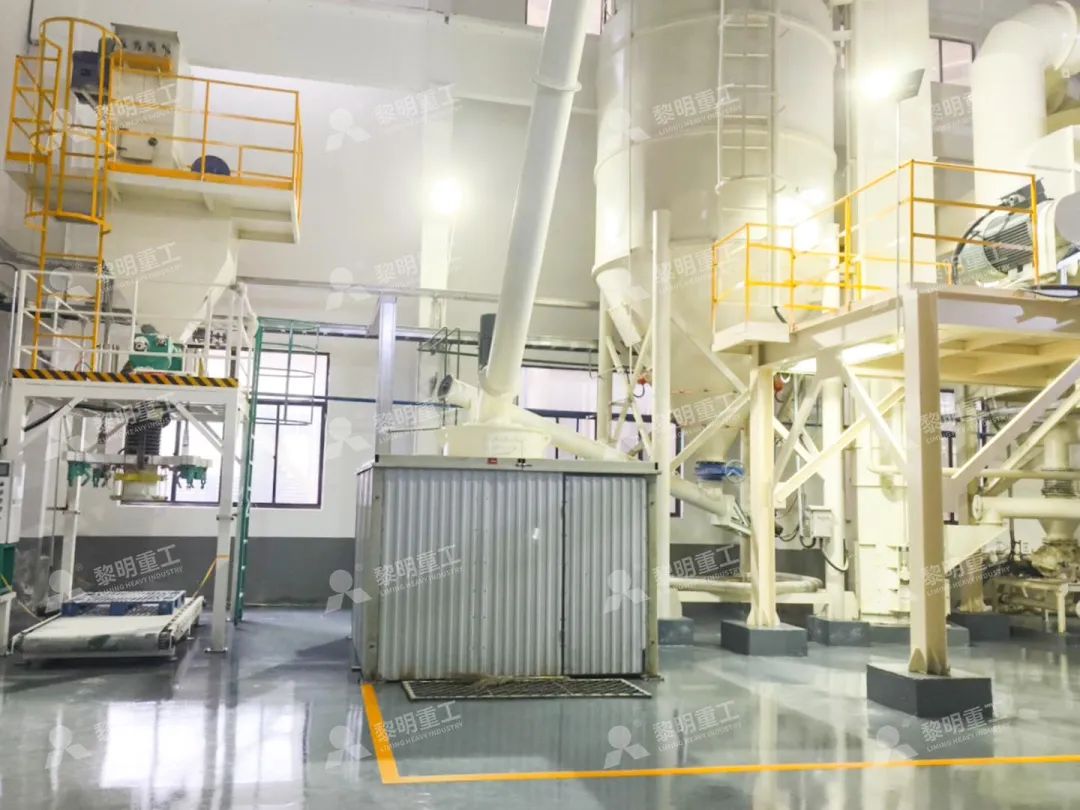
Another Superior Option: LUM Ultrafine Vertical Grinding Mill
For operations with space constraints or requiring even greater efficiency, our LUM Ultrafine Vertical Grinding Mill presents an excellent alternative. With its compact footprint and input size handling capability of 0-10 mm at 5-18 tph capacity, this mill integrates ultrafine powder grinding, grading, and transporting in a single efficient system.
The LUM mill’s energy-saving multi-head powder separating technology reduces energy consumption by 30%-50% compared to conventional mills, a significant advantage given Australia’s industrial electricity prices. The reversible structure simplifies maintenance operations, allowing quick access to grinding components without extensive disassembly—minimizing production interruptions during routine servicing.
Total Cost of Ownership Comparison
When evaluating milling options for gypsum soil conditioner production, Australian operators should look beyond initial purchase price. Our analysis of typical 5-year operating costs reveals that while advanced mills like the MW and LUM series command 20-30% higher initial investment than basic Raymond mills, they deliver 35-50% lower total cost of ownership through:
- Reduced energy consumption (30-50% savings)
- Lower maintenance costs and reduced downtime
- Higher product value through superior fineness control
- Reduced environmental compliance costs
- Longer operational life and better residual value
Making the Right Investment Decision
The Australian gypsum soil conditioner market continues to evolve, with growing demand for higher-quality, more consistent products. While traditional Raymond mills serve basic applications adequately, operations targeting premium market segments or seeking optimal operational efficiency should strongly consider advanced alternatives like our MW Ultrafine Grinding Mill or LUM Ultrafine Vertical Grinding Mill.
The higher initial investment is typically recovered within 18-30 months through operational savings and premium product pricing. For established operations considering equipment upgrades or new entrants planning greenfield projects, the advanced grinding technology represents a forward-looking investment that positions businesses for long-term competitiveness in Australia’s agricultural supply chain.

Frequently Asked Questions
What is the typical payback period for upgrading from a traditional Raymond mill to advanced grinding technology?
Most Australian operations report payback periods of 18-30 months, primarily through energy savings (30-50% reduction), reduced maintenance costs, and the ability to command premium pricing for higher-quality product with consistent fineness.
How does gypsum fineness affect its effectiveness as a soil conditioner?
Finer gypsum particles (typically 150-500 meshes) dissolve more rapidly in soil moisture, making calcium available quicker to displace sodium ions. Ultra-fine grinding also creates more surface area, enhancing the reaction rate and improving soil structure modification efficiency.
What capacity range is most practical for Australian gypsum soil conditioner operations?
Most successful operations target 5-25 tph capacity, balancing equipment investment against market demand. The MW Ultrafine Grinding Mill’s 0.5-25 tph range accommodates both small specialty producers and larger commercial operations.
How significant are dust control considerations in mill selection?
Extremely important. Australian workplace health and safety regulations require effective dust management. Advanced mills like the MW series include integrated pulse dust collectors and silencers, ensuring compliance without additional investment in pollution control equipment.
What are the main maintenance requirements for advanced grinding mills?
The MW and LUM series designs minimize maintenance through features like external lubrication systems and absence of internal bearings. Typical maintenance involves regular inspection of grinding components, lubrication system checks, and wear part replacement after 1,000-2,000 operating hours depending on material abrasiveness.
Can the same equipment process other agricultural minerals besides gypsum?
Yes, both the MW and LUM mills handle various non-metallic minerals including limestone, dolomite, and phosphate rocks—all relevant to agricultural soil amendment production. This flexibility allows operators to diversify their product offerings.
How does the Australian climate affect mill operation and maintenance?
Dust control becomes more critical in arid regions, making integrated collection systems advantageous. In coastal areas, corrosion-resistant components may be specified. Both the MW and LUM series can be configured with appropriate protective features for specific Australian environmental conditions.
What technical support is available for Australian operations?
We provide comprehensive technical support including installation supervision, operator training, remote monitoring capabilities, and guaranteed spare parts availability through regional service centers to minimize operational disruptions.