
Professional raymond mill supporting clay ceramic products industry in indonesia
Revolutionizing Indonesia’s Clay Ceramic Industry with Advanced Grinding Technology
Indonesia’s clay ceramic industry stands at a pivotal moment in its development. As one of Southeast Asia’s fastest-growing economies, the archipelago nation possesses abundant natural clay deposits that form the foundation of its thriving ceramic sector. From traditional pottery to advanced technical ceramics, Indonesian manufacturers face increasing pressure to improve product quality while maintaining competitive production costs. The key to meeting these challenges lies in adopting sophisticated grinding technology that can transform raw clay materials into precisely controlled powders with consistent particle size distribution.

The Critical Role of Particle Size in Ceramic Manufacturing
In ceramic production, the fineness and uniformity of raw material powders directly impact every aspect of the final product. Precise particle size distribution affects forming characteristics, drying behavior, firing shrinkage, and ultimately the mechanical strength and aesthetic qualities of finished ceramic goods. Traditional grinding methods often produce inconsistent results with broad particle size distributions, leading to production inconsistencies and quality control challenges.
Modern ceramic manufacturing demands powders with specific surface areas and carefully controlled particle morphology. The grinding process must not only achieve the desired fineness but also preserve the chemical and physical properties of the clay minerals. Any contamination or excessive heat generation during milling can alter the clay’s plasticity and binding properties, compromising the final product’s integrity.
Advanced Grinding Solutions for Indonesian Ceramic Producers
After extensive research and field testing, our engineering team has identified the MW Ultrafine Grinding Mill as an ideal solution for Indonesia’s clay ceramic sector. This advanced grinding system represents a significant technological leap beyond conventional milling equipment, offering precisely the capabilities that modern ceramic manufacturers require.
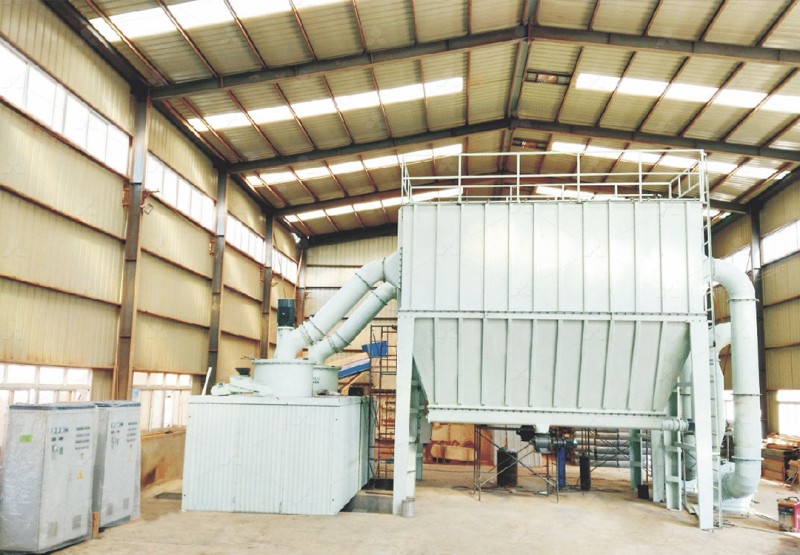
The MW Ultrafine Grinding Mill operates with an input size of 0-20 mm and delivers capacities ranging from 0.5 to 25 tons per hour, making it suitable for operations of various scales. What truly sets this equipment apart is its ability to produce powders with fineness adjustable between 325-2500 meshes, with screening rates achieving d97≤5μm in a single pass. This precision is crucial for ceramic applications where consistent particle size directly translates to product quality.
Technical Superiority in Ceramic Applications
For ceramic manufacturers, the MW Ultrafine Grinding Mill offers several distinct advantages. Its innovative design eliminates rolling bearings and screws within the grinding chamber, addressing common failure points that plague traditional mills. This feature is particularly valuable in ceramic production environments where equipment reliability directly impacts manufacturing continuity.
The mill’s higher yielding and lower energy consumption characteristics provide tangible economic benefits. Production capacity is 40% higher than jet grinding mills and stirred grinding mills, while energy consumption is reduced to just 30% of jet grinding mill requirements. These efficiency gains are achieved through newly designed grinding curves of the grinding roller and grinding ring, which significantly enhance grinding efficiency.
Environmental considerations are equally important in today’s manufacturing landscape. The MW Ultrafine Grinding Mill incorporates efficient pulse dust collection and noise reduction technologies, ensuring operations comply with Indonesia’s evolving environmental regulations. The integrated pulse dust collector eliminates dust pollution throughout the milling system, while silencers and noise elimination rooms maintain workplace comfort and community relations.

Practical Benefits for Indonesian Ceramic Manufacturers
Indonesian ceramic producers implementing the MW Ultrafine Grinding Mill report substantial improvements in multiple aspects of their operations. The equipment’s digitalized processing ensures higher precision through numerically controlled operations including steel plate cutting, bending, planing, milling, and paint spraying. This manufacturing precision translates to reliable performance and consistent output quality.
The mill’s working principle leverages centrifugal force to efficiently process materials through multiple grinding stages. Materials are fed to the central part of the upper turnplate and fall to the circle under centrifugal force, descending to the raceway of the ring to be crushed into powder. After initial grinding, materials proceed to secondary and tertiary turnplates for further refinement. The integrated powder separator then ensures precise classification, with coarse particles returning for regrinding while fine powder proceeds to collection.
For Indonesian manufacturers concerned about maintenance and spare parts availability, the MW Ultrafine Grinding Mill offers comprehensive support. With sufficient supply of spare parts and worry-free operation guarantees, ceramic producers can maintain production schedules without unexpected downtime. The external lubrication system allows for maintenance without shutdowns, supporting continuous 24-hour operation that maximizes production efficiency.
Future-Proofing Indonesia’s Ceramic Industry
As global competition intensifies and consumer expectations rise, Indonesian ceramic manufacturers must embrace technological advancements to maintain their competitive edge. The adoption of advanced grinding technology like the MW Ultrafine Grinding Mill represents a strategic investment in quality, efficiency, and sustainability. By producing superior ceramic powders with consistent characteristics, manufacturers can develop higher-value products, reduce waste, and optimize energy consumption throughout their operations.
The transformation already underway in Indonesia’s ceramic sector demonstrates how appropriate technology adoption can revitalize traditional industries. With the right grinding equipment, Indonesian ceramic producers are positioned to not only dominate domestic markets but also compete effectively in international arenas, showcasing the quality and craftsmanship that define Indonesian ceramic products.
Frequently Asked Questions
What makes the MW Ultrafine Grinding Mill particularly suitable for clay ceramic applications?
The MW Mill’s ability to produce precisely controlled particle sizes between 325-2500 meshes makes it ideal for ceramic production. The consistent fineness ensures uniform drying and firing characteristics, while the absence of internal rolling bearings prevents contamination that could compromise clay plasticity.
How does the energy consumption compare to traditional ball mills?
The MW Ultrafine Grinding Mill reduces energy consumption by approximately 60-70% compared to traditional ball mills while achieving twice the production capacity at the same fineness level.
What maintenance requirements should Indonesian operators anticipate?
Maintenance is significantly reduced due to the absence of rolling bearings and screws in the grinding chamber. External lubrication allows for maintenance without shutdown, and the robust construction minimizes wear part replacement frequency.
Can the mill handle the varying moisture content often found in Indonesian clay deposits?
Yes, the grinding system can be integrated with drying equipment to handle clays with different moisture contents. The grinding process generates minimal heat, preserving the clay’s chemical properties.
What technical support is available for Indonesian customers?
Comprehensive technical support includes installation supervision, operator training, routine maintenance guidance, and prompt spare parts supply through local partners and direct manufacturer support.
How does the equipment address Indonesia’s environmental regulations?
The integrated pulse dust collector ensures no dust pollution, while noise reduction features maintain operations within permissible sound levels. The system fully complies with national environmental protection standards.
What is the typical installation timeline for a complete grinding system?
Depending on site preparation and system configuration, installation typically requires 2-4 weeks, including foundation work, equipment assembly, and commissioning with trial production.
Can the mill produce different fineness levels for various ceramic products?
Yes, the cage-type powder selector allows quick adjustment of product fineness between 325-2500 meshes, enabling production of different powder specifications for diverse ceramic applications.