
Professional powder processing mill supporting talc plastic reinforcement industry in mexico
Elevating Mexico’s Plastics Sector: The Critical Role of High-Performance Talc Processing
The Mexican plastics industry stands as a dynamic and rapidly evolving sector, consistently seeking innovative solutions to enhance product performance, reduce costs, and meet stringent international quality standards. A key component in this quest for excellence is the use of functional fillers, with talc emerging as a premier material for plastic reinforcement. The efficacy of talc, however, is intrinsically tied to its particle size distribution, purity, and surface characteristics—attributes directly controlled by the grinding technology employed. For manufacturers aiming to produce high-impact polypropylene, automotive components, or durable household goods, investing in advanced powder processing mills is not an option but a strategic necessity.
The Talc Advantage in Polymer Engineering
When micronized to precise specifications, talc acts as a powerful reinforcing agent in plastics. It significantly improves stiffness (modulus), heat resistance (HDT), and dimensional stability while reducing shrinkage and warpage. In Mexico’s manufacturing landscape, where exports to demanding North American markets are crucial, achieving consistent filler quality is paramount. Substandard grinding can lead to oversized particles that act as stress concentrators, weakening the final product, or inconsistent batches that disrupt sensitive compounding and injection molding processes. The right mill delivers ultra-fine, narrowly distributed talc powder that disperses homogeneously within the polymer matrix, unlocking the full potential of the composite material.
Beyond Fineness: The Mill Features That Matter for Mexican Operations
Selecting equipment for talc processing goes beyond mere particle size claims. Operational efficiency, environmental compliance, and long-term reliability are critical factors for cost-conscious and sustainability-driven Mexican plants. Key considerations include:
- Energy Efficiency: With rising energy costs, mills that offer higher yield per kilowatt-hour directly improve the bottom line.
- Environmental Controls: Integrated dust collection and noise reduction systems are essential for maintaining a clean, safe workplace and adhering to environmental regulations.
- Product Purity: The grinding mechanism must minimize iron contamination and other impurities to preserve the whiteness and chemical inertness of talc, which is vital for applications in food-grade packaging and high-quality consumer products.
- Operational Simplicity & Support: Easy maintenance, access to genuine spare parts, and reliable local technical support minimize costly downtime.

Engineered Solutions for Peak Performance
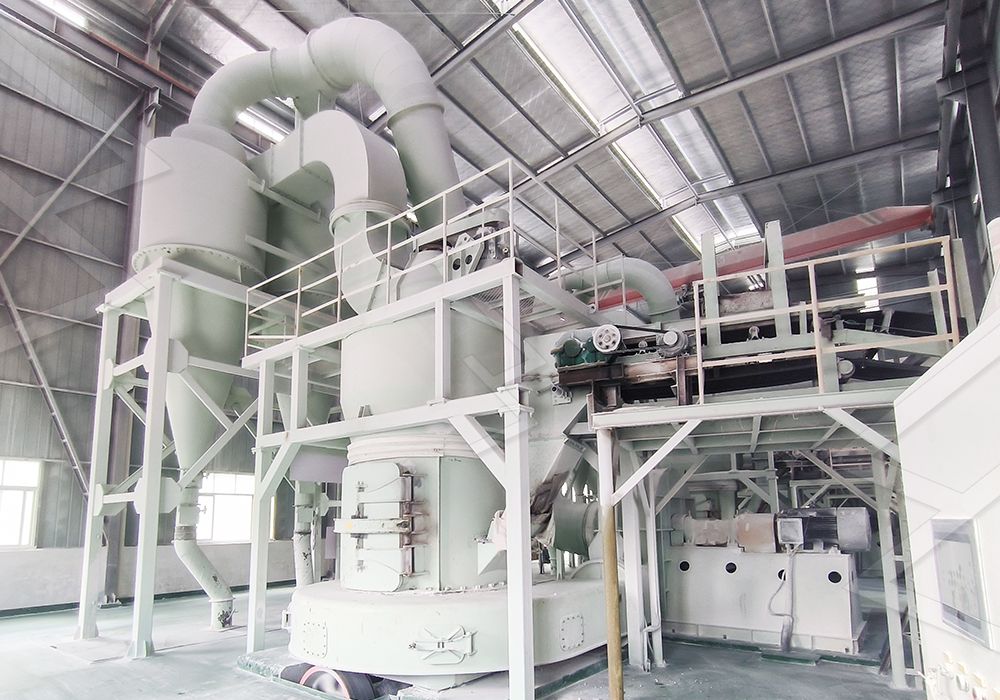
For operations requiring the pinnacle of ultra-fine grinding technology with exceptional control over product fineness, the MW Ultrafine Grinding Mill presents an ideal solution. Engineered for materials like talc, it achieves an adjustable fineness range between 325 and 2500 meshes, catering to the most demanding plastic reinforcement formulas. Its design eliminates rolling bearings and screws within the grinding chamber, a revolutionary feature that eradicates common failure points and concerns about seal damage or loose components causing breakdowns. This translates directly to higher operational reliability for Mexican plants. Furthermore, its higher yielding and lower energy consumption—reporting 40% higher capacity than jet mills at the same power—ensure a rapid return on investment. The integrated efficient pulse dust collector guarantees that the entire production process meets stringent environmental standards, a critical factor for sustainable industry growth in Mexico.
For large-scale production needs where integrating multiple processes into a compact footprint is key, the LM Vertical Grinding Mill offers a compelling alternative. It integrates crushing, drying, grinding, classifying, and conveying in a single unit, reducing the overall footprint by approximately 50% compared to traditional ball mill systems. This is a significant advantage for optimizing factory layout. Its energy consumption is 30%-40% lower, and the short material lingering time reduces repeated grinding, effectively controlling product grain size and minimizing iron content—preserving the talc’s natural properties for premium plastic composites.

Driving Competitiveness Through Advanced Technology
The integration of such advanced milling technology empowers Mexican plastic compounders and manufacturers to not only meet but exceed global quality benchmarks. Consistent access to superior-grade talc powder enables the production of lighter, stronger, and more heat-resistant plastic components. This enhances the value proposition for key industries such as automotive manufacturing, where Mexican exports are substantial, and consumer goods. By reducing material waste, energy consumption, and environmental impact, these mills also support the principles of circular economy and sustainable manufacturing, increasingly important for brand reputation and market access.
In conclusion, the choice of powder processing mill is a foundational decision for any enterprise involved in the talc-plastic reinforcement value chain in Mexico. It is an investment in product quality, operational efficiency, and long-term market competitiveness. Partnering with a technology provider that offers robust, efficient, and environmentally sound grinding solutions is essential for capitalizing on the growing opportunities within Mexico’s vibrant industrial sector.
Frequently Asked Questions (FAQs)
- What is the primary advantage of using ultra-fine talc in plastics?
Ultra-fine talc significantly improves the stiffness, heat deflection temperature, and dimensional stability of polymers like polypropylene, allowing for the production of lighter, stronger, and more reliable plastic components. - Why is iron contamination a concern in talc processing for plastics?
Iron impurities can degrade the polymer, cause discoloration (yellowness), and reduce the performance and aesthetic quality of the final plastic product, especially in applications requiring high purity or whiteness. - How does the MW Ultrafine Grinding Mill achieve higher energy efficiency?
Its newly designed grinding curves and cage-type powder selector enhance grinding and separation efficiency, allowing it to produce up to 40% more output than some alternative mill types using the same amount of power. - Can these mills handle the humidity sometimes present in raw talc feed?
Yes, models like the LM Vertical Grinding Mill integrate drying functionality, effectively handling materials with some moisture content by using hot air introduced during the grinding process. - What kind of after-sales support is typically available for such equipment in Mexico?
Reputable suppliers offer comprehensive support including installation supervision, operator training, a sufficient supply of original spare parts, and remote or on-site technical service to ensure worry-free operation. - How important is particle size distribution compared to just achieving a fine top size?
Extremely important. A narrow, consistent particle size distribution ensures uniform dispersion in the plastic melt, leading to predictable and enhanced mechanical properties. A wide distribution can lead to weak spots and processing issues. - Are these milling systems suitable for producing food-contact grade talc?
Yes, when equipped with appropriate wear-resistant materials and sealing systems that prevent contamination, they can produce talc that meets stringent food and pharmaceutical industry standards.