
How to optimize talc processing with industrial pulverizer for plastic filler in sri lanka
Unlocking the Potential of Sri Lankan Talc for High-Performance Plastic Fillers
Sri Lanka’s rich mineral deposits, particularly its high-quality talc reserves, present a significant opportunity for the plastics industry. When processed correctly, talc serves as an exceptional filler and reinforcing agent, enhancing stiffness, dimensional stability, heat resistance, and surface finish in polypropylene, polyethylene, and engineering plastics. However, the journey from raw mineral to high-value plastic additive hinges on one critical factor: precision grinding. The choice of industrial pulverizer directly dictates the particle size distribution, whiteness, and purity of the final talc powder, which are paramount for achieving optimal dispersion and performance within polymer matrices.
The Critical Role of Particle Size and Purity
For plastic filler applications, the target fineness typically ranges from 325 mesh (45 μm) to 2500 mesh (5 μm) and beyond. Ultra-fine talc (< 10 μm) offers superior reinforcement due to its higher surface area and better compatibility with polymer chains. Achieving this consistently requires a mill that can deliver a narrow particle size distribution (PSD) to prevent the presence of coarse particles that act as stress concentrators, weakening the final plastic product. Furthermore, the grinding process must preserve the lamellar structure of talc—its key reinforcing property—and minimize iron contamination from mechanical wear, which can lead to discoloration and reduced thermal stability in plastics.
Traditional grinding solutions like ball mills or basic Raymond mills often fall short. They may introduce excessive heat, leading to moisture issues and dehydroxylation of the talc, or fail to achieve the necessary ultra-fine cuts with energy efficiency. This is where advanced, purpose-built ultrafine grinding technology becomes indispensable for Sri Lankan processors aiming to compete in the global high-grade filler market.
Advanced Milling Solutions for Superior Talc
Modern pulverizers are engineered to overcome the limitations of older equipment. Key features to look for include efficient classification systems for precise particle size control, grinding mechanisms that minimize metal-to-metal contact to preserve product whiteness, and integrated drying capabilities to handle the moisture often present in Sri Lankan talc ore. Energy consumption is another major operational cost; thus, mills designed for higher yield per kilowatt-hour directly improve profitability.

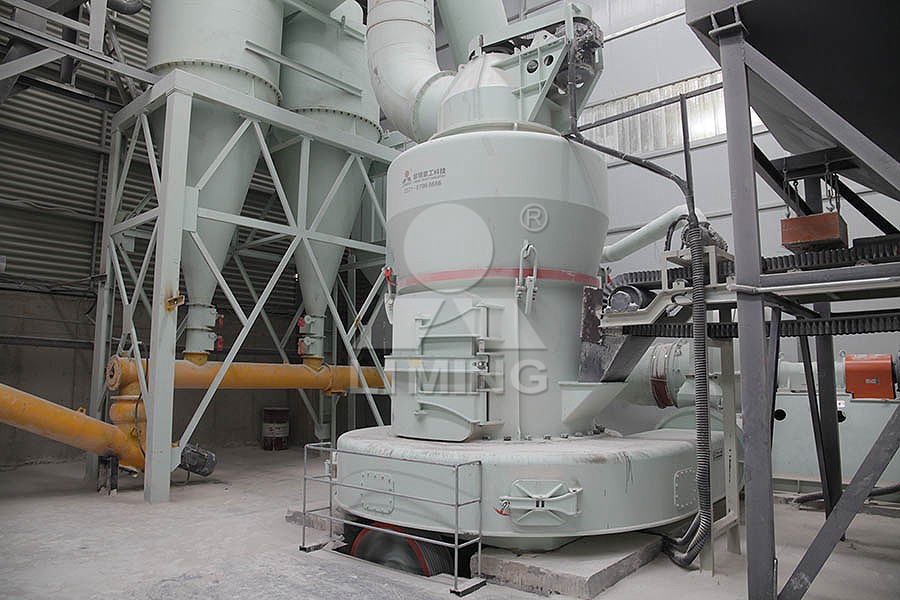
For processors targeting the demanding plastics sector, we highly recommend evaluating the MW Ultrafine Grinding Mill. This machine is specifically engineered for producing ultra-fine powder with exceptional characteristics. It accepts feed sizes up to 20mm and offers a capacity range of 0.5 to 25 tons per hour, making it suitable for various production scales. Its standout feature is the German-technology cage-type powder selector, which allows precise fineness adjustment between 325 and 2500 meshes, achieving a d97 ≤ 5μm cut point in a single pass—ideal for high-aspect-ratio talc fillers. Crucially, its design eliminates rolling bearings and screws inside the grinding chamber, virtually eliminating the risk of iron contamination from worn parts and ensuring the product’s whiteness and purity. Coupled with an efficient pulse dust collector, the MW Mill operates as a clean, environmentally compliant system, a growing priority for sustainable manufacturing in Sri Lanka.
Integrating the Mill into Your Sri Lankan Processing Line
A successful talc processing line involves more than just the grinding mill. Prior to milling, raw talc should undergo crushing, drying (if necessary), and possibly magnetic separation to remove tramp iron. The mill then acts as the heart of the process. For larger operations or those requiring integrated drying of moist feed, the LUM Ultrafine Vertical Grinding Mill presents another compelling option. With an input size of 0-10mm and capacity of 5-18 tph, it integrates grinding, drying, and classifying. Its unique roller and lining plate design is easier to generate a stable material bed, promoting efficient inter-particle grinding that protects the talc’s structure. The reversible roller system allows for easier maintenance of wear parts, minimizing downtime—a critical factor for continuous production.

After grinding, the ultrafine talc powder requires efficient collection via cyclone separators and baghouse filters before packaging. The entire system should be designed for minimal dust emission and noise, adhering to Sri Lanka’s environmental regulations. Both the MW and LUM mills are designed with these considerations, featuring advanced dust removal and noise reduction technologies.
Conclusion: A Strategic Investment for Value Addition
For Sri Lankan mineral processors, investing in the right industrial pulverizer is a strategic move from commodity talc production to manufacturing a high-value, specification-grade plastic filler. It enables access to premium markets in automotive components, household appliances, and packaging materials. By focusing on technology that delivers precise fineness, high whiteness, low contamination, and energy efficiency, processors can optimize their operations, reduce costs, and produce a talc filler that gives Sri Lankan plastics a competitive edge on the world stage.
Frequently Asked Questions (FAQs)
- What is the typical moisture content of Sri Lankan talc, and can your mills handle it?
Raw talc moisture can vary. While our MW Mill is designed for dry grinding, requiring pre-dried feed, the LUM Vertical Grinding Mill integrates a drying function and can handle materials with a certain moisture content by using hot air introduced into the grinding chamber. - How do you ensure the final talc powder has low iron content for plastic applications?
Our mills, like the MW series, use designs that avoid iron-to-iron contact in the grinding zone (e.g., no rolling bearings inside the chamber). Critical wear parts are also made from advanced, low-wear alloys, and optional ceramic or special lining can be used to further minimize metallic contamination. - What kind of particle size distribution (PSD) can we expect for plastic filler grade?
With the advanced classifier in mills like the MW Ultrafine Grinding Mill, you can achieve a very tight PSD. For example, you can target a d97 of 10 microns or even 5 microns, with minimal coarse particles, which is essential for good dispersion and mechanical properties in plastics. - Is technical support and spare parts availability a concern for operations in Sri Lanka?
We maintain a global supply chain and offer comprehensive after-sales support. Original spare parts are stocked and can be shipped promptly. We also provide remote technical assistance and can arrange on-site engineer visits if required to ensure worry-free operation. - How energy-efficient are these mills compared to traditional ball mills?
Our modern grinding mills are significantly more efficient. For instance, the MW Mill’s system energy consumption is only about 30% of a traditional jet mill for similar output. The LUM and LM series vertical mills also report 30-50% energy savings compared to ball milling systems, drastically reducing operational costs. - Can the fineness be adjusted easily for different customer specifications?
Yes. Mills like the MW and LUM feature advanced, externally adjustable classifiers. By simply changing the speed of the classifier rotor, the fineness can be quickly and precisely altered without stopping the mill, allowing flexible production for different market needs.