
How to optimize dolomite processing with roller mill for glass additive in ghana
How to Optimize Dolomite Processing with Roller Mill for Glass Additive in Ghana
Ghana’s burgeoning glass industry, particularly in container, flat, and specialty glass production, presents a significant opportunity for local mineral processors. A key raw material in this sector is high-purity, finely ground dolomite (CaMg(CO3)2), used as a stabilizing additive to improve the chemical durability and workability of glass melts. The efficiency of dolomite processing directly impacts product quality, production costs, and environmental compliance. This article explores the technical considerations for optimizing dolomite milling in Ghana, focusing on the strategic application of advanced roller mill technology.
The Critical Role of Particle Size and Purity in Glass Manufacturing
For glass batch formulation, dolomite must meet stringent specifications. Fineness is paramount; a uniform, ultra-fine powder (typically ranging from 200 to 1250 mesh) ensures rapid and homogeneous melting in the furnace, reducing energy consumption and eliminating unmelted “stones” that compromise glass integrity. Furthermore, the milling process must preserve the material’s chemical composition and minimize iron contamination, which can cause undesirable discoloration (greenish tint) in the final glass product. Traditional grinding methods like ball mills often struggle with efficiency, high energy use, and potential for iron wear contamination.

Why Roller Mill Technology is the Optimal Choice
Modern roller mills, specifically vertical roller mills (VRMs) and advanced trapezium mills, have revolutionized mineral processing. For dolomite destined for Ghana’s glass factories, these systems offer distinct advantages:
- High Grinding Efficiency & Energy Savings: The material is ground between rollers and a stationary table/ring under pressure, a more efficient mechanism than impact or tumbling. This can reduce specific energy consumption by 30-50% compared to ball mills.
- Precise Particle Size Control: Integrated dynamic classifiers allow for real-time adjustment of product fineness without stopping the mill, ensuring a consistent particle size distribution crucial for glass batch homogeneity.
- Low Iron Contamination: Key components in high-quality mills use wear-resistant alloys, and the grinding principle often minimizes metal-to-metal contact. Some designs feature a non-contact limiting system, virtually eliminating iron pollution from mechanical wear.
- Integrated Drying: Ghana’s climate introduces moisture, which can hinder grinding and storage. Roller mills with hot air intake can simultaneously dry and grind dolomite, streamlining the process.
- Compact Footprint & Environmental Compliance: Their vertical design requires less space, and closed-circuit systems with efficient pulse-jet bag filters ensure dust-free operation, aligning with stringent environmental standards.
Tailoring the Mill to Ghana’s Dolomite Characteristics
Successful optimization requires matching the mill’s capabilities to the local dolomite’s hardness, feed size, and moisture content. Key operational parameters include:
- Grinding Pressure: Adjusting hydraulic pressure on the rollers to optimize throughput and fineness for the specific dolomite deposit.
- Classifier Speed: Fine-tuning the separator’s rotor speed is the primary control for achieving the target mesh size (e.g., 325 mesh for general glass, up to 1250 mesh for specialty glass).
- Airflow Rate: Managing the internal air volume to ensure proper material transport and drying without causing excessive wear.
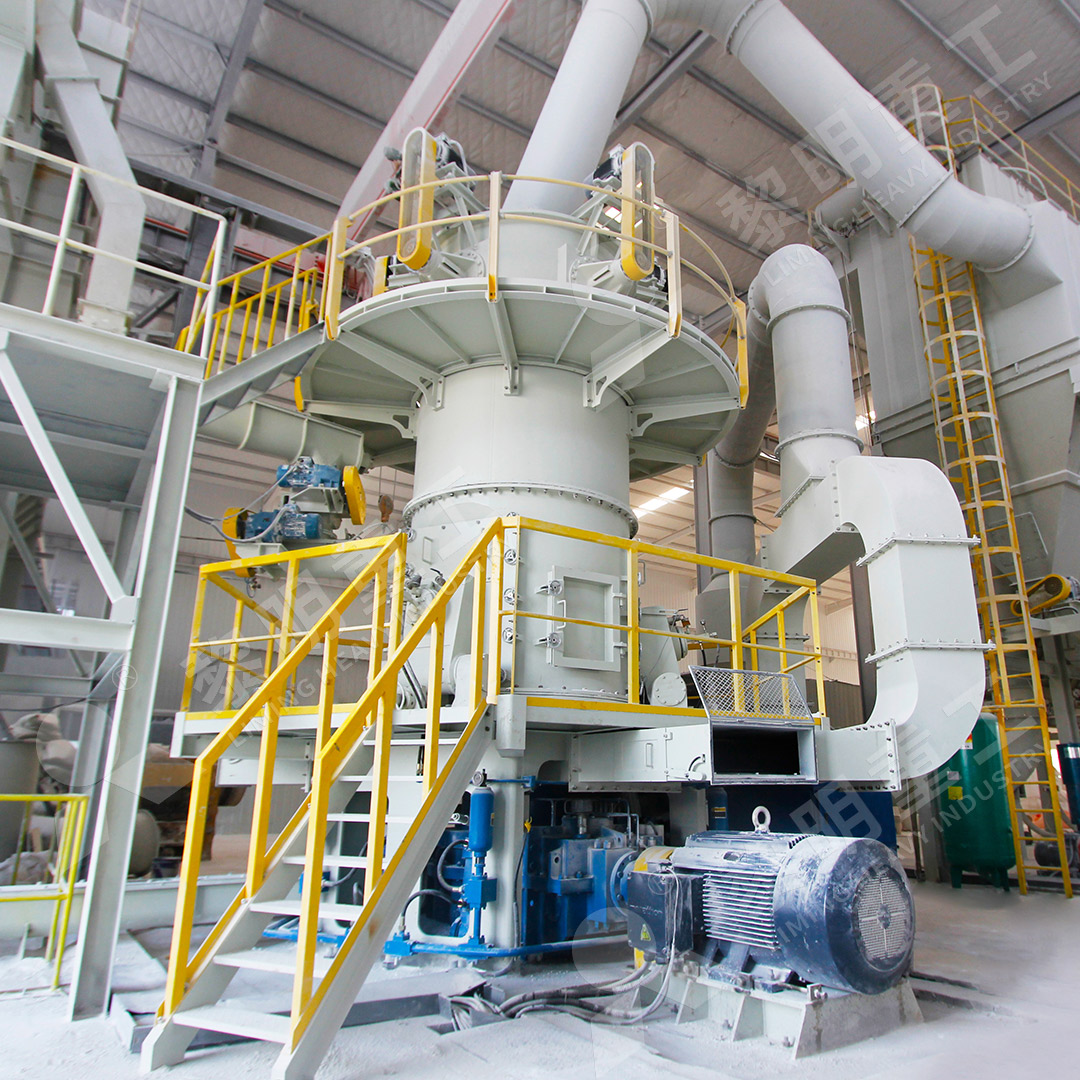
Recommended Solution: The LUM Ultrafine Vertical Grinding Mill
For Ghanaian processors aiming at the high-end glass additive market, where exceptional whiteness and ultra-fine consistency are demanded, the LUM Ultrafine Vertical Grinding Mill stands out. This mill integrates the latest grinding roller and German powder separating technology, making it ideal for producing superfine dolomite powder.
Its unique roller shell and lining plate grinding curve promote stable material layer formation, enabling high-yield, single-pass milling that enhances whiteness—a critical factor for glass clarity. The PLC-controlled multi-head powder separating technology solves the dual challenge of high-precision size cuts and fast switching between different product specifications, allowing a single plant to serve multiple glass clients. Notably, its double position-limiting technology protects the mill from disruptive vibrations, ensuring stable, continuous operation crucial for Ghana’s industrial productivity. With an input size of 0-10 mm and a capacity range of 5-18 tph, it is perfectly scaled for medium to large processing setups.
For High-Capacity Production: The LM Vertical Grinding Mill
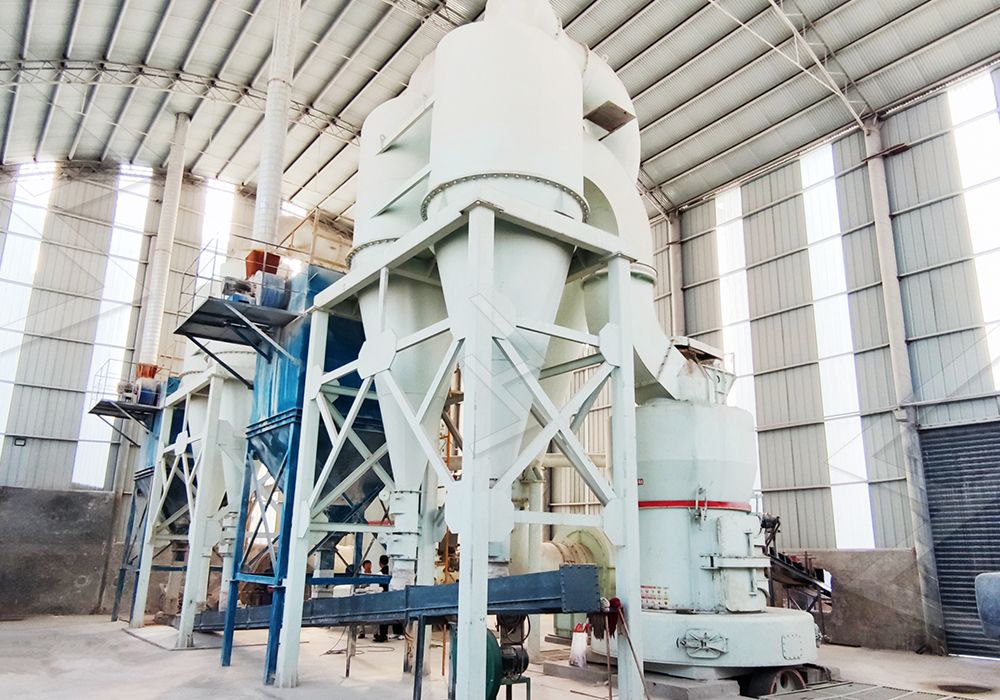
For large-scale operations supplying major glass plants, the LM Vertical Grinding Mill offers unparalleled efficiency and reliability. It integrates crushing, drying, grinding, classifying, and conveying in a single unit, drastically reducing the footprint and comprehensive investment. Its ability to handle feed sizes up to 70 mm and capacities from 3 to 340 tph makes it a powerhouse. The short material lingering time minimizes repeated grinding and keeps iron content exceptionally low, directly preserving the dolomite’s purity. Its fully automated control system and environmentally sealed design ensure worry-free, clean operation that meets international standards.
Conclusion: Building a Competitive Edge
Optimizing dolomite processing for Ghana’s glass industry is not merely about pulverizing rock; it’s about delivering a engineered powder that enhances manufacturing efficiency and final product quality. By investing in advanced roller mill technology like the LUM or LM series, Ghanaian mineral processors can achieve superior product specifications, significant operational savings, and robust environmental compliance. This strategic approach positions them as critical, reliable partners in the value chain, supporting the growth and sophistication of Ghana’s domestic glass sector and its export potential.
Frequently Asked Questions (FAQs)
- What is the typical target fineness (mesh size) for dolomite used as a glass additive?
It varies by application. For container and flat glass, 200-325 mesh (d97 ≤ 45μm) is common. For high-performance or specialty glass requiring faster melting, fineness of 600-1250 mesh (d97 ≤ 10μm) may be specified. - How does roller mill technology reduce iron contamination compared to a traditional ball mill?
High-quality roller mills use wear-resistant alloys for grinding parts. More importantly, the grinding mechanism (roller against bed) and features like non-contact limiters minimize direct metal wear. In contrast, ball mills involve constant steel-ball-to-liner contact, generating more metallic wear debris. - Can these mills handle the moisture content in dolomite as mined in Ghana?
Yes. Vertical roller mills like the LM and LUM series are designed with integrated hot air ducts. They can simultaneously dry (using auxiliary heat from a hot air generator) and grind materials with moderate surface moisture, making them suitable for local conditions. - What are the main maintenance concerns for a roller mill in such an application?
Primary wear parts are the grinding rollers and table/ring liners. Modern mills like the LUM feature reversible structures and hydraulic systems that allow rollers to be easily swung out for maintenance, minimizing downtime. Regular inspection of the classifier blades and the bag filter system is also recommended. - Is the power supply in Ghana stable enough for such industrial milling equipment?
While power stability can be a regional consideration, these mills are equipped with advanced PLC control systems that can manage gradual fluctuations. For areas with significant instability, we recommend consulting with our engineers to design a system with appropriate motor starters and potential backup power considerations. - What kind of after-sales support and spare parts availability can be expected in Ghana?
We maintain a commitment to global support. For clients in Ghana, we provide comprehensive technical documentation, remote operational support, and ensure a sufficient supply of original spare parts through our distribution network to guarantee worry-free, long-term operation. - How does the energy consumption of a vertical roller mill compare for dolomite grinding?
Vertical roller mills are significantly more energy-efficient. For producing the same fineness of dolomite powder, a VRM typically consumes 30% to 50% less energy than a traditional ball mill system, representing a major reduction in operational costs.