
How to optimize cement clinker processing with roller mill for infrastructure projects in ethiopia
How to Optimize Cement Clinker Processing with Roller Mill for Infrastructure Projects in Ethiopia
Ethiopia’s ambitious infrastructure development, encompassing dams, roads, railways, and urban expansion, is fundamentally built on a reliable and high-quality supply of cement. The heart of cement production lies in the efficient processing of cement clinker, a process where grinding technology plays a pivotal role. Traditional ball mills, while reliable, are increasingly being outpaced by modern vertical roller mills (VRMs) and advanced grinding systems that offer superior energy efficiency, product quality, and operational flexibility. For project managers and plant operators in Ethiopia, selecting and optimizing the right roller mill technology is not just an operational decision—it’s a strategic one that impacts project timelines, costs, and environmental compliance.
The Ethiopian Context: Demands and Challenges
The scale and pace of infrastructure projects in Ethiopia place unique demands on local cement production. Consistency in cement strength and setting time is non-negotiable for structural integrity. Furthermore, operational costs, particularly energy consumption which can constitute up to 60% of grinding costs, are a major concern. Environmental regulations, though evolving, necessitate dust-free and low-noise operations. Lastly, the need for robust, easy-to-maintain machinery that minimizes downtime is critical in a market where technical support logistics can be challenging. A roller mill optimized for these conditions must deliver precision, efficiency, and resilience.

Core Advantages of Modern Roller Mill Technology
Modern roller mills, particularly vertical roller mills, address the core challenges of clinker grinding head-on. Their principle involves grinding material between a rotating table and conical rollers under hydraulic pressure. This direct grinding mechanism is inherently more efficient than the impact and attrition of tumbling balls. Key advantages include:
- Substantial Energy Savings: VRMs typically consume 30-50% less energy than a ball mill for the same output, a decisive factor for cost-sensitive projects.
- Superior Product Quality: The ability to precisely control grinding pressure, table speed, and air classification results in a narrower, more consistent particle size distribution (PSD). A optimized PSD directly enhances cement strength development.
- Integrated Drying: Hot gases from the kiln can be directly introduced into the mill, efficiently drying raw materials or additives like slag or fly ash, which is crucial for composite cement production.
- Compact Footprint: Their vertical design requires significantly less floor space than a horizontal ball mill system.
- Environmental Compliance: Closed-system operation with integrated high-efficiency bag filters ensures dust emissions are kept far below permissible limits.
Optimization Strategies for Peak Performance
Simply installing a roller mill is not enough; continuous optimization is key. This involves:
- Grinding Pressure and Table Speed Tuning: Adjusting the hydraulic pressure on the rollers and the rotational speed of the table to find the optimal balance between throughput and fineness for the specific clinker chemistry.
- Classifier Optimization: The integrated dynamic classifier is the brain of product fineness. Ensuring its rotor speed and blade configuration are set correctly is vital for achieving the target Blaine surface area.
- Wear Part Management: Implementing a predictive maintenance schedule for grinding rollers and table liners based on operational data prevents unexpected failures and maintains grinding efficiency.
- Process Integration: Optimizing the entire circuit, from clinker feed consistency to product conveying, to ensure the mill operates at a stable, designed load.

Technology Spotlight: The LIMING LUM Ultrafine Vertical Grinding Mill
For projects requiring exceptionally high-quality cement or the production of specialty blended cements, advanced grinding solutions offer a distinct edge. The LUM Ultrafine Vertical Grinding Mill represents a significant leap forward. Engineered with the latest grinding roller and German powder separating technology, it is designed for high-precision ultrafine powder production. Its unique roller shell and lining plate grinding curve promote stable material layer formation, enabling high-yield, single-pass milling that improves product whiteness and purity—a critical factor for high-grade applications.
What makes the LUM series particularly relevant for demanding operations is its focus on stability and ease of maintenance. Its double position-limiting technology (electronic and mechanical) prevents destructive roller-to-table contact during unexpected vibration, safeguarding the mill’s core. Furthermore, its innovative reversible structure allows grinding rollers to be easily swung out of the mill body for inspection or maintenance, drastically reducing downtime for wear part replacement. With an adjustable fineness and capacity ranging up to 18 tph, it provides the flexibility needed for specialized cement production supporting Ethiopia’s most critical infrastructure.
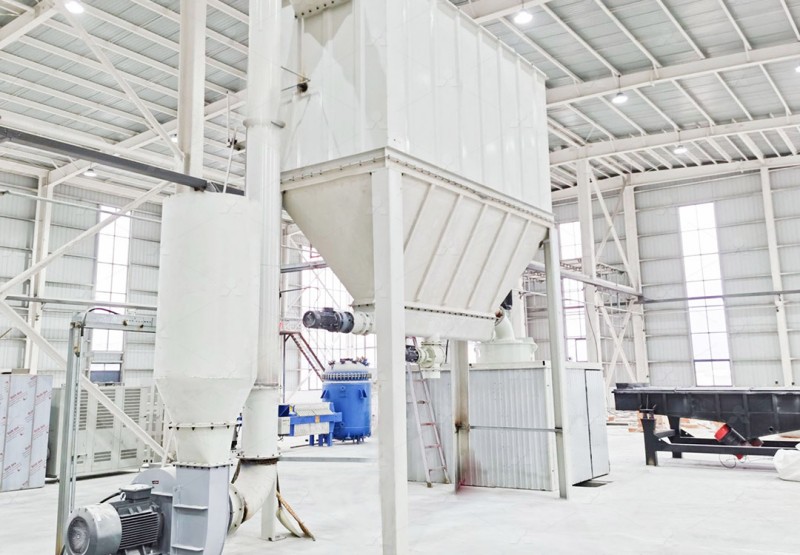
A Robust Workhorse: The LIMING LM Vertical Grinding Mill
For large-scale, general-purpose clinker and raw meal grinding, the LM Vertical Grinding Mill stands as a proven, comprehensive solution. It integrates crushing, drying, grinding, classification, and conveying into a single, compact unit, reducing the overall footprint by approximately 50% compared to ball mill systems. This integration is ideal for new plant installations in Ethiopia, simplifying layout and reducing civil engineering costs.
The LM mill excels in operational economy. Its design ensures materials have a short residence time, minimizing over-grinding and reducing iron contamination from mechanical wear, which safeguards the cement’s quality. The system operates under negative pressure, making it inherently dust-free and environmentally friendly. With capacities scaling from 3 to over 300 tph, it can be tailored to projects of any size, from regional cement plants to mega-infrastructure supply hubs. Its digitalized manufacturing ensures high precision in core parts, contributing to reliable, worry-free operation—a essential feature for maintaining continuous supply to fast-tracked construction projects.
Conclusion: Building Ethiopia’s Future on a Foundation of Efficiency
The choice of grinding technology is a cornerstone of efficient and sustainable cement production. For the dynamic and growing infrastructure sector in Ethiopia, modern roller mills like the LIMING LUM and LM series offer a compelling path forward. They deliver the precise blend of energy savings, product quality, operational reliability, and environmental stewardship required to support the nation’s development ambitions. By investing in and optimizing these advanced grinding systems, Ethiopian cement producers can build not just stronger structures, but a stronger, more competitive industrial foundation for the future.

Frequently Asked Questions (FAQs)
1. Why choose a vertical roller mill over a traditional ball mill for clinker grinding in Ethiopia?
Vertical roller mills offer 30-50% lower energy consumption, superior product quality with a narrower particle size distribution, integrated drying capability for additives, a much smaller physical footprint, and easier compliance with dust emission standards, making them more cost-effective and environmentally suitable for modern projects.
2. How does the LUM Ultrafine Vertical Mill improve cement quality?
The LUM mill’s unique grinding curve and advanced multi-head powder separator allow for precise control over fineness (adjustable between a wide range). This results in higher product whiteness, lower iron content, and better particle uniformity, which can enhance the final strength and performance characteristics of specialty or high-grade cement.
3. What are the key maintenance advantages of the LIMING LM Vertical Grinding Mill?
The LM mill is designed for easier maintenance. Its grinding rollers and millstone do not have direct metal-to-metal contact, reducing wear. Core parts are accessible, and the mill’s stable operation with low vibration extends component life. Furthermore, LIMING provides a complete supply of original spare parts and technical support to ensure worry-free operation.
4. Can these mills handle the grinding of blended cements with materials like slag or fly ash?
Yes, absolutely. Both the LUM and LM vertical mills feature integrated hot air ducts that allow them to simultaneously dry and grind moist materials like granulated blast furnace slag or fly ash. This makes them ideal for producing cost-effective and sustainable composite cements, which are increasingly popular.
5. How does the technology ensure environmental compliance?
These mills operate as closed, negative-pressure systems. They are equipped with high-efficiency pulse jet bag dust collectors (like in the MW Mill) or similar integrated filtration systems that capture over 99.9% of particulate matter, ensuring dust emissions are minimal and well within international and local environmental standards.
6. What is the typical lead time and support available for such equipment in Ethiopia?
Lead times vary based on model and configuration. Reputable manufacturers like LIMING offer comprehensive support packages, including installation supervision, operator training, and a reliable supply chain for genuine spare parts, which is crucial for minimizing downtime in remote locations.
7. Are these mills suitable for smaller-scale or modular cement production projects?
Yes. The product range includes models with capacities starting from a few tons per hour (e.g., certain configurations of the LUM or MTW series). This scalability allows them to be deployed in modular grinding plants or to support specific, smaller-scale infrastructure projects effectively.