
How to optimize barite processing with grinding mill for paint filler in tunisia
Unlocking Tunisia’s Barite Potential for High-Quality Paint Fillers
The Tunisian industrial landscape, particularly the paint and coatings sector, stands at a pivotal moment. With global demand for high-performance, sustainable paints on the rise, the need for superior-quality fillers is paramount. Barite, or barium sulfate, is a cornerstone mineral for this industry, prized for its high specific gravity, chemical inertness, brightness, and low oil absorption. However, transforming raw Tunisian barite ore into the ultra-fine, consistent powder required for premium paint formulations presents a significant technical challenge. The key lies not just in grinding, but in intelligent, optimized processing with the right milling technology.
The Critical Role of Particle Size and Purity in Paint Applications
For paint manufacturers, the functional properties of barite extend far beyond mere filler volume. In primers and industrial coatings, its density provides sound damping and enhances film durability. In all paints, its whiteness contributes to opacity and color consistency. Achieving these benefits requires precise control over particle size distribution (PSD). A narrow, consistent PSD in the ultrafine range (typically d97 ≤ 10µm) ensures smooth application, improved gloss control, and prevents settling in the can. Furthermore, the grinding process itself must not introduce contaminants, especially iron, which can lead to discoloration and reduced chemical stability in the final paint product.

Beyond Traditional Milling: Addressing the Pitfalls for Barite
Traditional ball mills or basic Raymond mills often fall short for modern paint-grade barite production. Common issues include:
- Broad Particle Size Distribution: Leading to poor paint rheology and finish.
- High Iron Contamination: From metal-to-metal contact in the grinding chamber, risking paint yellowing.
- Excessive Energy Consumption: Making production costs prohibitive.
- Inadequate Fineness Control: Inability to reliably reach and maintain the 1250-2500 mesh range required for high-end applications.
- Dust and Noise Pollution: Failing to meet increasingly strict environmental and workplace safety standards.
An optimized process must therefore integrate advanced grinding, precise classification, and environmental controls in a single, efficient system.
A Tailored Solution: The MW Ultrafine Grinding Mill for Tunisian Barite
For paint producers in Tunisia seeking a competitive edge, the MW Ultrafine Grinding Mill presents a compelling, purpose-built solution. This system is engineered specifically for minerals like barite where ultra-fine powder, high whiteness, and operational efficiency are non-negotiable.
Its design directly tackles the challenges outlined above. The innovative grinding curve of its roller and ring assembly enhances efficiency, achieving a 40% higher capacity compared to jet mills at the same power and fineness, while slashing system energy consumption by 70%. For paint formulators, the adjustable cage-type powder selector is a game-changer. It allows precise calibration of fineness between 325 and 2500 meshes, enabling a single mill to produce different grades for various paint lines. Crucially, the absence of rolling bearings and screws in the grinding chamber virtually eliminates the risk of iron contamination from mechanical wear, safeguarding the brightness and purity of your barite filler.
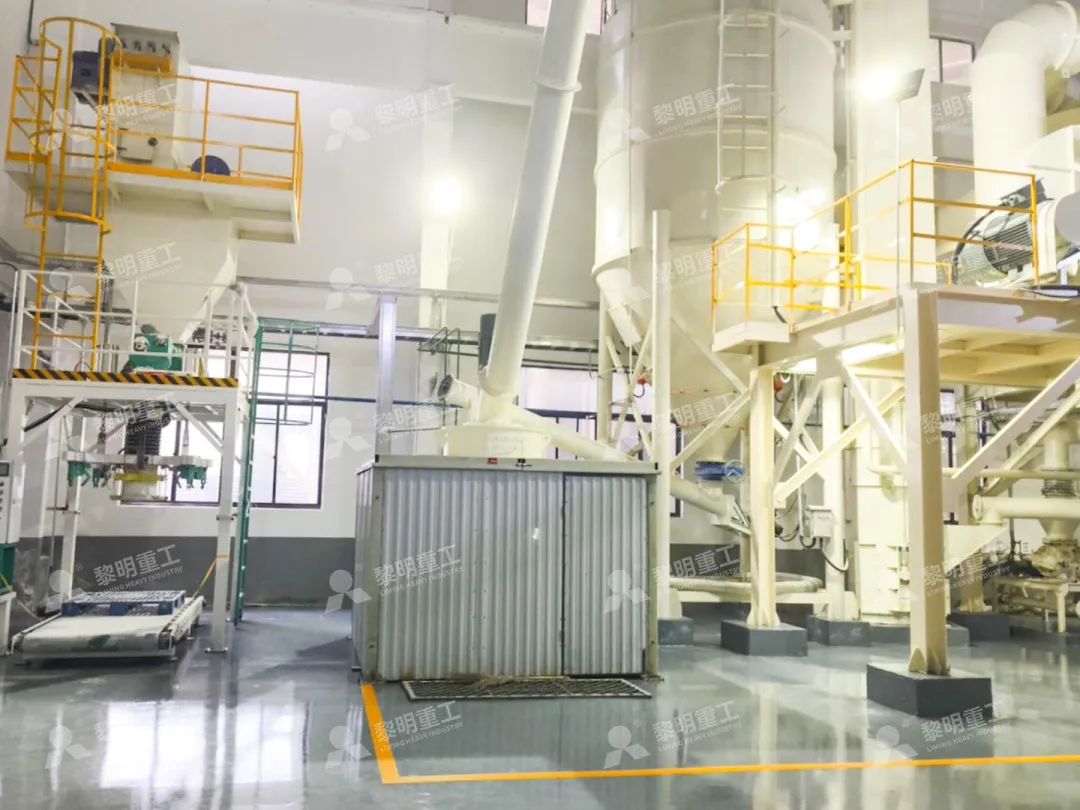
Integrating the Mill into a Complete Barite Processing Line
Optimization extends beyond the mill itself. A well-designed barite processing line in Tunisia should include:
- Primary Crushing & Drying: Reducing raw ore to below 20mm and controlling moisture.
- Precision Feeding: A stable, automated feeder to ensure consistent mill load.
- Core Grinding & Classification: The MW Mill, where grinding and immediate internal classification occur.
- Efficient Collection & Packaging: A pulse-jet baghouse dust collector ensures a 99.9% recovery rate of valuable product and a dust-free workshop.
The MW Mill’s integrated pulse dust collector and silencer make this entire process remarkably clean and quiet, aligning with global environmental standards and creating a safer workplace—a significant advantage for Tunisian industries focused on sustainable growth.
For Larger Scale or Specialized Needs: The LUM Ultrafine Vertical Alternative
For operations requiring very high throughput or processing barite alongside other non-metallic minerals, the LUM Ultrafine Vertical Grinding Mill offers another excellent option. Integrating the latest grinding roller and powder separating technology, the LUM mill excels in stability and energy savings. Its unique roller shell design promotes efficient material bed formation, enabling high-yield, single-pass milling that preserves material whiteness. The double position-limiting technology protects the mill from vibrational shocks, ensuring uninterrupted operation, while its reversible structure allows for rapid roller maintenance, minimizing costly downtime—a critical factor for continuous production paint plants.

Conclusion: Building a Competitive Advantage
Optimizing barite processing for Tunisia’s paint industry is an investment in quality, efficiency, and sustainability. By moving beyond conventional milling to adopt advanced, integrated systems like the MW or LUM Ultrafine Grinding Mills, producers can consistently manufacture a superior paint filler. This not only meets but exceeds the expectations of both local and international paint markets, ensuring brighter, more durable, and reliably consistent products. The right grinding technology transforms a domestic mineral resource into a high-value industrial commodity, fueling the growth and sophistication of Tunisia’s manufacturing sector.
Frequently Asked Questions (FAQs)
- What is the typical moisture content tolerance for barite fed into the MW Mill?
The MW Mill system can integrate drying, but for optimal efficiency, feed material should ideally have a moisture content below 6%. Pre-drying may be necessary for higher moisture ore. - Can the same mill produce different fineness grades for different paint products?
Yes. The adjustable cage-type powder selector in the MW Mill allows operators to easily change the fineness setting, enabling production of various grades from coarse extender pigments to ultra-fine fillers without changing hardware. - How significant is the reduction in iron contamination compared to a traditional ball mill?
It is substantial. The “no rolling bearing in chamber” design of the MW Mill prevents one of the primary sources of iron wear. Product iron content can be reduced to levels that have no measurable impact on paint color or stability. - What kind of after-sales support and spare parts availability is there for Tunisia?
Manufacturers like LIMING provide comprehensive technical support, remote assistance, and guarantee the supply of original spare parts to ensure worry-free, long-term operation of the grinding mills. - Is the system automated, and what level of technical skill is required to operate it?
The grinding mills feature advanced PLC control systems that allow for both local and remote operation with automated monitoring of key parameters. Training is provided, and the digital interface is designed for clear operational feedback. - What is the expected wear life of the grinding rollers and rings when processing abrasive barite?
The rollers and rings are made from high-performance wear-resistant alloys. Depending on operating hours and feed size, their service life typically ranges from 3,000 to 6,000 hours before needing refurbishment or replacement. - How does the energy consumption compare per ton of finished barite powder to older mill types?
Systems like the MW Mill can reduce specific energy consumption by 30% to 50% compared to traditional ball mills or older Raymond mill systems, offering major long-term cost savings.