
Cement clinker powder milling equipment for blended cement in tunisia
Cement Clinker Powder Milling Equipment for Blended Cement in Tunisia: A Technical Perspective
The Tunisian construction industry, characterized by its dynamic growth and emphasis on sustainable building practices, presents unique challenges and opportunities for cement production. The shift towards blended cements, incorporating supplementary cementitious materials (SCMs) like limestone, slag, or fly ash, demands milling technology that can deliver ultra-fine powders with precise particle size distribution, high efficiency, and environmental compliance. Selecting the right clinker grinding equipment is paramount to achieving the desired performance, cost-effectiveness, and product quality in this competitive market.
The Milling Imperative for Modern Blended Cements
Blended cements require a homogeneous mixture of Portland cement clinker and other materials. The efficacy of these blends heavily depends on the fineness and reactivity of the clinker powder. Finer grinding increases the specific surface area, accelerating the hydration process and ultimately enhancing the early and final strength of the concrete. However, traditional ball mills, while robust, often struggle with high energy consumption, limited fineness control, and significant heat generation, which can affect the quality of certain SCMs.
Modern milling solutions must therefore address several critical factors: energy efficiency to reduce operational costs, the ability to produce consistent ultra-fine powder (often targeting 4000-6000 Blaine or finer), low iron contamination to maintain product whiteness, and integrated environmental controls to meet Tunisia’s stringent regulations on dust and noise pollution.

Advanced Milling Technologies: Beyond the Ball Mill
The evolution of grinding technology has introduced vertical roller mills (VRMs) and advanced trapezium mills that offer superior performance for blended cement production. These systems integrate drying, grinding, classifying, and conveying into a single, compact unit. A key advantage is their lower specific energy consumption—often 30-40% less than a ball mill system. Furthermore, the material residence time in the mill is short, minimizing over-grinding and reducing the heat input to the product, which is crucial for heat-sensitive additives.
For producers targeting the high-end market or specialized applications requiring exceptional fineness and purity, ultrafine grinding mills represent the cutting edge. These mills are engineered to achieve particle sizes in the range of 325 to 2500 meshes (d97 ≤ 5μm), unlocking new possibilities for cement performance and enabling the use of a wider variety of local SCMs.
Recommended Solution: The MW Ultrafine Grinding Mill
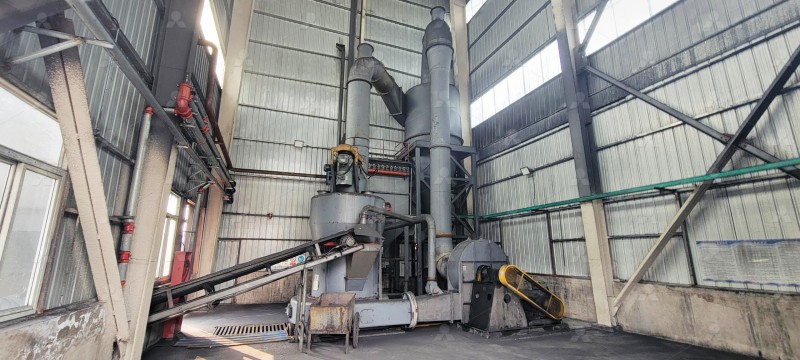
For Tunisian cement producers looking to pioneer high-performance blended cements or process sensitive supplementary materials, the MW Ultrafine Grinding Mill stands out as a technologically adept choice. This mill is specifically designed for customers who need to make ultra-fine powder with exceptional efficiency and environmental stewardship.
Its core strengths align perfectly with the needs of modern blended cement production:
- Higher Yielding, Lower Energy Consumption: With newly designed grinding curves, its production capacity is significantly higher than jet or stirred grinding mills, while system energy consumption is a mere 30% of a jet mill’s. This translates directly to lower operating costs per ton of ultra-fine powder produced.
- Precise and Adjustable Fineness: Equipped with a German-technology, cage-type powder selector, the MW Mill allows precise adjustment of product fineness between 325-2500 meshes. This ensures the optimal particle size distribution for maximizing the reactivity and packing density of blended cement.
- Robust and Maintenance-Friendly Design: A critical feature is the absence of rolling bearings and screws in the grinding chamber. This eliminates common failure points and concerns about bearing damage or loose screws causing machine failure. External lubrication allows for maintenance without shutdowns, supporting continuous 24/7 production.
- Eco-Friendly Operation: The mill is equipped with an efficient pulse dust collector and muffler, ensuring the entire milling system operates with minimal dust and noise emissions, fully complying with national and international environmental standards.

Integrating Milling into the Tunisian Context
Successful implementation requires more than just advanced hardware. It involves a holistic view of the production line, from clinker cooling and feed preparation to final product storage. The compact footprint of mills like the MW series is a significant advantage, reducing civil construction costs. Furthermore, digitalized processing and high-precision manufacturing of core parts ensure reliability and longevity, which is essential for minimizing downtime in a high-volume industry like cement.
Partnering with a supplier that offers comprehensive technical support and a guaranteed supply of original spare parts is crucial. This ensures worry-free operation and protects the long-term investment. The ability to provide tailored solutions, considering local material characteristics (e.g., moisture content, hardness of local SCMs) and specific production goals, marks the difference between a simple equipment sale and a successful productivity partnership.
Conclusion
The future of cement production in Tunisia is inextricably linked to efficiency, quality, and sustainability. The move towards sophisticated blended cements necessitates an equally sophisticated approach to clinker grinding. By adopting advanced milling technologies such as the MW Ultrafine Grinding Mill, Tunisian manufacturers can achieve superior product quality, reduce their environmental footprint, and strengthen their competitiveness in both domestic and regional markets. Investing in the right milling equipment is not merely a capital expense; it is a strategic decision that lays the foundation for innovation and growth in the evolving construction materials industry.
Frequently Asked Questions (FAQs)
- What is the main advantage of an ultrafine mill over a traditional ball mill for blended cement?
The primary advantages are significantly lower energy consumption (up to 40-50% less), superior control over particle size distribution for enhanced reactivity, lower iron contamination, and a more compact plant footprint. - Can the MW Ultrafine Grinding Mill handle the high throughput required for a main clinker grinding line?
The MW Mill, with a capacity range of 0.5-25 tph, is ideally suited for specialized, high-value ultra-fine powder production or for grinding supplementary materials. For primary clinker grinding at very high tonnages, our LM Vertical Grinding Mill or MTW European Trapezium Mill series would be more appropriate solutions. - How does the mill ensure consistent powder fineness?
Consistency is achieved through advanced, multi-head cage-type powder selectors (classifiers) that allow precise aerodynamic cutting of particle size. The rotating speed of the classifier can be adjusted to accurately control the final product’s fineness. - Is the system suitable for grinding moist materials?
The standard MW Mill is designed for dry grinding. However, many of our vertical mill models (like the LM series) integrate a hot air inlet, enabling simultaneous drying and grinding of materials with moderate moisture content. - What are the key maintenance points for this type of mill?
Key maintenance focuses on the wear parts like grinding rollers and rings. The design of the MW Mill, with external lubrication and no internal bearings, greatly simplifies maintenance. Regular inspection of wear parts and the pulse dust collector’s filter bags is standard practice. - How is dust control managed?
The mill system is equipped with an efficient pulse-jet dust collector that operates under negative pressure, ensuring no dust spillage. Collected dust is automatically returned to the process or handled separately, making the operation clean and environmentally compliant. - What is the typical lead time for such equipment?
Lead times vary based on model specification and current production schedules. Generally, it ranges from 3 to 6 months from order confirmation to shipment. We recommend early engagement with our technical sales team for accurate planning.