
Advanced powder processing mill grinding cement clinker for blended cement production production in vietnam
Advanced Powder Processing: Mill Grinding Cement Clinker for Blended Cement Production in Vietnam
The Vietnamese cement industry stands at a critical juncture, driven by robust infrastructure development and a growing emphasis on sustainable construction practices. A key trend shaping this sector is the increasing production of blended cements, which incorporate supplementary cementitious materials (SCMs) like fly ash, slag, or limestone powder. This shift demands advanced powder processing technology capable of producing ultra-fine, highly reactive cementitious powders with exceptional efficiency and environmental compliance. The core of this process lies in the precision grinding of cement clinker and SCMs, a task where the choice of grinding mill dictates product quality, operational cost, and plant sustainability.
The Technical Imperative for Modern Grinding Solutions
Traditional ball mills, while reliable, often fall short in the modern context due to high energy consumption, limited particle size control, and significant heat generation which can affect the reactivity of certain SCMs. The production of high-performance blended cements requires a mill that delivers a narrow particle size distribution, high specific surface area (Blaine), and consistent fineness—all while managing the often abrasive and variable nature of raw clinker and industrial by-products.
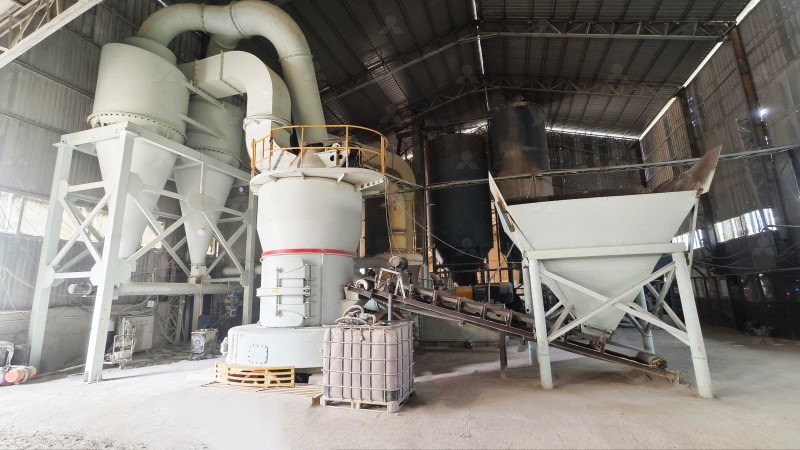
Modern vertical roller mills (VRMs) and advanced trapezium mills have emerged as superior alternatives. They integrate drying, grinding, classification, and conveying into a single, compact unit. Their principle of material bed comminution, where particles are ground between a rotating table and rollers under hydraulic pressure, is inherently more energy-efficient than the impact and attrition of tumbling balls. For Vietnamese plants aiming to reduce carbon footprint and lower power costs—which constitute a major portion of cement production expenses—this efficiency is paramount.
Key Considerations for Mill Selection in Vietnam
When selecting grinding equipment for blended cement production, Vietnamese engineers must evaluate several critical factors:
- Energy Efficiency: With volatile energy prices, mills that offer 30-50% lower specific power consumption compared to ball mills provide a decisive economic advantage.
- Product Flexibility: The ability to easily adjust fineness (from 300 to over 5000 Blaine) and quickly switch between different cement types (OPC, PPC, PSC) is crucial for meeting diverse market demands.
- Drying Capacity: Vietnam’s humidity necessitates effective in-mill drying, especially when using moist SCMs like slag. Integrated hot gas systems are essential.
- Wear Resistance & Maintenance: The abrasive nature of clinker demands robust grinding elements and a design that facilitates easy maintenance to minimize downtime.
- Environmental Compliance: Mills must operate with minimal dust emissions and noise, adhering to increasingly strict national environmental standards.
Introducing the LUM Ultrafine Vertical Grinding Mill: A Paradigm for Precision
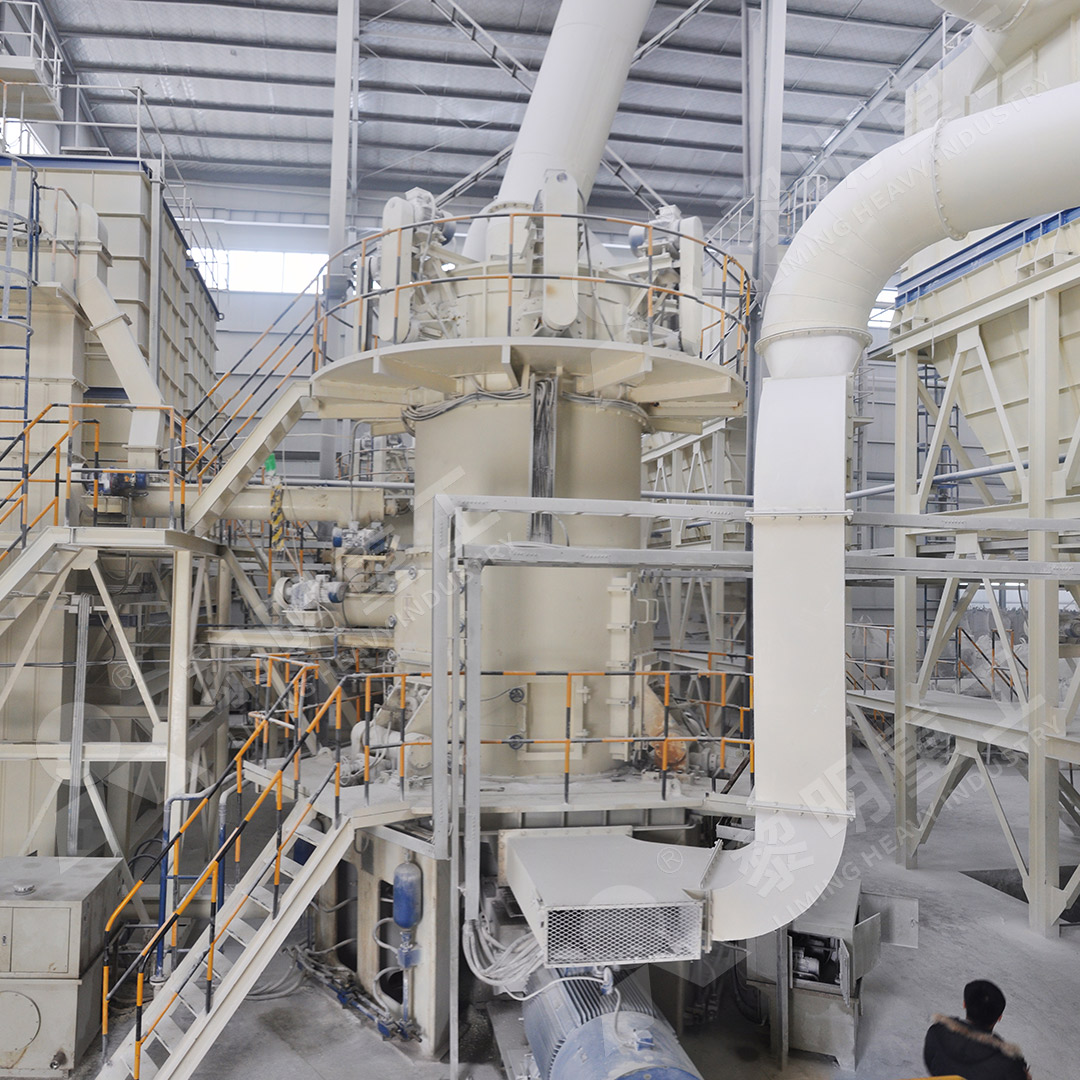
For producers targeting the high-end market of ultra-fine blended cements or seeking to maximize the reactivity of SCMs, the LUM Ultrafine Vertical Grinding Mill represents a technological leap. Independently designed by LIMING, it integrates the latest grinding roller and German powder separating technology. Its unique roller shell and lining plate grinding curve are engineered to generate a stable material layer, enabling a high rate of finished product in a single pass. This not only boosts efficiency but also enhances the whiteness and cleanliness of the final cement powder—a valuable quality metric.
A standout feature for operational stability in Vietnam’s industrial settings is its double position-limiting technology. This system, combining electronic and mechanical limits, prevents destructive impacts between the grinding roller and millstone during unexpected events like voltage fluctuations or feed surges, a common concern in power grids. Furthermore, its reversible structure and external hydraulic system allow operators to easily swing the grinding roller out of the mill body for inspection or part replacement, dramatically simplifying maintenance and reducing shutdown losses.
The Role of the MW Ultrafine Grinding Mill in Additive Processing
While clinker grinding is central, the processing of SCMs to ultra-fine levels is what unlocks their full pozzolanic or latent hydraulic potential. Here, the MW Ultrafine Grinding Mill excels. Designed specifically for making ultra-fine powder, it is ideal for processing limestone, slag, or fly ash to fineness levels between 325-2500 meshes. Its cage-type powder selector, employing advanced German technology, ensures precise classification with a screening rate that can achieve d97≤5μm in one cycle.
For plant managers, its reliability is a major benefit. The grinding chamber contains no rolling bearings or screws, eliminating common failure points and concerns about seal damage or loose fasteners causing machine failure. Lubrication is performed externally without shutdown, supporting continuous 24/7 production—a critical factor for meeting high-volume contracts. Coupled with an efficient pulse dust collector and noise reduction features, the MW Mill enables Vietnamese plants to produce premium additives in an environmentally sound manner, fully aligning with national环保 standards.

Driving Sustainable Growth in Vietnam’s Cement Sector
The adoption of advanced grinding technology is more than an equipment upgrade; it is a strategic move towards sustainable growth. By significantly lowering energy use per ton of output, these mills directly reduce production costs and greenhouse gas emissions. Their ability to efficiently utilize industrial by-products (slag, fly ash) supports a circular economy, reducing landfill waste and the clinker factor in cement, which is the primary source of CO2 in cement production.
For new plant projects or major upgrades in Vietnam, investing in mills like the LUM series or MW series from LIMING provides a future-proof foundation. They offer the digitalized processing precision, operational stability, and eco-friendly performance needed to compete in both domestic and export markets. With comprehensive after-sales support and a guaranteed supply of original spare parts, Vietnamese cement producers can achieve not only superior product quality but also long-term, worry-free operation.

Frequently Asked Questions (FAQs)
1. What is the main advantage of a vertical roller mill over a traditional ball mill for cement grinding?
The primary advantages are dramatically higher energy efficiency (30-50% savings), superior drying capability for moist materials, a more compact footprint, and better control over particle size distribution and product fineness.
2. Can the LUM Ultrafine Vertical Mill handle the abrasive nature of cement clinker?
Yes. The LUM Mill is built with wear-resistant materials for grinding rollers and tables. Its design also allows for easy reversal and replacement of wear parts, and the grinding pressure can be hydraulically adjusted to optimize performance for abrasive materials.
3. How does the MW Ultrafine Grinding Mill achieve such precise fineness control?
It utilizes a multi-head cage-type powder selector based on German technology. This allows for highly accurate separation of particles. The fineness can be precisely adjusted between 325 and 2500 meshes by controlling the selector’s speed and configuration.
4. Are these mills suitable for the humid climate in Vietnam?
Absolutely. Both the LUM and LM series vertical mills have integrated hot air systems that provide strong drying capacity concurrently with grinding, making them ideal for processing materials with inherent or atmospheric moisture common in Vietnam.
5. What kind of after-sales support is available for these mills in Vietnam?
LIMING provides full technical support, including installation supervision, operator training, and ongoing technical consultancy. A key benefit is the guaranteed supply of original spare parts to ensure optimal mill performance and minimize unexpected downtime.
6. How does advanced grinding contribute to “greener” cement production?
By lowering energy consumption, it reduces the carbon footprint directly. Furthermore, by enabling efficient grinding of supplementary materials like slag and fly ash, it allows for higher blend ratios, reducing the amount of carbon-intensive clinker needed per ton of cement.
7. What is the typical installation and commissioning timeline for a large vertical mill in a new plant?
The timeline varies based on plant scale and preparation, but typically, from delivery to full commissioning, it can take approximately 4 to 6 months. This includes foundation work, mechanical erection, electrical installation, and system tuning.