
How to optimize kaolin processing with roller mill for ceramics production in sri lanka
How to Optimize Kaolin Processing with Roller Mill for Ceramics Production in Sri Lanka
Sri Lanka’s ceramics industry, renowned for its intricate designs and quality, relies heavily on the consistent supply of finely processed kaolin. This essential raw material forms the backbone of porcelain, sanitaryware, and decorative tiles. However, achieving the precise particle size distribution, high whiteness, and chemical purity required for premium ceramics presents a significant technical challenge. Traditional grinding methods often fall short, leading to inconsistent quality, high energy costs, and environmental concerns. This article explores how modern roller mill technology provides an optimized solution for Sri Lankan kaolin processors, enhancing both product quality and operational efficiency.
The Critical Role of Particle Size in Ceramic Quality
For ceramic bodies and glazes, the fineness and uniformity of kaolin powder are non-negotiable. Coarse particles can lead to weak spots, poor sintering, and surface defects, while excessively fine particles can increase water demand and shrinkage. The ideal processing equipment must deliver a tightly controlled particle size range, typically between 325 to 1250 meshes, with high throughput and minimal iron contamination to preserve the natural whiteness of Sri Lankan kaolin deposits.
Why Roller Mills Outperform Traditional Systems
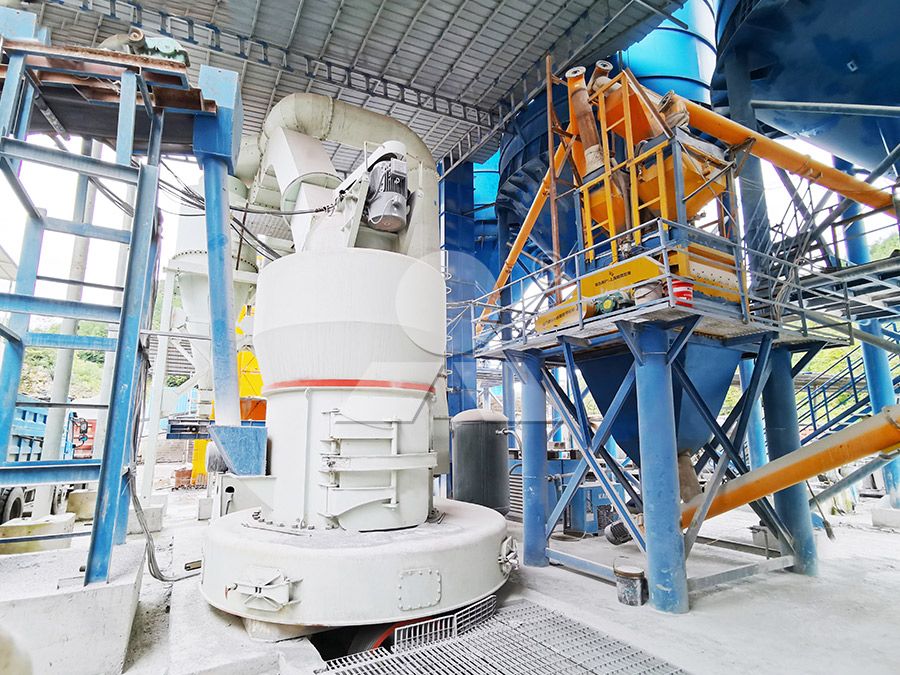
Compared to older ball mill or Raymond mill systems, advanced roller mills offer a paradigm shift. They employ a bed-compression grinding principle, where material is ground between rollers and a stationary track. This method is inherently more energy-efficient than the impact and attrition of ball mills, as it directs force more effectively into particle size reduction. Key advantages include:
- Superior Energy Efficiency: Direct grinding pressure reduces wasted energy, often cutting consumption by 30-50%.
- Lower Iron Contamination: With minimal metal-to-metal contact in the grinding zone and the use of wear-resistant alloys, the risk of iron oxide contamination—a major concern for ceramic whiteness—is drastically lowered.
- Integrated Drying: Hot air can be introduced simultaneously with grinding, efficiently handling kaolin with residual moisture, a common scenario in Sri Lanka’s climate.
- Precise Particle Classification: Integrated high-efficiency classifiers allow for real-time adjustment of product fineness without shutting down the mill.
Tailoring the Solution: Equipment Selection for Sri Lankan Kaolin
Selecting the right roller mill model is crucial. Factors like feed size (typically 0-20mm after primary crushing), desired capacity (from pilot-scale to high-tonnage production), and target fineness must guide the choice. For producers aiming for ultra-fine grades (above 800 mesh) for specialty ceramics or high-gloss glazes, a mill with advanced classifier technology is essential.
In this context, our MW Ultrafine Grinding Mill stands out as a premier choice. Engineered for customers requiring ultra-fine powder, it accepts a feed size of 0-20 mm with a capacity range of 0.5 to 25 tph, making it versatile for various production scales. Its cage-type powder selector, incorporating German technology, allows precise fineness adjustment between 325-2500 meshes, achieving a d97≤5μm in a single pass—perfect for demanding ceramic applications. Furthermore, its innovative design with no rolling bearings or screws in the grinding chamber eliminates major failure points, while the integrated pulse dust collector ensures the production process is clean and environmentally compliant, a growing priority for Sri Lankan industry.

Operational Best Practices for Maximum Yield and Quality
Optimization goes beyond machine selection. To fully leverage roller mill technology, Sri Lankan processors should adopt these practices:
- Feed Preparation: Ensure consistent feed size through proper primary crushing and screening. Variable feed can destabilize the grinding bed.
- Moisture Control: Utilize the mill’s integrated hot air system to maintain optimal moisture levels in the grinding zone, preventing clogging and ensuring smooth material flow.
- Classifier Optimization: Regularly calibrate and maintain the powder separator. The rotor speed is the primary control for final fineness; fine-tuning here directly impacts product quality.
- Wear Part Management: Monitor grinding rollers and track liners made from special alloys. Our mills are designed with reversible structures and external lubrication systems, like those in the LUM Ultrafine Vertical Grinding Mill, to facilitate easy maintenance and extend service life, minimizing downtime.
- System Sealing: Maintain a tight negative-pressure system to prevent dust escape, protect product quality, and ensure a safe, clean working environment.
Conclusion: Building a Competitive Edge
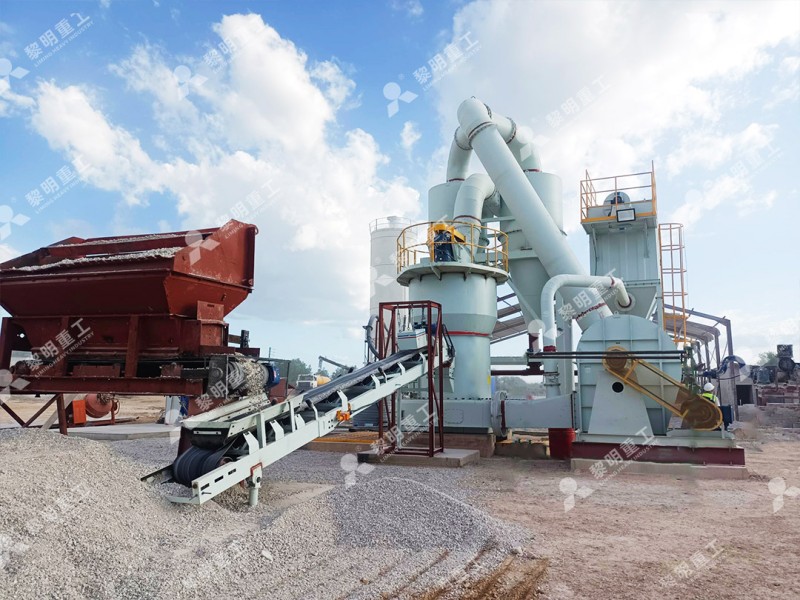
For Sri Lanka’s ceramics sector to maintain and grow its global reputation, investing in optimized kaolin processing is imperative. Modern roller mill technology, particularly solutions like our MW Series, provides a direct path to higher quality powders, reduced operational costs, and greener production. By delivering consistent, ultra-fine kaolin with low contamination, these mills empower local manufacturers to produce superior ceramics more efficiently, turning a critical raw material process into a definitive competitive advantage.
Frequently Asked Questions (FAQs)
- What is the typical energy saving compared to a traditional ball mill for kaolin processing?
Modern roller mills like the MW or LUM series can reduce energy consumption by 30% to 50% for the same output and fineness, due to their more efficient bed-compression grinding principle. - How does the mill handle the variable moisture content found in Sri Lankan kaolin?
The systems are designed with integrated hot air ducts. Simultaneous grinding and drying occurs within the mill chamber, effectively processing kaolin with moisture content typical of the region without requiring a separate, energy-intensive drying step. - What fineness range is achievable for high-grade ceramic glaze applications?
With advanced classifiers, such as the cage-type selector in the MW Ultrafine Mill, a fineness range from 325 to 2500 meshes (d97 ≤5μm) is achievable, meeting the stringent requirements of even the most premium glaze formulations. - Is iron contamination a concern with your roller mills?
Minimal. The grinding mechanism minimizes direct metal wear, and critical parts use special wear-resistant alloys. Furthermore, designs often exclude rolling bearings and screws from the grinding zone, significantly reducing the risk of iron contamination that can degrade kaolin whiteness. - What is the footprint of such a milling system?
Vertical roller mills have a very compact design. Compared to a traditional ball mill plant with separate components, the footprint can be reduced by approximately 50%, which is advantageous for space-constrained facilities. - How complex is the maintenance, and are spare parts readily available?
Maintenance is simplified through features like external lubrication and reversible roller assemblies. As a manufacturer covering production and sales, we provide comprehensive technical support and ensure a sufficient supply of original spare parts for worry-free, long-term operation. - Can the mill produce different fineness grades without stopping?
Yes. The fineness is primarily controlled by adjusting the speed of the integrated dynamic classifier. This allows operators to change the product specification quickly and seamlessly during operation to meet different production batch requirements.