
Using roller mill for carbon black for plastic coloration in kazakhstan
Using Roller Mill for Carbon Black for Plastic Coloration in Kazakhstan
The plastics industry in Kazakhstan is experiencing robust growth, driven by expanding manufacturing, packaging, and construction sectors. A critical component in plastic production is coloration, where carbon black serves as a primary pigment for achieving deep blacks, grays, and UV protection. However, the effectiveness of carbon black is intrinsically linked to its particle size and dispersion quality. This is where advanced milling technology, specifically roller mills, becomes indispensable for processors seeking competitive advantage.
Traditional grinding methods often struggle with the agglomerative nature of carbon black, leading to inconsistent particle size distribution, poor dispersion in the polymer matrix, and ultimately, inferior product quality with issues like speckling or reduced mechanical strength. The modern roller mill addresses these challenges head-on, offering precise control over the grinding process to produce ultra-fine, uniformly dispersed carbon black powder.

The Critical Role of Fineness and Consistency
For plastic coloration, the fineness of carbon black directly impacts color strength, gloss, and product uniformity. A finer, more consistent powder integrates more seamlessly during the compounding or masterbatch production phase. Roller mills excel in this area by applying controlled compressive and shear forces between rotating rollers and a stationary ring or table. This mechanism is particularly effective for brittle materials like carbon black, allowing for efficient size reduction without excessive heat generation, which can degrade the material.
In the context of Kazakhstan’s industrial landscape, where operational efficiency and product quality are paramount for both domestic use and export, investing in the right milling technology is a strategic decision. A roller mill system designed for powders like carbon black not only enhances product quality but also improves production throughput and reduces waste.
Introducing the Ideal Solution: MW Ultrafine Grinding Mill
For processors in Kazakhstan focusing on high-value applications such as plastic coloration, the MW Ultrafine Grinding Mill presents a compelling solution. Engineered specifically for producing ultra-fine powder, this mill is perfectly suited for refining carbon black to the exacting standards required by the plastics industry.
Its key advantage lies in its ability to deliver a higher yield with lower energy consumption. The newly designed grinding curves of the roller and ring enhance efficiency, offering production capacity up to 40% higher than jet mills for the same fineness and power. For carbon black processing, this translates to significant cost savings per ton of output. Furthermore, its adjustable fineness between 325-2500 meshes provides unparalleled flexibility. Operators can precisely tailor the carbon black powder’s particle size to suit different plastic resins and end-product requirements, ensuring optimal coloration and performance.
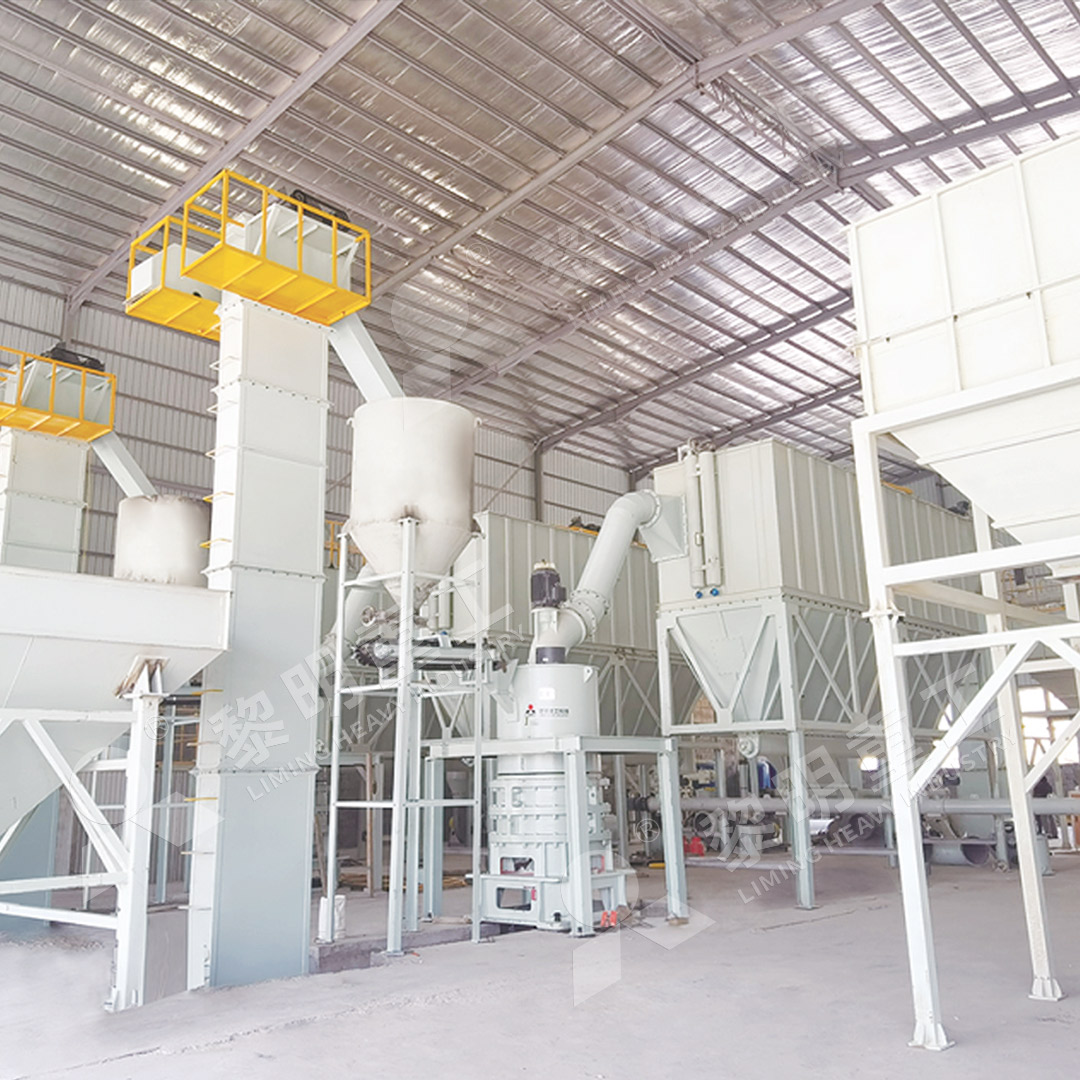
Operational reliability is another cornerstone of the MW Mill. Its innovative design features no rolling bearings or screws in the grinding chamber, eliminating common failure points and concerns about seal damage. External lubrication allows for maintenance without shutdowns, supporting continuous 24/7 production cycles—a crucial factor for meeting tight deadlines. Importantly, the integrated efficient pulse dust collector ensures a clean, environmentally compliant operation, containing the carbon black powder entirely within the system and aligning with stringent workplace and environmental standards.
Integration into Kazakhstani Production Lines
Implementing a roller mill like the MW series into a carbon black processing line in Kazakhstan involves several considerations. The mill acts as the core refining stage, receiving pre-crushed carbon black feedstock. Its compact system—integrating grinding, classification, and conveying—simplifies plant layout. The digitalized processing and high-precision manufacturing of the mill’s core parts guarantee consistent performance and long service life, minimizing downtime.
For larger-scale operations or those requiring integrated drying of raw materials, the LUM Ultrafine Vertical Grinding Mill is another excellent option from our portfolio. It combines ultrafine grinding, grading, and transporting with advanced roller technology, offering exceptional energy savings of 30%-50% and features like a reversible structure for easier maintenance of grinding rollers. Both the MW and LUM mills are backed by our commitment to providing original spare parts and technical support, ensuring worry-free operation across Kazakhstan.

Conclusion
The choice of milling technology is a decisive factor in the quality and economics of carbon black for plastic coloration. For Kazakhstani manufacturers aiming to elevate their product quality, improve efficiency, and strengthen their market position, adopting advanced roller mill technology is a forward-thinking step. The MW Ultrafine Grinding Mill, with its focus on ultra-fine powder production, energy efficiency, and operational robustness, provides a tailored, reliable solution to master the challenges of carbon black processing and unlock new potentials in plastic manufacturing.
Frequently Asked Questions (FAQs)
- Why is a roller mill preferred over a ball mill for carbon black?
Roller mills apply direct pressure and shear force, offering more efficient grinding of brittle materials like carbon black with lower energy consumption, less heat generation, and a narrower, more controllable particle size distribution compared to the impact and attrition in ball mills. - What fineness (mesh size) is typically required for carbon black in plastics?
Requirements vary, but for high-quality dispersion and jetness, a fineness of d97 < 10-20 microns (approximately 800-1500 mesh) is often targeted. The adjustable separator in mills like the MW series allows precise control within this range. - How does the MW Mill handle dust control, a major concern with carbon black?
The MW Ultrafine Grinding Mill is equipped with an efficient pulse jet dust collector integrated into a closed-loop system. This ensures nearly 100% capture of airborne particles, preventing pollution, protecting workers, and maximizing product yield. - Can the same mill process other materials besides carbon black?
Yes. The MW Mill is versatile and can process various non-metallic minerals and industrial powders, such as limestone, calcite, talc, and barite, making it a valuable asset for diversified production. - What are the main maintenance requirements for such a roller mill?
Key maintenance involves regular inspection and replacement of wear parts like grinding rollers and rings. The MW Mill’s design simplifies this with external lubrication and a chamber free of vulnerable bearings and screws, reducing frequency and complexity. - Is technical support and spare parts availability a concern for Kazakhstan?
No. We provide comprehensive after-sales support, including access to original spare parts and remote or on-site technical service, ensuring continuous and efficient operation of your equipment. - How does the energy consumption compare to traditional grinding systems?
The MW Mill’s optimized grinding curve and efficient classifier can reduce system energy consumption by up to 30-50% compared to some traditional jet or ball milling systems for achieving similar fineness.