
How to optimize carbon black processing with grinding mill for ink production in canada
How to Optimize Carbon Black Processing with Grinding Mill for Ink Production in Canada
The Canadian ink manufacturing sector, particularly for high-quality printing, packaging, and specialty applications, demands consistent excellence. At the heart of this quality lies the processing of carbon black—the primary pigment that provides opacity, depth of color, and UV protection. Achieving the optimal dispersion and fineness of carbon black is not merely a step in production; it is the definitive factor influencing ink performance, stability, and final print quality. For Canadian producers navigating stringent environmental regulations and competitive global markets, selecting and optimizing the right grinding technology is paramount.
Traditional milling methods often fall short, struggling with agglomeration, excessive heat generation, and broad particle size distributions that lead to inconsistent ink rheology and gloss. The modern solution lies in advanced ultrafine grinding systems designed for precision, efficiency, and environmental compliance.

Key Challenges in Carbon Black Milling for Ink
Processing carbon black for ink presents unique hurdles. Its particles are notoriously prone to re-agglomeration due to strong van der Waals forces. Inadequate milling can result in poor tinting strength, reduced gloss, and increased ink viscosity. Furthermore, the process must be meticulously controlled to prevent contamination, as even minute impurities can affect color purity. Energy consumption is another critical concern, as inefficient grinding directly impacts operational costs and carbon footprint—a significant consideration for Canadian manufacturers committed to sustainable practices.
The target fineness for most high-grade ink applications typically falls within a narrow band, often requiring a D97 of less than 10 microns, and sometimes down to the sub-micron range for specialty inks. This necessitates a mill capable of precise particle size control and high classification efficiency.
The Cornerstone of Optimization: Advanced Grinding Mill Technology
Optimization begins with the core equipment. The ideal grinding mill for carbon black must deliver ultra-fine powders with a narrow particle size distribution, operate with high energy efficiency, and integrate seamlessly with dust collection and noise reduction systems to meet Canada’s strict workplace and environmental standards.
For Canadian ink producers seeking a balance of high yield, exceptional fineness control, and operational reliability, the MW Ultrafine Grinding Mill presents a compelling solution. Engineered for customers requiring ultra-fine powder, this mill is specifically designed to tackle materials like carbon black. With an input size of 0-20 mm and a capacity range of 0.5-25 tph, it offers flexibility for various production scales.
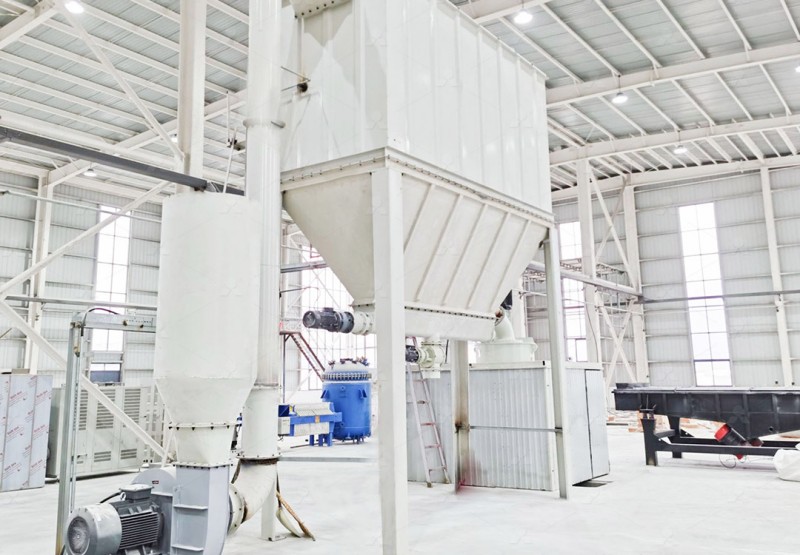
Its advantages are directly aligned with the needs of ink production:
- Higher Yielding, Lower Energy Consumption: Its newly designed grinding curves enhance efficiency, offering production capacity up to 40% higher than jet or stirred mills while consuming only 30% of the energy of a jet mill. This translates to significant cost savings for Canadian plants.
- Adjustable Fineness (325-2500 meshes): The German-technology cage-type powder selector allows precise control over fineness, achieving a d97 ≤5μm in a single pass. This is crucial for achieving the consistent pigment quality required in ink formulation.
- Eco-Friendly & Worry-Free Operation: The integrated efficient pulse dust collector ensures no dust pollution, aligning with Canada’s environmental ethos. Furthermore, the absence of rolling bearings and screws in the grinding chamber eliminates common failure points, enabling continuous 24/7 operation—a key factor for maintaining supply chains.
Integration and Process Control in the Canadian Context
Optimization extends beyond the mill itself. A holistic system approach is vital. This includes proper pre-treatment of carbon black (often involving pelletized feed), controlled feeding systems to maintain optimal load in the grinding chamber, and integrated temperature management to prevent degradation of the material.
The fully digitalized processing of the MW Mill, with numerically controlled machining of core parts, ensures the precision and repeatability needed for batch-to-batch consistency. For larger-scale operations or those requiring integrated drying, the LUM Ultrafine Vertical Grinding Mill is another excellent option. It combines ultrafine grinding, grading, and transporting with advanced roller and powder separating technology, offering energy savings of 30%-50% and features like a reversible structure for easier maintenance of heavy grinding rollers.

Canadian manufacturers should also leverage the technical support and original spare parts supply offered by reputable manufacturers like LIMING. This ensures worry-free operation and minimizes costly downtime in remote or high-labor-cost environments.
Conclusion: A Strategic Investment for Quality and Compliance
For the Canadian ink industry, optimizing carbon black processing is a strategic imperative. Investing in advanced grinding technology like the MW Ultrafine Grinding Mill is not just an equipment purchase; it’s an investment in product superiority, operational efficiency, and regulatory compliance. By achieving superior pigment dispersion with lower energy use and minimal environmental impact, producers can strengthen their market position, meet the demands of discerning clients, and contribute to a more sustainable manufacturing sector in Canada. The path to premium ink production is paved with precisely ground carbon black.
Frequently Asked Questions (FAQs)
- What is the typical target fineness (mesh size) for carbon black used in ink production?
Most high-quality printing inks require carbon black ground to a fineness between 800 and 1500 meshes (approximately 10-20 microns D90). Specialty inks may demand even finer particles, up to 2500 meshes. - Why is energy consumption a major concern when selecting a carbon black mill?
Grinding is an energy-intensive process. High energy consumption directly increases production costs and environmental footprint. Selecting an energy-efficient mill, like the MW Mill which uses significantly less power than traditional jet mills, is crucial for cost-competitive and sustainable operation. - How does the mill prevent contamination of the carbon black during grinding?
Advanced mills utilize designs that minimize metal-to-metal contact in the grinding zone. For example, the MW Mill has no rolling bearings or screws in the chamber, reducing the risk of metallic contamination. The use of wear-resistant alloys for grinding elements also helps. - Can the grinding system handle the pelletized form of carbon black commonly supplied?
Yes. With an input size capacity of 0-20 mm, the MW Ultrafine Grinding Mill can directly process standard pelletized carbon black feed, often with only minimal pre-crushing required. - What kind of after-sales support is important for operating in Canada?
Given Canada’s geographic vastness, reliable access to technical services and genuine spare parts is critical. Partnering with a supplier that offers comprehensive support and maintains a sufficient supply of original parts ensures minimal downtime and long-term operational reliability. - How does the mill system address environmental regulations regarding dust and noise?
Modern systems like the MW Mill are equipped with integrated, high-efficiency pulse dust collectors that capture over 99.9% of particulates, and mufflers or sound enclosures to reduce operational noise, ensuring compliance with Canadian environmental and workplace safety standards. - Is the fineness adjustable for producing different grades of ink from the same mill?
Absolutely. Mills featuring advanced classifiers, such as the cage-type powder selector in the MW Mill, allow operators to accurately adjust the fineness output (between 325-2500 meshes) without stopping the machine, providing great flexibility for producing multiple ink formulations.