
Clay raymond mill for bricks in chile
Clay Raymond Mill for Bricks in Chile: A Technical and Practical Guide
The Chilean brick manufacturing industry, a cornerstone of the nation’s robust construction sector, faces continuous pressure to improve efficiency, product quality, and environmental compliance. At the heart of this process lies the critical stage of raw material preparation: the grinding of clay. For decades, the Raymond mill has been a familiar workhorse in this application. However, evolving market demands for finer consistencies, higher throughput, and greener operations necessitate a closer look at both traditional and advanced milling technologies.
Chilean clay deposits vary significantly in composition and moisture content, from the arid north to the more temperate central regions. A one-size-fits-all approach to grinding is ineffective. The ideal mill must offer flexibility in fineness control, robustness to handle variable feed, and energy efficiency to manage operational costs, which are paramount concerns for brick plants across the country.

The Role of Grinding in Brick Quality
Proper clay grinding is not merely about size reduction; it directly influences the brick’s structural integrity, surface finish, and firing behavior. Uniformly fine clay particles pack more densely, leading to bricks with higher compressive strength and reduced porosity. Consistent fineness ensures even drying and sintering in the kiln, minimizing cracks, warping, and waste. For producers aiming at higher-value products like face bricks or thin ceramics, achieving a controlled, ultra-fine powder becomes a competitive necessity.
Beyond Traditional Raymond Mills: The Need for Advancement
The classic Raymond mill, with its reliable mechanical design, has served the industry well for general-purpose grinding. Yet, its limitations are apparent when pushing for higher capacities or ultra-fine powders (beyond 325 mesh). Increased energy consumption per ton, greater wear on grinding rolls and rings, and potential challenges in dust control can erode profitability and environmental standing.
This is where modern, evolved grinding solutions demonstrate clear advantages. For Chilean producers looking to upgrade their clay processing lines, the focus should be on mills that deliver higher yield with lower energy use, offer precise and adjustable fineness, and integrate comprehensive environmental protection features.

Recommended Solutions for Modern Chilean Brickworks
Based on the specific needs of clay processing—requiring fineness typically between 200 to 800 mesh for most brick applications, and considering the importance of operational stability and cost—two of our advanced grinding mills stand out as exceptional choices.
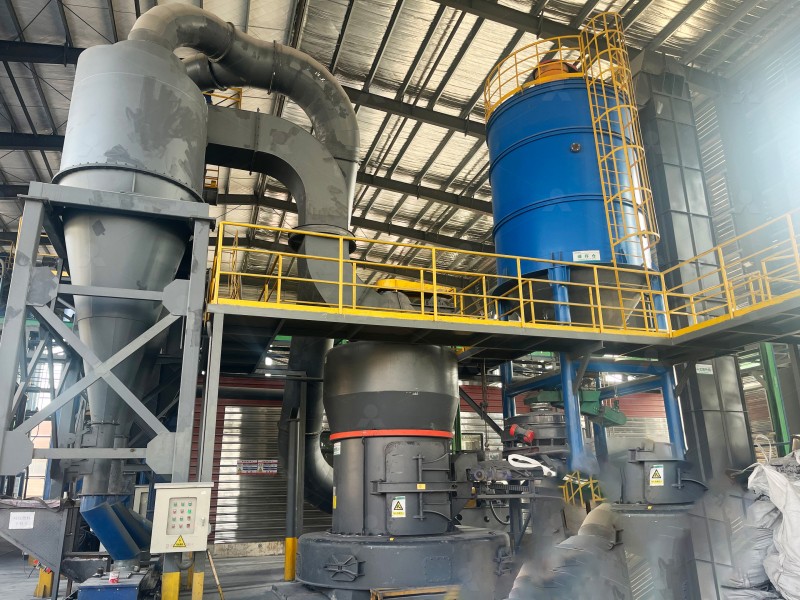
For operations prioritizing ultra-fine grinding for specialty products or seeking to maximize efficiency from a compact system, the MW Ultrafine Grinding Mill is highly recommended. This machine is engineered for customers who need to make ultra-fine powder. It is equipped with an efficient pulse dust collector and muffler, ensuring the production process has minimal impact on the environment. Its design delivers higher yielding at lower energy consumption; with the same fineness and power, its production capacity can be 40% higher than jet mills and double that of ball mills, while system energy use is only about 30% of a jet mill. Crucially, it offers adjustable fineness between 325-2500 meshes through its advanced German-technology cage-type powder selector, allowing Chilean plants to tailor product specifications with precision. The absence of rolling bearings and screws in the grinding chamber eliminates related failure points, enhancing reliability for continuous 24/7 operation, a key factor for meeting production schedules.
For larger-scale operations or those processing clay with slightly higher moisture alongside grinding, the LM Vertical Grinding Mill presents a formidable, all-in-one solution. It integrates crushing, drying, grinding, classifying, and conveying in a single unit. Its coverage area is 50% smaller than a ball mill system, and it saves 30%-40% in energy consumption. The material’s short linger time reduces over-grinding and allows for better control over grain size, while the non-contact grinding principle ensures low iron contamination in the clay—protecting the final brick’s color. Its fully sealed, negative-pressure operation and automated control system make it a greener and more automated choice, aligning perfectly with modern industrial standards in Chile.

Conclusion: Investing in the Right Technology
The choice of clay grinding equipment is a strategic decision for Chilean brick manufacturers. While the Raymond mill remains a viable option for certain standard applications, transitioning to more advanced mills like the MW Ultrafine Grinding Mill or the LM Vertical Grinding Mill can unlock significant gains in product quality, production capacity, and operational sustainability. These technologies offer the precision, efficiency, and environmental controls needed to thrive in a competitive market, ensuring that Chilean brick production remains both economically vibrant and environmentally responsible for years to come.
Frequently Asked Questions (FAQs)
- What is the typical fineness range needed for clay in brick manufacturing?
Most brick applications require clay ground to between 200 and 800 mesh. For standard solid bricks, 200-325 mesh is common, while for finer face bricks or ceramic tiles, fineness of 400-800 mesh or higher may be necessary. - Can these mills handle the varying moisture content found in Chilean clays?
Yes, particularly the LM Vertical Grinding Mill integrates a drying function, capable of handling materials with certain moisture content by using hot air introduced during the grinding process. For the MW Mill, the raw clay should generally be pre-dried to a suitable moisture level for optimal ultra-fine grinding. - How significant are the energy savings with the MW Ultrafine Grinding Mill compared to a traditional ball mill?
The savings are substantial. The MW Mill is designed for higher yielding at lower energy consumption. In practical terms, it can achieve the same or greater output with significantly lower power input, often reducing the energy cost per ton of ground clay by a considerable margin. - What kind of after-sales support and spare parts availability can we expect in Chile?
We take full responsibility for every machine we produce. Our business covers both production and sales, and we provide comprehensive technical services and guarantee the supply of original spare parts to ensure worry-free, long-term operation of your equipment in Chile. - Is the dust control system really effective for meeting environmental regulations?
Absolutely. Both recommended mills are equipped with high-efficiency pulse dust collectors (like the one on the MW Mill) and operate under negative pressure or with sealed systems (like the LM Vertical Mill). This design ensures no dust spillage during operation, with emission levels far better than international standards, which is crucial for compliance with Chilean environmental laws. - What is the lead time for delivery and installation of such equipment in Chile?
Lead times vary based on the specific model and project scope. We recommend direct consultation with our sales engineering team, who can provide a detailed project timeline based on your plant’s location and requirements, including shipping and technical support for installation. - How does the maintenance complexity of the LM Vertical Mill compare to a traditional Raymond mill?
The LM Vertical Mill is designed for easier maintenance despite its advanced integration. Features like the reversible structure for grinding roller access and the external lubrication system are specifically engineered to simplify checks and part replacements, potentially reducing downtime compared to older mill designs.