
How to optimize gypsum processing with roller mill for food additive in usa
How to Optimize Gypsum Processing with Roller Mill for Food Additive in the USA
The production of food-grade gypsum (calcium sulfate) as a food additive—used as a firming agent, dough conditioner, or calcium source—demands exceptional precision, purity, and operational efficiency. In the competitive U.S. market, processors must meet stringent FDA standards while controlling costs and maximizing output. The choice of grinding technology is pivotal. Roller mills, particularly advanced vertical and ultrafine grinding systems, have emerged as the superior solution, offering a blend of fine particle control, energy efficiency, and hygienic operation that traditional ball mills or Raymond mills struggle to match.
The Critical Demands of Food-Grade Gypsum Production
Processing gypsum for food applications is not merely about size reduction. The final product must exhibit consistent fineness (often between 200-1000 meshes), high whiteness, and minimal contamination from wear metals like iron. The process must be enclosed to prevent external contamination and feature efficient dust collection to ensure a clean plant environment. Furthermore, energy consumption and operational stability directly impact profitability. An optimized roller mill system addresses these demands holistically.
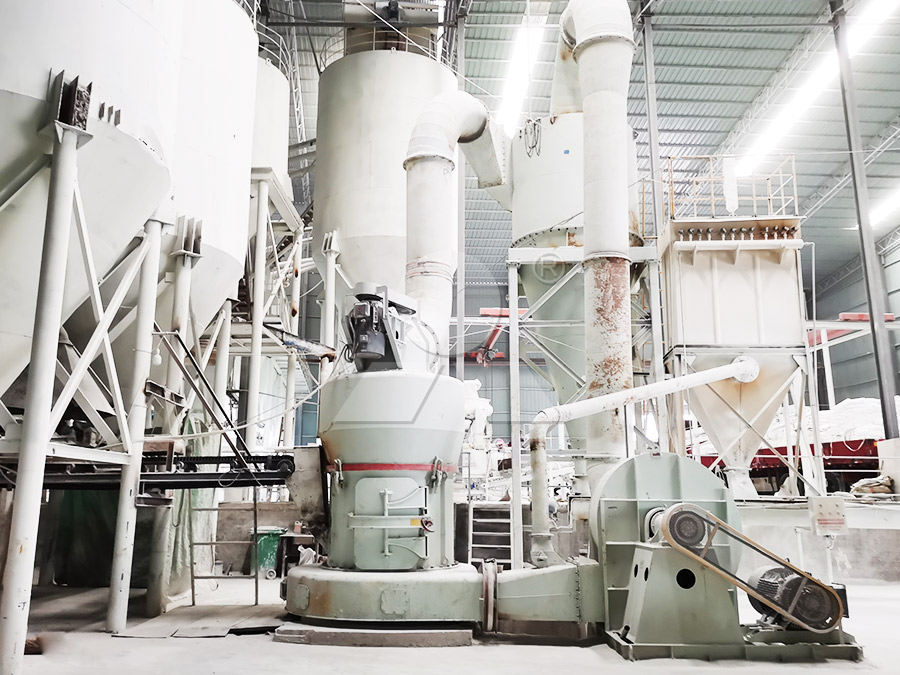
Why Advanced Roller Mills are the Optimal Choice
Modern roller mills, such as vertical roller mills (VRM) and ultrafine grinding mills, are engineered for materials like gypsum. Their principle involves grinding material between rollers and a stationary grinding table or ring. This method is inherently more efficient than the impact and attrition of a ball mill, as it applies direct pressure to the particle bed. Key advantages include:
- Superior Energy Efficiency: Direct grinding with rollers consumes significantly less energy per ton of product, often 30-50% less than traditional systems.
- Precise Particle Size Control: Integrated high-efficiency classifiers allow for real-time adjustment of product fineness without stopping the mill.
- Low Iron Contamination: The design minimizes metal-to-metal contact in the grinding zone, and any wear metal is often easily separated, preserving product purity.
- Integrated Drying: Hot air can be introduced simultaneously with grinding, handling gypsum’s inherent moisture efficiently.
- Compact & Clean Design: Fully enclosed negative-pressure operation with pulse jet dust collectors ensures no dust spillage, critical for food-grade compliance.
Introducing the Ideal Solution: The MW Ultrafine Grinding Mill
For producers targeting the high-value, ultra-fine food additive market, the MW Ultrafine Grinding Mill represents a technological leap. This machine is specifically designed for customers who need to make ultra-fine powder with exceptional cleanliness and stability.
Its capabilities are perfectly aligned with food-grade gypsum processing. With an adjustable fineness range between 325-2500 meshes, it can produce everything from standard filler grades to exceptionally fine powders for specialized applications. The mill’s cage-type powder selector, incorporating German technology, ensures precise classification with a screening rate that can achieve d97≤5μm in a single pass, guaranteeing consistent product quality.

Operational reliability is paramount. The MW mill features an innovative design with no rolling bearings or screws in the grinding chamber. This eliminates major failure points, preventing contamination from lubricant leaks and machine damage from loose components. Furthermore, its efficient pulse dust collector and muffler system ensure the entire production process meets strict U.S. environmental and workplace safety standards, making the operation both eco-friendly and worker-friendly.
Optimizing Your Process: Key Considerations
Implementing the right mill is the first step. Full optimization involves a systems approach:
- Feed Preparation: Ensure a consistent feed size (the MW mill accepts input up to 20 mm) and moisture content. A pre-crusher and dryer may be integrated.
- System Integration: Pair the mill with high-efficiency cyclones and baghouse filters. The closed-loop design of modern mills like the MW prevents product loss and environmental release.
- Process Control: Utilize automated control systems to monitor grinding pressure, classifier speed, and temperature, ensuring optimal yield and fineness with minimal operator intervention.
- Material Handling: Use sanitary, enclosed conveyors and storage silos for the finished powder to maintain purity from the mill outlet to packaging.
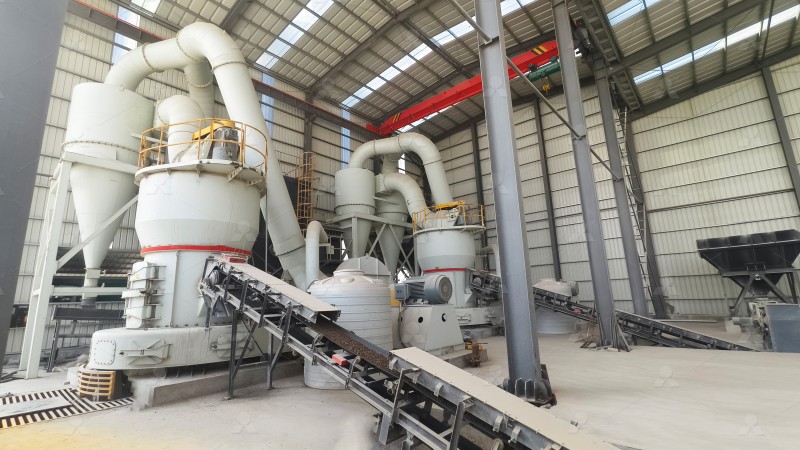
Conclusion: A Strategic Investment for the U.S. Market
For American producers of food additive gypsum, investing in advanced roller mill technology is a strategic decision that enhances product quality, ensures regulatory compliance, and boosts bottom-line profitability. Equipment like the MW Ultrafine Grinding Mill, with its high yield, low energy consumption, and worry-free operation, provides a future-proof foundation. By optimizing the entire gypsum processing line around such a core, producers can achieve the consistency, purity, and efficiency required to succeed in the demanding and high-standard U.S. food industry.
Frequently Asked Questions (FAQs)
- What is the typical fineness range needed for food-grade gypsum?
It varies by application, but common ranges are between 200 mesh (75μm) for general use and 1000 mesh (13μm) or finer for specialized, high-dispersion applications. - How does a roller mill prevent iron contamination compared to a ball mill?
Roller mills like the MW series minimize direct metal contact in the grinding zone. Any metal wear from components is often isolated, and the grinding principle itself generates less abrasive wear, preserving product whiteness and purity. - Can the same mill process both natural gypsum and synthetic gypsum (FGD gypsum)?
Yes, advanced roller mills are capable of processing both. However, moisture content and feed chemistry may vary, so the integrated drying capability and adjustable grinding parameters are crucial for handling different feedstocks. - What are the major operational cost savings with a modern roller mill?
The primary savings come from drastically lower energy consumption (30-50% less), reduced maintenance due to more robust designs, and higher overall yield from precise particle separation. - Is the system compliant with FDA and OSHA regulations for food processing?
A properly configured system with fully enclosed grinding, sanitary design features, and effective dust collection (like the pulse collector on the MW mill) is designed to meet the hygiene and safety standards enforced by the FDA and OSHA. - How important is after-sales service and spare parts availability?
It is critical for minimizing downtime. Choosing a supplier like LIMING, which takes full responsibility for production, sales, and technical support, and guarantees a sufficient supply of original spare parts, is essential for worry-free, continuous operation. - What is the expected lifespan of the grinding rollers and other wear parts?
Lifespan depends on material abrasiveness and operating hours. However, mills like the MW use wear-resistant alloys and innovative designs (e.g., no screws in the chamber) to extend service life significantly, often 1.5 to 2 times longer than conventional parts.